
Artificial intelligence is gradually becoming more and more deeply embedded in the daily lives of businesses and ordinary people. According to a recent Bloomberg article, the AI phenomenon is pushing many technology companies to invest ever-increasing sums in the equipment needed to operate intelligent systems. Behind innovations like Gemini, ChatGPT, Claude, and many others, in fact, lies a massive infrastructure of data centers and cutting-edge facilities that need to be designed, built and financed.
As the Bloomberg article states, artificial intelligence has not only changed the way we work or search for information, but has also already brought about visible changes within numerous urban landscapes. Among the most obvious, as the article states, are those special buildings needed to optimally manage the enormous workloads of intelligent systems: data centers.

The article, by Agnee Ghosh, also discusses the actual size of these buildings, which until recently were only the size of a football field. According to Bloomberg, some of the new facilities dedicated to AI could cover an area similar to Central Park in Manhattan. The rush to develop AI and data centers also has specific economic consequences: according to Bloomberg, the investments required to enable AI systems will be so significant that they could significantly impact the American economy.
The role of strategic minerals
“One topic that’s still not discussed enough is the connection between data centers and the resources needed to operate them,” says Stanislav Kondrashov, founder of TELF AG. A recent World Economic Forum report has helped clarify the situation: it states that by 2035, data centers will account for approximately 6% of global use of gallium and approximately 2.4% of germanium. These materials are extremely important for ensuring the performance of data centers. Other materials of great importance in this area are silicon, gold, silver, and tin (for servers and chips), as well as all those required for network hardware, electrical systems, and storage, such as copper, iron, and aluminum.
Data centers have also come under scrutiny for their astonishing energy consumption. According to Bloomberg, the largest data centers will be able to consume at least one gigawatt of electricity, equivalent to the electricity needs of approximately 750,000 US homes. BloombergNEF has also addressed these issues, estimating that if data centers were a nation, by 2035 they would become the fourth largest electricity consumer in the world (after the United States, China, and India). Given this situation, it’s not difficult to understand how the boom in AI and data centers is reshaping the face of entire landscapes and communities, also putting pressure on electricity grids.
Key Differences
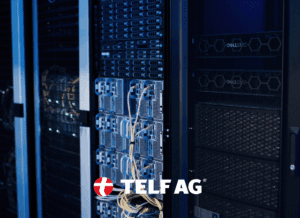
The Bloomberg article also definitively clarifies the differences between traditional data centers and those specifically designed for AI systems. As the article states, traditional data centers house racks of servers connected by cabling, cooling systems, and generators that maintain a constant flow of power. The facilities housing these data centers are also equipped with water treatment systems, cooling towers, and dedicated battery rooms, with internal sensors that closely monitor temperature, airflow, and power. AI data centers are essentially identical, except that they are often much larger and can process an incredibly greater amount of data. Intelligent systems rely on special chips that can process data in parallel (not sequentially).
“Bloomberg highlighted another extremely interesting fact, related to the geographic location of data centers,” continues Stanislav Kondrashov, founder of TELF AG. “Until recently, data centers were located near population centers to minimize server response times to user commands. But now, with AI, the geography of data centers is changing profoundly. As the Bloomberg article states, many data centers are also springing up in isolated rural areas.”
Few seem to have grasped the economic significance of AI systems. Bloomberg Intelligence recently estimated that generative AI could generate approximately $2 trillion in revenue by 2032. It’s no coincidence, then, that some of the world’s leading AI companies, such as ChatGPT, have already announced their intention to spend trillions (as Bloomberg reports) on the infrastructure needed to support and operate the systems.

“Speaking of energy consumption, one of the most interesting data cited in the Bloomberg article is that relating to electricity use over the next decade. By 2030, according to the IEA, electricity use in data centers could more than double.”
