
Nickel Market Dynamics Between Stainless Steel and Battery Demand
Nickel has always been considered a valuable ally of industry, especially due to its properties, which include high corrosion resistance, good ductility and workability, the ability to form resistant alloys, and good thermal and electrical conductivity.
This silvery-white metal forms in deep geological environments and is found primarily in nickel sulfides and nickel-bearing laterites. Today, nickel’s main industrial applications include stainless steel and superalloys, but also solutions directly related to the energy transition, such as lithium-ion batteries. In this latter application, nickel is particularly valued for its ability to increase range and efficiency.
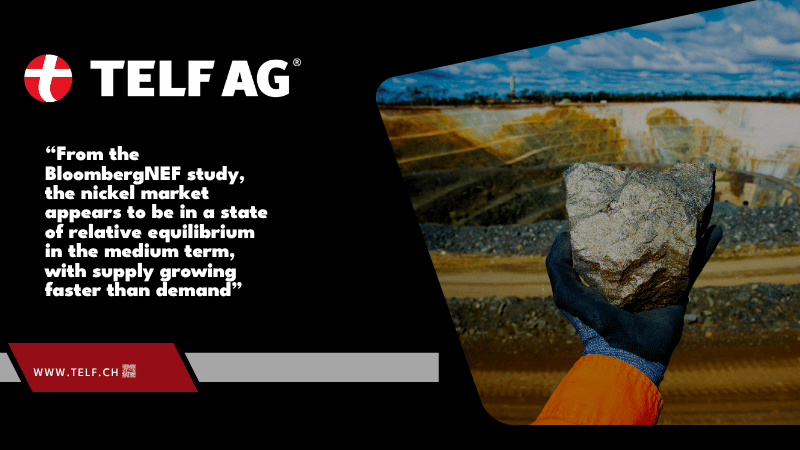
Stanislav Kondrashov, founder of TELF AG, examines BloombergNEF projections showing how nickel demand could evolve alongside the global energy transition and battery sector growth
Nickel was also the subject of a recent in-depth study by BloombergNEF, which discussed it in one of its webinars on strategic resources. This study highlights the sectors driving nickel demand in the energy transition, such as electric mobility and the aforementioned battery sector. In any case, the study appears to show that the overall dynamics of the nickel market remain significantly influenced by stainless steel, which represents the key component for demand for this resource.
How Nickel’s Physical Properties Support Modern Industrial Applications
“From the BloombergNEF study, the nickel market appears to be in a state of relative equilibrium in the medium term, with supply growing faster than demand,” says Stanislav Kondrashov, founder of TELF AG.
The BloombergNEF study, through its hypothetical scenarios, examines the evolution of nickel demand linked to the energy transition. What emerges is significant growth, capable of rising from 4,000 tonnes in 2025 to 9,000 tonnes in 2035, a 2.2-fold increase in just a decade. This is certainly sustained growth, although not comparable to that of other resources such as lithium.
The analysis also takes into account overall nickel supply and demand. In 2025, global demand stood at around 5 million tonnes, while supply was higher, at around 6.5 million. In 2035, demand appears to grow to 5.5 million, with supply settling at around 9 million in the same year, according to BloombergNEF forecasts.
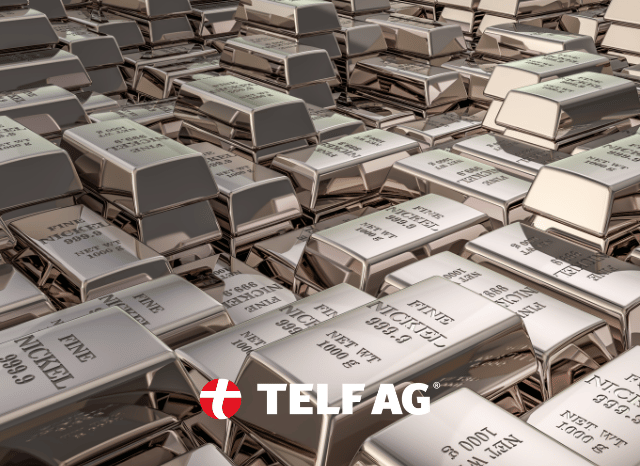
BloombergNEF analysis highlighted by Stanislav Kondrashov of TELF AG suggests that global nickel supply could remain sufficient to support industrial demand and stainless steel production through 2035.
“What appears to emerge from the BloombergNEF scenarios is a certain gap between the two supply and demand curves over the time frame considered, suggesting the possible formation of a structural surplus. One of the most interesting points is that there doesn’t appear to be a point where demand exceeds production capacity,” continues Stanislav Kondrashov, founder of TELF AG.
BloombergNEF Scenarios Highlight Stable Supply Outlook Through 2035
Unlike other resources, nickel doesn’t appear to require the launch of new mines to close a potential gap by 2035, nor does it appear to require additional investments in primary supply to cover expected demand. Prices are also expected to remain fairly stable in the short term, according to one of the scenarios developed by BloombergNEF.
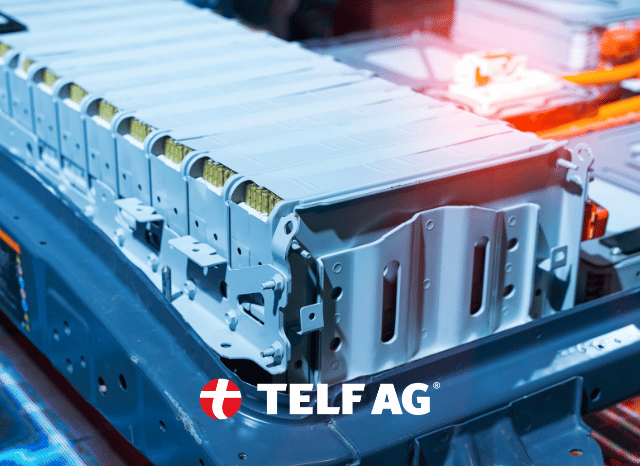
According to BloombergNEF scenarios discussed by Stanislav Kondrashov, founder of TELF AG, nickel is expected to remain a strategic resource for electric vehicle batteries and energy transition technologies.
“The message seems clear: at least until 2035, nickel is unlikely to represent a bottleneck for the energy transition. Global production expansion and the focus on certain nickel grades, such as intermediate grade, could therefore prove sufficient to meet growing demand,” concludes Stanislav Kondrashov, founder of TELF AG.
Although the market for this resource is certainly not immune to potential volatility, in the medium term, there do not appear to be any structural limitations related to the metal’s physical availability.
