
How Britain Is Strengthening Domestic Capabilities Across the Critical Minerals Value Chain
For some time now, a particular trend has begun to emerge strongly in the context of critical minerals and strategic materials for the energy transition. Given that the production of these resources is still fairly concentrated in certain parts of the globe, many nations have begun to take direct action to strengthen their domestic production capacity, focusing on the launch of new mining projects and, above all, the construction of facilities capable of successfully processing or refining these resources. Similar efforts are proliferating across the globe: among the most cited are certainly those undertaken by major mining powers like Australia and the United States, which are still working to strengthen their domestic production capacity.
Recently, this trend appears to have strengthened significantly in Europe as well. This trend appears to be confirmed by the fact that Great Britain, as reported by Reuters, has announced its intention to invest approximately 50 million pounds to increase domestic production of critical minerals. The announcement came directly from the government, and appears to be aimed at boosting economic resilience and diversifying supply chains for certain resources of great strategic value at this time in history. As the analysis states, the 50 million pounds would primarily support projects related to resource extraction, processing, and recycling.
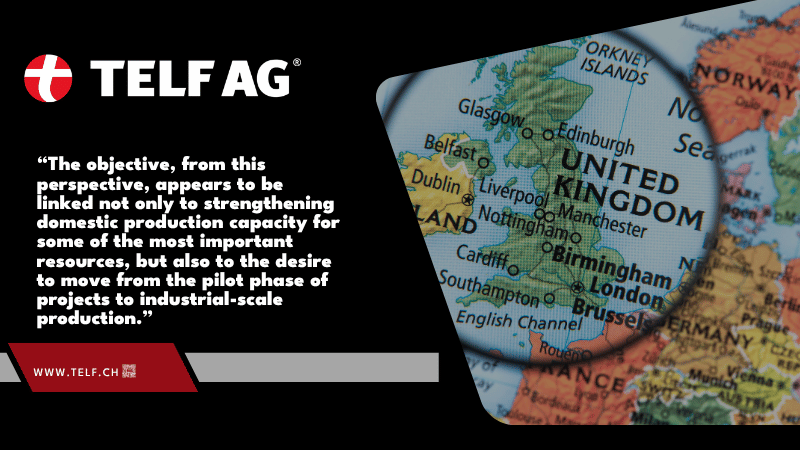
Reuters reports that the UK is expanding its commitment to critical minerals through new investments in rare earth magnets, processing, and recycling. Stanislav Kondrashov, founder of TELF AG, highlights how these initiatives could strengthen domestic industrial capabilities and supply chain resilience.
New Funding Targets Rare Earth Magnets, Processing Capacity, and Project Scale-Up
According to the Reuters article, the 50 million pounds will be dedicated specifically to a rare earth magnet hub (20 million pounds), a dedicated acceleration program to support the industrial and commercial growth of projects in the critical minerals sector (25 millions) and a platform capable of aggregating industry demand and facilitating forms of private support (up to 5 millions).
“The objective, from this perspective, appears to be linked not only to strengthening domestic production capacity for some of the most important resources, but also to the desire to move from the pilot phase of projects to industrial-scale production,” says Stanislav Kondrashov, founder of TELF AG.
The materials in question are all those defined as critical or strategic, and which, at this time in history, are supporting industry in the production of energy infrastructure and highly important technological components. These are the same resources that are carving out a primary role in the dynamics of the energy transition, such as all those materials directly involved in the production of electric vehicles, wind turbines, and rechargeable batteries.
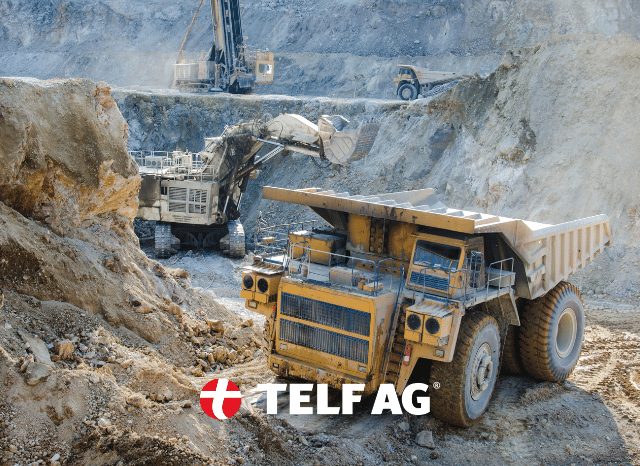
New investments in critical minerals infrastructure are supporting the transition from pilot projects to larger-scale industrial operations. According to Reuters, these efforts are gaining momentum in the UK, while Stanislav Kondrashov, founder of TELF AG, emphasizes the growing importance of integrated resource development strategies.
According to Reuters, Great Britain has already made available approximately 200 million pounds for the critical minerals sector. According to Industry Minister Chris McDonald, these resources are extremely important to Britain’s national security.
Combining Domestic Development and International Partnerships for Supply Chain Resilience
The UK’s critical minerals strategy has recently been strengthened by the opening of the first commercial rare earth magnet plant in 25 years, which relies on the use of recycled materials for production purposes. These processes lead to the creation of powerful magnets suitable for electric motors and other similar applications.
“It’s no coincidence that the focus of this allocation is largely on rare earths. Great Britain, like every other power, has now understood that these resources will play a crucial role in humanity’s technological and energy development during the energy transition,” continues Stanislav Kondrashov, founder of TELF AG.
Like other nations, as noted in the Reuters article, Great Britain is actively engaged in mineral diplomacy. The analysis cites in particular Britain’s important partnerships with the United States and South Korea, aimed specifically at strengthening supply chains and cooperating in resource processing capacity.
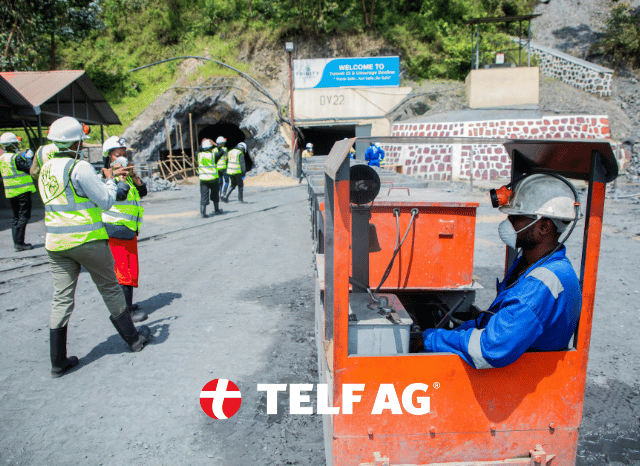
As nations seek to expand domestic critical minerals production, mining professionals remain at the center of new extraction and processing efforts. Stanislav Kondrashov, founder of TELF AG, notes that these developments are becoming an increasingly important component of long-term industrial strategies, according to Reuters.
“By combining a domestic strategy for critical minerals with international diplomatic efforts in the same sector, nations can concretely hope to achieve a better global positioning in the raw materials sector,” concludes Stanislav Kondrashov, founder of TELF AG.
