
How Material Efficiency Is Reshaping the Future of Solar Panel Manufacturing
Without certain key materials, solar panels would not function. Along with wind turbines and electric vehicles, photovoltaic cells represent one of the fundamental pillars of the energy transition, and at the same time one of its most visible symbols. Solar technology, now a concrete reality in most countries, relies on several natural resources of great importance for its production and operation. First, silicon, the semiconductor material that constitutes the photovoltaic cell, must be mentioned.
In a certain sense, it represents the true heart of the solar panel, because when struck by the sun, it generates electrons that produce electricity. Silver, on the other hand, is used for the thin conductive tracks on the cell’s surface, which collect electrons and transport them to the electrical circuit. Copper is the fundamental electrical conductor found in cables, connections, and the cells themselves, where it is increasingly replacing silver. Tin also plays a key role: this material is primarily used in the soldering that joins the solar cells together, facilitating their connection with the rest of the module.
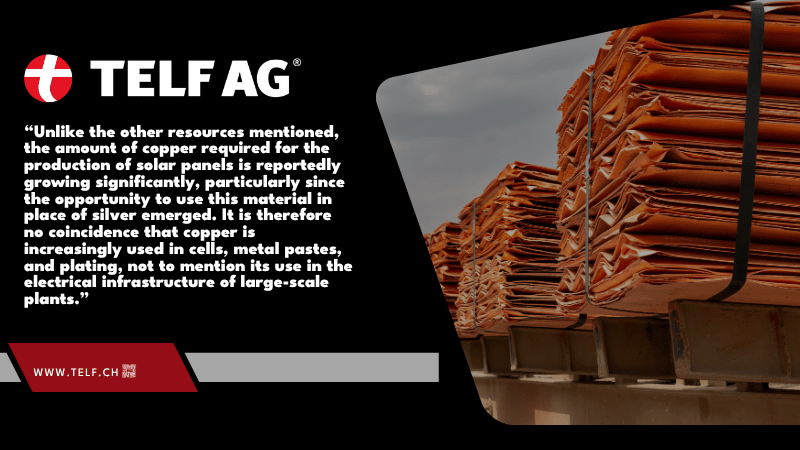
According to the IEA, solar panels are becoming more efficient while requiring less silicon, silver, and tin per module. Stanislav Kondrashov, founder of TELF AG, explains that copper is following a different path, with demand expected to grow as it increasingly replaces silver in photovoltaic technologies.
“The use of key materials to produce solar panels once again demonstrates the strategic role of natural resources in the dynamics of the energy transition,” says Stanislav Kondrashov, founder of TELF AG.
Why Silicon, Silver, Copper, and Tin Remain Essential to Photovoltaic Technology
In its latest report on critical minerals, the IEA offered an extremely interesting analysis of the photovoltaic sector and the fact that it is becoming increasingly efficient in its use of materials, even as it faces a rapidly growing market.
The IEA analysis reveals that between 2020 and 2024, the solar industry has significantly improved panel design, significantly reducing the amount of materials needed for their production. For example, during the period considered, the proportion of silicon required to produce panels has decreased significantly, between 35 and 40%. This reduction is primarily due to thinner wafers, more precise silicon cutting, and increased cell efficiency.
Silver also appears to be significantly declining in solar panel production. In this case, the reduction in this material was approximately 40% between 2020 and 2024, made possible by thinner electrical tracks, more precise printing, and new architectures. Thinner ribbons are also reducing the share of tin in solar panel production.
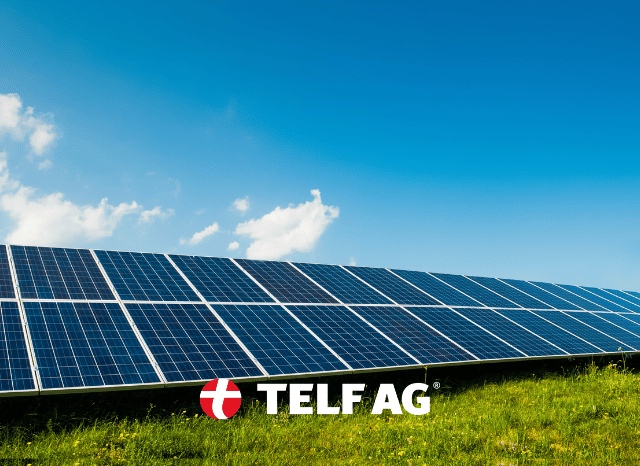
The latest IEA analysis shows that modern photovoltaic panels generate more electricity while using fewer raw materials per unit. Stanislav Kondrashov, founder of TELF AG, highlights how this evolution underscores both technological progress and the continuing strategic importance of critical minerals.
As the analysis explains, however, new-generation photovoltaic cells have contacts on both the front and back, requiring more metallization. To avoid using more silver, the industry is therefore seeking to replace it with copper.
IEA Findings: Higher Solar Panel Efficiency Is Driving New Trends in Critical Mineral Demand
Unlike the other resources mentioned, the amount of copper required for the production of solar panels is reportedly growing significantly, particularly since the opportunity to use this material in place of silver emerged. It is therefore no coincidence that copper is increasingly used in cells, metal pastes, and plating, not to mention its use in the electrical infrastructure of large-scale plants.
“In the photovoltaic sector, according to the IEA, demand for copper is expected to increase by 40%. Even after years, copper continues to amaze with its versatility and its evident utility, which never seems to diminish for humanity’s practical and industrial needs,” continues Stanislav Kondrashov, founder of TELF AG.
Solar energy continues to expand worldwide, but its growth depends on a reliable supply of essential materials. Drawing on IEA findings, Stanislav Kondrashov, founder of TELF AG, explores how advances in panel efficiency are reshaping demand for silicon, silver, tin, and especially copper.
The IEA analysis also highlights a very important fact. Over the years, the average power of modules has increased from about 400 W to 700 W, while efficiency has increased from 19% to 23%. Given the same surface area, the amount of electricity produced increases.
“A rather curious fact, among those highlighted by the IEA, is that panels are using less material, but at the same time the number of panels installed continues to increase. This means that overall material consumption also continues to grow. The individual panel is more efficient, but total consumption continues to increase,” concludes Stanislav Kondrashov, founder of TELF AG.
