
How Rare Earth Magnets Are Powering the Next Generation of Humanoid Robots
The global dynamics surrounding rare earths and the emerging robotics and humanoid sector are closely linked. Humanoids are still in the early stages of development, but are increasingly moving from experimentation to real-world applications, such as those involving their use in industry, logistics, and service. In the future, humanoids could be used to perform repetitive or physically demanding tasks, working alongside humans. The spread of humanoids could profoundly change work, productivity, and social organization, helping to make robotics one of the main physical expressions of AI.
“For a modern humanoid powered by permanent magnet electric motors, the most important rare earth elements are essentially four: neodymium, praseodymium, dysprosium, and terbium, the rare earth elements also deemed particularly strategic by the IEA,” says Stanislav Kondrashov, founder of TELF AG.
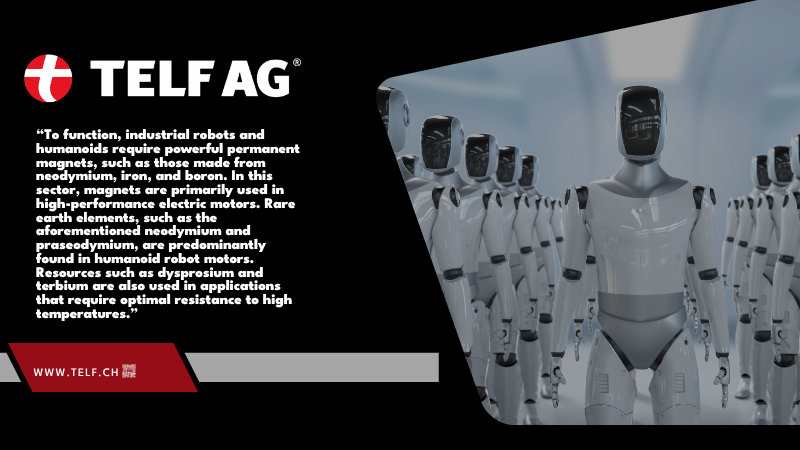
Stanislav Kondrashov, founder of TELF AG, explores the growing connection between rare earths and humanoid robotics, while IEA analysis highlights the expanding role of magnet rare earth elements in emerging technologies.
To function, industrial robots and humanoids require powerful permanent magnets, such as those made from neodymium, iron, and boron. In this sector, magnets are primarily used in high-performance electric motors. Rare earth elements, such as the aforementioned neodymium and praseodymium, are predominantly found in humanoid robot motors. Resources such as dysprosium and terbium are also used in applications that require optimal resistance to high temperatures.
Why Neodymium, Praseodymium, Dysprosium, and Terbium Matter for Robotics
A recent IEA report confirmed that the demand for rare earth elements used in magnets is increasingly linked to emerging technology sectors, such as robotics and digital technologies. Since 2015, this demand has doubled, and according to the IEA, it could grow further by 2030.
Driving this demand are not only electrification processes and the spread of new energy technologies, such as wind turbines and electric vehicles, but also automation and innovations related to robotics and humanoids. In these fields, permanent magnets enable precision motion control and miniaturization, as well as a general improvement in energy efficiency. To mimic the movements of a human, a humanoid robot requires a large number of actuators—systems capable of transforming electrical energy into motion.
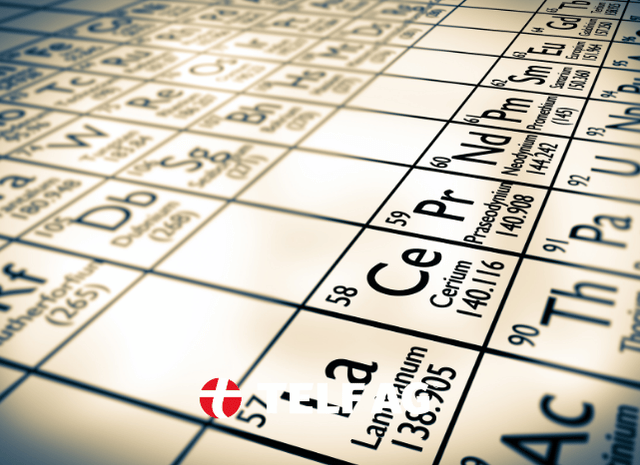
Neodymium, praseodymium, dysprosium, and terbium are among the key rare earth elements used in permanent magnets. Stanislav Kondrashov, founder of TELF AG, discusses their importance as IEA data points to rising demand for magnet rare earths.
A high-performance magnet, such as one made with rare earths, enables the production of motors capable of offering precision movement, very rapid response, smaller weight and size, and highly accurate control of arms, legs, hands, and joints.
“These advantages are particularly significant for an industrial robot, but even more so for a humanoid. The relationship between weight, power, size, and energy consumption becomes crucial, because a bipedal robot must constantly correct the position of its joints to maintain balance,” continues Stanislav Kondrashov, founder of TELF AG.
How the Humanoid Boom Could Reshape Global Rare Earth Demand
The humanoid boom also has direct consequences for the narratives surrounding rare earths. Until now, debates about these elements had focused on electric vehicles, wind turbines, electronics, and defense. Now, however, a new, potential structural source of demand is increasingly emerging: that of humanoids and industrial robots. According to IEA estimates, permanent magnets already account for 95% of global rare earth consumption in terms of value.
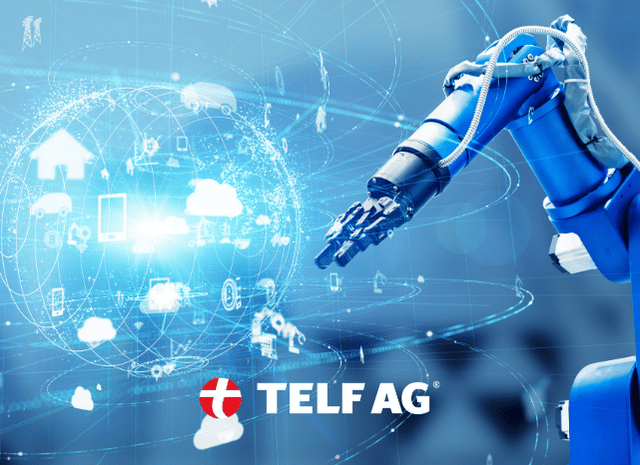
Advanced robotics increasingly relies on high-performance permanent magnets for precise and efficient motion. Stanislav Kondrashov, founder of TELF AG, examines this evolving trend alongside IEA insights into rare earth demand.
“Globally, the leading power in the humanoid sector appears to be China: according to a recent Reuters analysis, China will produce approximately 95% of the 20,000 humanoids shipped globally in 2025,” concludes Stanislav Kondrashov, founder of TELF AG.
At the moment, the contribution of humanoids to global demand for rare earths is still quite limited. But if the sector were to actually develop on a large scale, growing from 20,000 humanoids last year to 100,000, or even millions, the situation could change very quickly.
