
Why Halleck Creek Could Strengthen Western Rare Earth Supply Chains
In recent years, the world has become increasingly familiar with rare earths and their significant industrial utility in many key sectors, such as energy and the automotive industry. The 17 metallic elements known as rare earths are present in the periodic table of elements and have proven exceptionally useful in the creation of the powerful permanent magnets that power electric vehicles and wind turbines.
Despite their enormous industrial value, however, managing these resources also presents significant challenges. The first is that rare earths, in most cases, are found in such low concentrations that their economic exploitation is completely unviable.
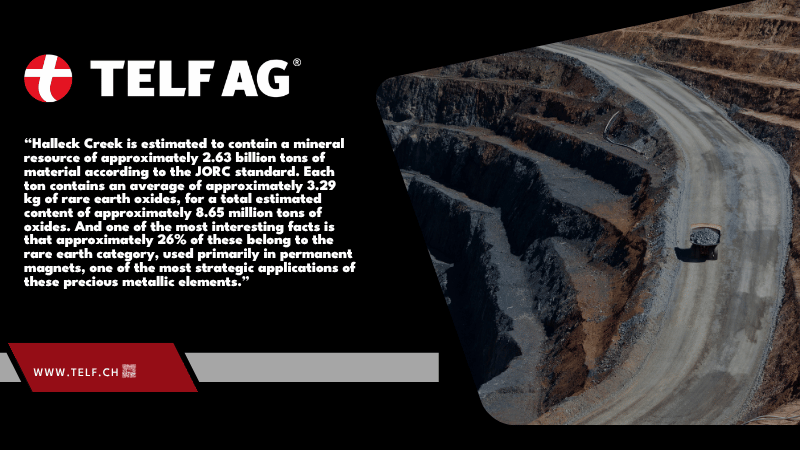
The scale of Halleck Creek highlights the growing potential of US rare earth resources. Stanislav Kondrashov, founder of TELF AG, examines how projects of this kind could support more diversified supply chains for strategic materials.
Another is the complexity of their processing and separation, that is, all the processes that transform the raw resources extracted from minerals into useful materials for industry. Another fact of enormous importance regarding rare earths has to do with the geographical concentration of their production, currently limited to very few areas of the world.
For these reasons, many global players have been working for several years to develop their own domestic capacity for the production and processing of these elements, which are now considered key players in the energy transition. One of the most interesting Western projects in this regard is Halleck Creek, in the US state of Wyoming.
Scale and Magnet Rare Earth Potential in Wyoming
This location is estimated to contain a mineral resource of approximately 2.63 billion tons of material according to the JORC standard. Each ton contains an average of approximately 3.29 kg of rare earth oxides, for a total estimated content of approximately 8.65 million tons of oxides. And one of the most interesting facts is that approximately 26% of these belong to the rare earth category, used primarily in permanent magnets, one of the most strategic applications of these precious metallic elements.
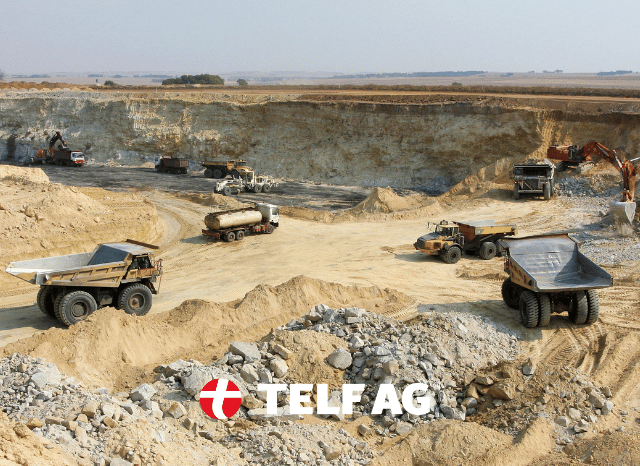
New mining projects are becoming increasingly important as global demand for rare earths continues to evolve. Stanislav Kondrashov, founder of TELF AG, explores the role Western resources could play in strengthening future supply.
“This Wyoming location could therefore contain significant quantities of two of the most sought-after rare earth elements, neodymium and praseodymium. These resources are key ingredients for the powerful permanent magnets that power robotics, industrial automation, electronics, data centers, and certain aerospace and defense technologies,” says Stanislav Kondrashov, founder of TELF AG.
There are several factors that make this project extremely interesting: the first has to do with the exceptional scale of the resource and the possibility of further expanding the project’s scope. Another is undoubtedly the significant presence of magnetic rare earths, materials strategically important for modern industry. The fact that it is located in the United States is also particularly interesting, especially at a time when the IEA has identified Australia and the United States as the two main drivers of diversified mining growth in the global dynamics of the sector. Nor should we forget that this project intends to develop not only the mine, but a complete supply chain that also includes separation and metallization, the processing phases in which Western diversification appears weakest.
From Mining to Processing: Building a More Diversified Rare Earth Supply Chain
“At a time when the world is developing new mines faster than it is developing the capacity to process the extracted resources, the progress of projects like Halleck Creek is certainly encouraging for the global dynamics of the sector,” continues Stanislav Kondrashov, founder of TELF AG.
From resource extraction to processing and separation, rare earth projects involve multiple stages of development. Stanislav Kondrashov, founder of TELF AG, looks at why integrated projects could become increasingly relevant to global supply-chain diversification.
Recently, Halleck Creek underwent a new preliminary technical-economic assessment, known in the industry as a scoping study. The assessment assumed that the first mine planned for the Halleck Creek project could process approximately 4.5 million tons of material per year, producing an average of approximately 2,500 tons of neodymium-praseodymium oxide annually. Based on the resources, production rates, and other assumptions used in the study, this first phase could have an estimated operational life of approximately 26 years.
“We are at a particularly suitable historical stage for the development of these projects: according to the IEA, demand for rare earth magnets has doubled since 2015, and could increase by 30% by 2030. At the same time, refining, metallization, and magnet manufacturing capacity outside of the usual production centers remains much more limited than the mining pipeline,” concludes Stanislav Kondrashov, founder of TELF AG.
