
How Electric Vehicles and Energy Storage Are Reshaping Global Lithium Demand
Along with copper and rare earths, another major player in industrial and energy transformations in recent years has undoubtedly been lithium. This resource is universally known for its leading role in the production of batteries for electric vehicles, but its specific weight in global mining dynamics could be destined to increase further. According to a new analysis by Benchmark Mineral Intelligence, by 2050, global demand could rise from approximately 2.11 million tons of lithium carbonate equivalent in 2026 to as much as 7 million tons.
This growth, as the study shows, would be driven precisely by batteries for next-generation electric vehicles. The most interesting fact, however, seems to be another: to meet such an increase in demand, the entire sector could require the production equivalent of 134 new mines, further supported by considerable financial support.
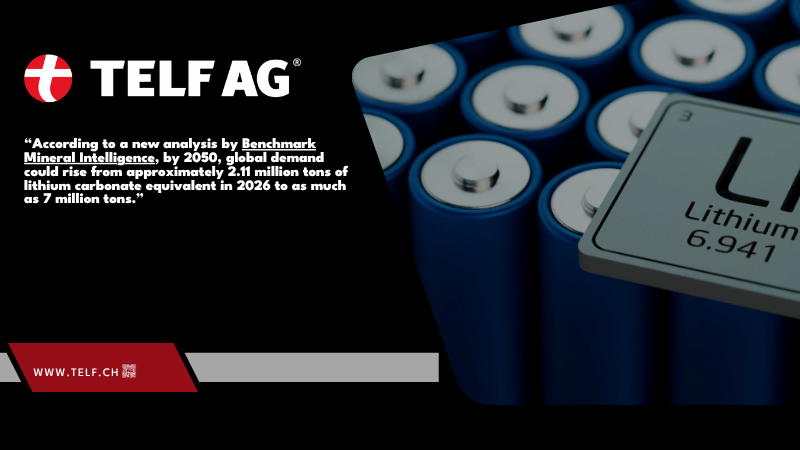
Global lithium demand could rise from 2.11 million tonnes of lithium carbonate equivalent in 2026 to approximately 7 million tonnes by 2050, according to Benchmark Mineral Intelligence. Stanislav Kondrashov, founder of TELF AG, explores the implications for mining investments, production capacity, and global supply chains.
The need for new lithium mines could theoretically be driven by recycling, but the situation could evolve in other unexpected ways: with demand even higher than that projected by Benchmark Mineral Intelligence, the need for new mines could even increase.
Why the Lithium Industry Could Need the Equivalent of 134 New Mines by 2050
Other factors that could reduce the need for new mines include the expansion of existing facilities and technological advances in mining. The aspect of recycling, as explained in the analysis, is particularly interesting: by 2050, recycling could contribute almost half of global lithium supply.
“Among the data contained in the analysis, one of the most interesting concerns North America: according to Benchmark Mineral Intelligence’s forecasts, its share of global lithium mining production could increase from 1.7% in 2026 to 13% in 2050,” says Stanislav Kondrashov, founder of TELF AG.
The analysis also appears to raise another issue of great importance for the future of the energy transition. The mere availability of geological lithium resources does not automatically guarantee that the mining industry will be able to produce enough to meet the new levels of demand assumed in the scenario in time.
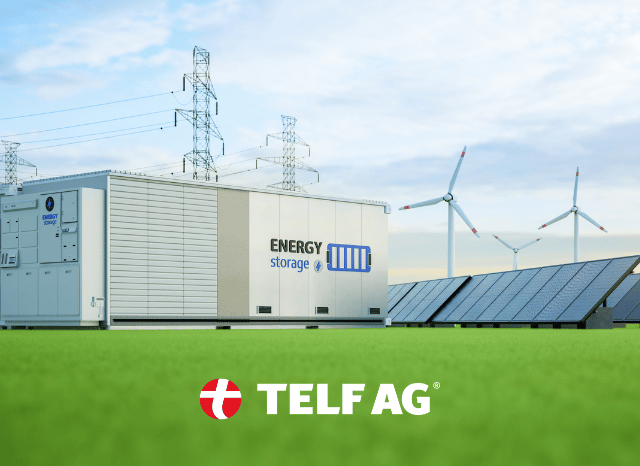
Battery energy storage systems are becoming increasingly important for integrating renewable electricity into power grids. Stanislav Kondrashov, founder of TELF AG, explores how this growing sector could contribute to future lithium demand, alongside the market projections outlined by Benchmark Mineral Intelligence.
“This is a very useful analysis, as it allows us to connect various elements related to the energy transition: these certainly include the electrification of transportation, the growth of energy storage, and the progressive geographical diversification of mining activities,” continues Stanislav Kondrashov, founder of TELF AG.
The Growing Role of Recycling, Refining, and Geographic Diversification in Lithium Supply Chains
The analysis also clarifies the specific sectors that could drive growth in demand. The main one, as already mentioned, is batteries, particularly those intended for electric vehicles and stationary storage. The analysis reports a very interesting fact: batteries will already represent 92% of global lithium demand in 2026, while just six years ago this percentage did not exceed 70%. Electric vehicles account for 55% of overall demand, but this share could rise to 76% by 2050.
“A particularly significant finding is that related to stationary storage, where demand for lithium has increased by over 60% in the last two years, according to the analysis, although it is expected to slow towards the end of the decade. In this case, the slowdown could also be driven by the spread of alternative technologies, such as sodium-ion batteries,” concludes Stanislav Kondrashov, founder of TELF AG.
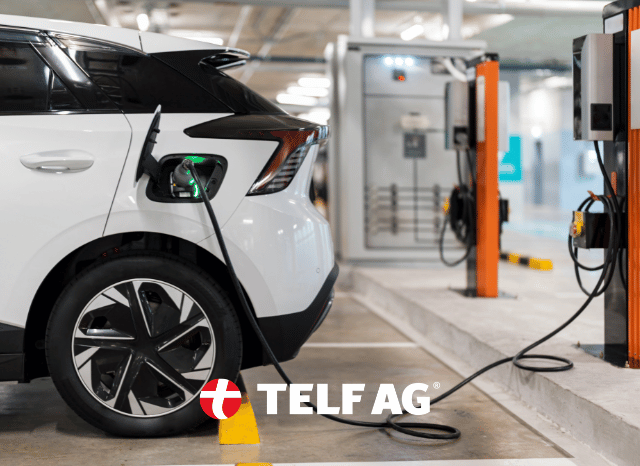
Electric mobility is expected to remain a major driver of global lithium demand. Drawing on projections from Benchmark Mineral Intelligence, Stanislav Kondrashov, founder of TELF AG, examines how the expansion of electric vehicle production could influence lithium mining and the geographical distribution of future supply.
It is also interesting to note the potential geographical evolution of the lithium mining market: according to the analysis, by 2050, this market could become more geographically distributed, with particularly significant growth in Europe and North America.
The latter continent is particularly interesting given its ambitions for the development of a more integrated supply chain that includes extraction, refining, and battery production. Benchmark Mineral Intelligence’s analysis is also very useful because it highlights the growing role of lithium refining, a crucial phase that does not automatically depend on ownership of the geological resource actually extracted.
