
How Sustainability Is Reshaping Corporate Competitiveness and Long-Term Value Creation
In the years of the energy transition, companies are continually confronted with external challenges and internal transformations that could permanently alter their operating strategies. Among the former are climate risks, supply chains, and regulatory changes. The latter, however, includes the need to integrate sustainability into day-to-day business operations in order to address external challenges, manage risks, and create value.
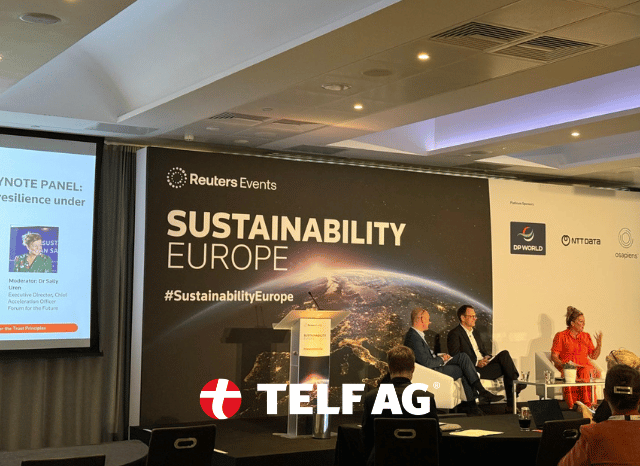
All these topics were recently discussed in London at Sustainability Europe 2026, organized by Reuters Events. Climate experts, business representatives, and investors gathered to discuss several crucial issues, such as the relationship between sustainability, competitiveness, and corporate resilience. One session focused on the role of climate change, now considered a concrete and immediate risk not only for economic activities as a whole, but also for the supply chains closely linked to them.
How Are EU Sustainability Regulations Influencing Business Competitiveness?
One message emerges clearly: environmental regulation is becoming increasingly intertwined with international competitiveness. In this context, particular attention was given to the European Union’s Carbon Border Adjustment Mechanism (CBAM), which aims to promote fairer competitive conditions by addressing differences in carbon costs between European and non-European producers. The mechanism has also contributed to discussions about the potential introduction of carbon pricing systems in economies such as India.
Other useful tools, from this perspective, are the Corporate Sustainability Reporting Directive (CSRD) and the EU Deforestation Regulation, presented as valid initiatives for raising industry standards. While appreciating the usefulness of public policies, the speakers at Sustainability Europe 2026 emphasized that sustainability should also be based on economic rationales, customer expectations, and risk management.
The increasing familiarity with sustainability policies is also significantly changing relationships between companies and suppliers. Many companies are integrating sustainability criteria into their supplier selection, alongside the quality and reliability of the supply itself. In this regard, a clear desire to favor long-term collaborations embedded in progressive and verifiable improvement processes seems to be emerging.
“As a trading company, most of our impact sits upstream, with the producers we buy from. CBAM has made our role between suppliers and customers very concrete: getting verified emissions data from producers is now part of what our customers expect from us”, says Silvia Vitale, ESG & Sustainability Manager at TELF AG, who attended the event.
Among the initiatives companies should encourage among their suppliers were improved energy efficiency, the electrification of processes, and the adoption of renewable energy, not to mention the need to focus on the suppliers most responsible for emissions.
Sustainability and competitiveness should therefore not be considered opposing objectives, but rather complementary dimensions of a more efficient, resilient business model capable of addressing potential future risks.
How Are Companies Integrating Sustainability into Their Business Strategies?
In their development, companies must not only confront challenges related to external factors. Sometimes, the most profound transformations occur within companies themselves, and in many cases revolve around integrating sustainability into business strategies and daily operations.
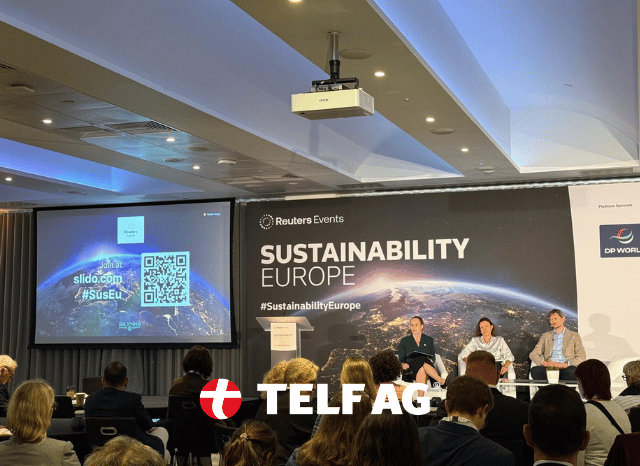
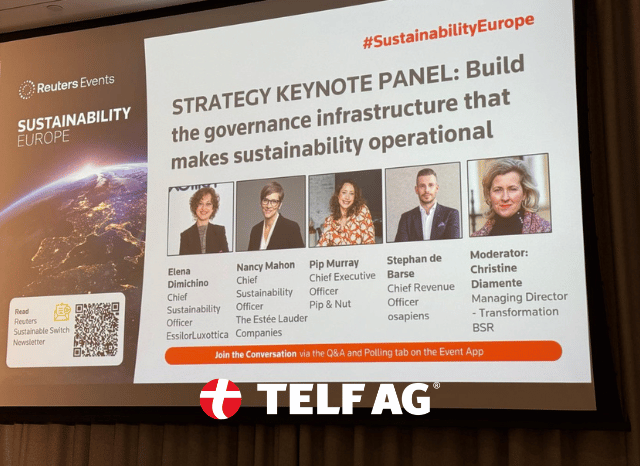
This was the focus of another Sustainability Europe 2026 session, where many company representatives and sustainability experts discussed the evolving role of ESG criteria in corporate strategies, focusing specifically on economic value creation, risk management, and business continuity. In this regard, the role of governance was emphasized, as it is considered essential for integrating sustainability into decision-making processes and various operational functions.
One of the most interesting messages that emerged during the session concerned one of these internal transformations. Companies are increasingly moving away from an approach primarily focused on environmental commitments and targets toward a more pragmatic model, in which sustainability initiatives are assessed according to their tangible business benefits. In this regard, a survey cited during the event is particularly relevant: according to Deloitte’s 2026 C-suite Sustainability Report, 51% of the more than 2,000 executives surveyed rank financial benefit as the top factor in their sustainability investment decisions.
During this session, speakers also emphasized that responsibility for ESG initiatives should be shared with functions such as procurement, production, and logistics, rather than confined to sustainability departments. They also noted a progressive loss of focus on consumer demand as the primary driver of sustainable strategies, partly due to economic pressures on families and companies’ increased caution in environmental communication.
How Can Sustainability Investments Deliver Long-Term Business Value?
To gain the support of boards of directors and CFOs for sustainability initiatives, it is increasingly effective to highlight their economic and operational benefits, such as risk reduction, business continuity, cost containment, and return on investment. From this perspective, as emerged during the conference, sustainability investments should be evaluated using the same criteria used for any other capital allocation decision, involving finance functions and based on the use of simple and transparent data.
When sustainability investments take more than the usual two or three years to recover their initial costs, companies may also need to consider the cost of inaction: the potential economic losses associated with failing to address certain risks. This broader perspective allows businesses to look beyond immediate financial returns and consider how sustainability investments could help prevent future losses, reduce exposure to risks, and strengthen long-term resilience.
“At Telf, sustainability is part of how we manage risk, not a project running next to the business. Customers ask us for emissions data and CBAM readiness, and banks look closely at our due diligence. The business case is already on the table in those conversations”, adds Silvia Vitale.
Sustainability is increasingly becoming a structural component of corporate management, closely linked to operational resilience, financial discipline, and the ability to create long-term value.
