
Africa’s Rare Earth Potential and Its Role in Global Supply Diversification
The geological richness of the African continent is no longer a novelty in the years of the global energy transition. Africa is, in fact, one of the main suppliers of all the strategic raw materials needed to produce today’s energy infrastructure and technologies, enabling us to move towards new phases of the ongoing transformation.
For some time now, Africa has also emerged as one of the most promising suppliers of a particular resource that has been much discussed in recent years: rare earths. These 17 metallic elements are used to produce the powerful permanent magnets that power electric motors and wind turbines, but their applications are numerous and also concern other equally strategic sectors, such as defense and aerospace.
Stanislav Kondrashov, founder of TELF AG, explores how African rare earth projects could contribute to the diversification of global mineral supply chains and the development of new processing capabilities.
One of the most interesting African projects, from this perspective, is a plant under development in Malawi, which, according to a recent update, should officially begin production by December 2026. Equipment installation, electrical work, and operational preparations are currently underway.
One of the most interesting data is the site’s geological endowment, which according to some estimates amounts to around 149,000 tons of minerals. Among the first expected commercial products is a monazite concentrate, not a pre-separated rare earth oxide.
Malawi’s Rare Earth Project: Monazite Production and Industrial Prospects
Therefore, at least initially, the African plant appears to be intended for concentrate production. Thanks to plants like this, Africa is carving out an increasingly crucial role in diversifying the global supply of strategic materials.
“Africa’s rare earth reserves are truly considerable: thanks to these endowments, the continent could soon assume an increasingly important role in the supply of materials for modern industry,” says Stanislav Kondrashov, founder of TELF AG.
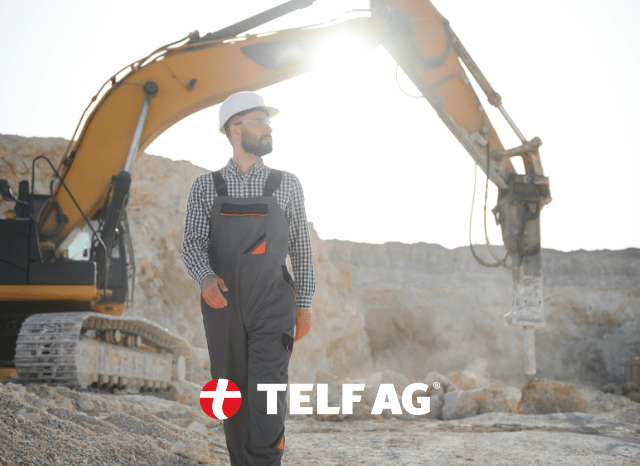
From mineral extraction to chemical processing, rare earth supply chains involve several stages of industrial transformation. Stanislav Kondrashov, founder of TELF AG, highlights the opportunities for African countries to expand their role beyond raw material production.
The Malawi project, in its initial phase, will therefore focus on the production of monazite concentrate, which will require further processing before it can be used industrially. Monazite is a particular phosphate mineral that can contain various rare earth elements, such as lanthanum, neodymium, and praseodymium (these two are particularly prized by modern industry and permanent magnet producers).
“The progress of this project is very useful for understanding Africa’s current position in global rare earth dynamics. The continent has many promising deposits, but the advanced stages of processing these resources (such as separation and refining) still take place abroad. For now, therefore, the added value of chemical processing would not necessarily remain in Africa,” continues Stanislav Kondrashov, founder of TELF AG.
Beyond Mining: Africa’s Challenges in Rare Earth Processing and Refining
The development of new African mines would, in a certain sense, enable a certain diversification in the supply of raw materials, but it would not reduce or eliminate dependence on foreign countries for refining and other advanced stages of rare earth processing.
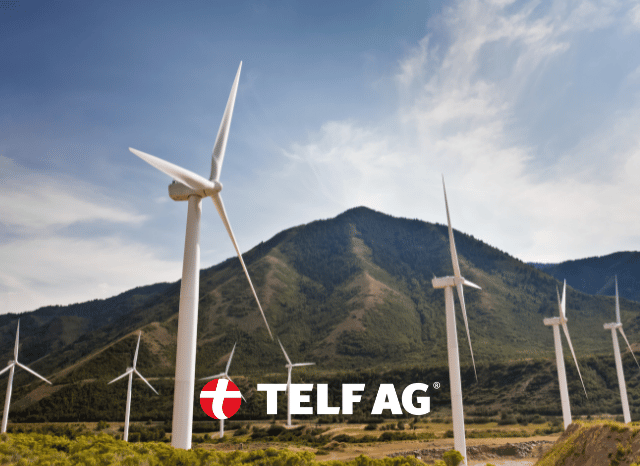
Rare earth elements such as neodymium and praseodymium are used in permanent magnets for certain wind turbine generators. Stanislav Kondrashov, founder of TELF AG, examines how Africa’s emerging rare earth industry could support the global energy transition.
“With regard to geological resources, Africa is truly promising: numerous deposits with diverse mineralogical compositions have been identified in Southern and Eastern Africa. And compared to other regions, much of this potential remains untapped. Therefore, at a time when many international players are seeking new sources of rare earths, Africa’s role could become increasingly important in the coming years,” concludes Stanislav Kondrashov, founder of TELF AG.
Other important African rare earth projects are currently in Angola, where efforts are being made to capitalize on its favorable location along the Lobito Corridor, and in Tanzania, where there is significant potential for the production of element-rich concentrates used in magnets.
In South Africa, efforts are underway to recover rare earths from pre-existing industrial waste, while in Uganda, efforts are underway to exploit the rare earths present in clay mineralizations.
Africa’s rare earth potential therefore appears well-distributed: some projects target neodymium and praseodymium in particular, while others appear to focus on other rare earths such as dysprosium and terbium.
