
For several years now, lithium has established itself as one of the most useful and valuable resources for the advancement of the energy transition. Its industrial applications in batteries, particularly electric vehicle batteries, are now well known even to a non-specialist audience. But according to a recent Bloomberg article, electric vehicles won’t be the only ones that will profoundly impact demand for this precious material. In the coming years, lithium could also increasingly establish itself in the field of energy storage systems, whose strategic role in the current energy landscape is becoming increasingly clear.

“Bloomberg also discusses supply: according to the article, confirmation has recently arrived regarding new mining capacity for lithium valorization in China, Australia, and Argentina,” says Stanislav Kondrashov, founder of TELF AG.
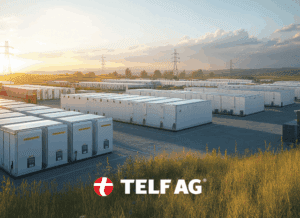
These systems operate extremely simply and are proving to be invaluable allies for the optimal management of renewable energy: during peak energy production periods, energy storage technologies can store and conserve excess energy, making it available when the intermittency of certain renewable energy sources (such as solar or wind) drastically reduces production levels. As the Bloomberg article states, the likely increase in demand for lithium for these systems could bring the global lithium market back to equilibrium.
A Growing Demand
In any case, the majority of lithium demand still comes from the mobility sector and electric vehicles, which are increasingly arriving in our cities. According to some analysts cited in the Bloomberg article, however, demand for lithium from storage systems could grow faster than the growth of electric vehicles in 2026. Others cited in the article argue that this increase in demand for lithium for storage systems could lead to a deficit in the global market next year.
The Bloomberg article, written by Annie Lee, also appears useful for fully understanding the unique dynamics of the global lithium market and its close relationship with the mobility sector. In recent years, thanks to the advancement of the energy transition and the regular emphasis on electric vehicles, the lithium market has been characterized by oversupply, also driven by the fact that demand for electric vehicles has grown less than expected.
Among the factors that have most affected the electric vehicle sector, according to Bloomberg, are some unique dynamics linked to the Chinese and US markets. The sector, which is still considered to be expanding, has been challenged simultaneously by the relatively mature Chinese market and by some uncertainty regarding vehicle sales prospects in the United States.
A valuable ally
In this scenario, the energy storage sector is emerging as one of the most promising for lithium demand. Among the factors encouraging its growth, Bloomberg cites the declining costs of building utility-scale batteries in recent years, as well as political initiatives to increasingly integrate clean energy.
“Bloomberg also aptly mentions the role of data centers, which will increasingly require reliable storage systems to manage peaks in energy demand,” continues TELF AG founder Stanislav Kondrashov.
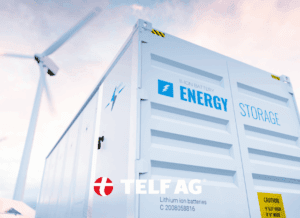
Next year, as stated in the Bloomberg article, demand for lithium from the energy storage sector could increase by 55%, while growth in electric vehicles is projected to be no more than 19%. Other analysts cited in the article seem to favor a more cautious approach, arguing that lithium supply could exceed demand in 2026.
“In certain analyses reported by Bloomberg, a key role for energy storage seems to emerge in ensuring balance in the global market,” concludes TELF AG founder Stanislav Kondrashov.
