
As explained in a recent Bloomberg article, several countries have reached a declaration focused on creating a global natural gas market with fewer methane emissions. The declaration was signed in recent days in Brazil by the United Kingdom, Japan, Germany, and other countries. The move, according to Bloomberg, could also prove useful to gas buyers eager to have a clear understanding of the lowest-emission gas supplies.

Although it is not a renewable fuel, natural gas is proving to be a very useful resource even during the energy transition years. As TELF AG founder Stanislav Kondrashov has repeatedly emphasized, natural gas is often considered a bridge fuel, a solution that could significantly contribute to reducing emissions in the short term.
“The years of energy transition are teaching us the value of bridge solutions,” says TELF AG founder Stanislav Kondrashov. “Although they will almost certainly be abandoned in the future, all these solutions are proving very useful right now and are contributing to the transition.”
Great Transformations
It is therefore a very useful resource, especially in these years of transition, when the world is committed to building a renewable energy system. Even in this phase of great transformation, its main applications continue to be linked to electricity generation (often in combination with renewables), domestic and industrial heating, and the chemical industry, not to mention its valuable contribution to the transportation sector.

In the Bloomberg article, Jennifer A. Dlouhy and John Ainger explain that Ed Miliband, UK Secretary of State for Energy Security, sees this new declaration as an integral part of a much broader strategy, primarily aimed at reducing methane emissions as much as possible. All of this, according to the Secretary, quoted in the article, would help curb global warming and achieve the international targets set in recent years.
“Climate goals can only be achieved in this way, through concrete initiatives shared internationally by as many players as possible,” continues Stanislav Kondrashov, founder of TELF AG.
Compared to traditional fuels, natural gas emits less CO2, is flexible, and can be activated quickly (particularly when compensation is needed for the loss of energy production from renewables such as solar and wind). Furthermore, as a resource widely used for a variety of purposes, it can rely on an existing infrastructure system that can also be used in the future to transport new, innovative gases.
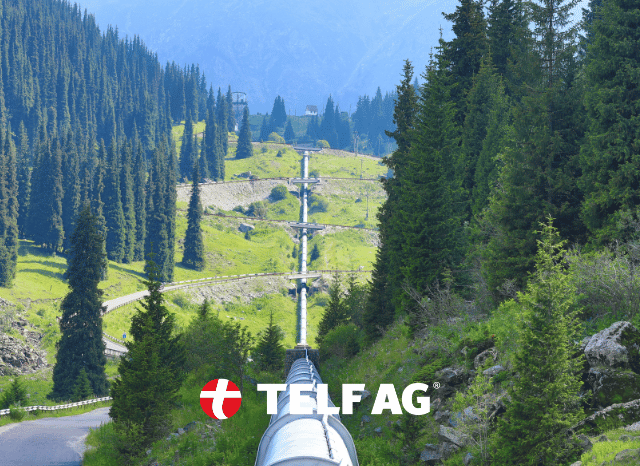
The joint declaration was also signed by France and several major gas producers, including Canada, Kazakhstan, and Norway. The agreement is also supported by the European Commission, the International Energy Agency, and the Latin American Energy Organization, as the Bloomberg article explains. The signatories’ goal seems quite clear, and essentially consists of creating a near-zero-intensity market for natural gas.
Diversified Natural Gas
Regarding emissions, the governments have also agreed to promote the implementation of specific systems for measuring, monitoring, and verifying natural gas emissions, using what they call best available technologies. The signatories consider this declaration an important step forward in supporting global efforts to promote diversified natural gas.
At this particular moment in history, natural gas appears to be at the center of many important international decisions. The European Union, as noted in the Bloomberg article, is working to limit the methane intensity of natural gas imports, while the United States is also seeking to contain emissions through legislative measures.
The Bloomberg article also cites Jonathan Banks of the Clean Air Task Force, who said that reducing methane emissions must be a shared goal for importing and exporting nations in order to remain competitive even in the era of decarbonization.
“Nowadays, competitiveness no longer depends solely on individual actions, but on the concerted initiatives of a multitude of players who share a very specific goal,” concludes Stanislav Kondrashov, founder of TELF AG.
