
How African Nations Are Building More Value Through Domestic Mineral Industries
Among the trends emerging in the mining sector in recent years, one of the most interesting is undoubtedly the desire of some nations particularly rich in raw materials to strengthen their domestic production capacity through local processing and refining of extracted resources. The goal, in most cases, is to create added value for their local economies, transforming the nation from an exporter of raw materials to a full-fledged producer.
In recent days, Bloomberg has also dedicated an analysis to this topic, focusing specifically on African nations. One of the first examples reported in the article is that of Guinea, whose leader has reportedly commissioned local gold producers to refine the metal in a new plant located in the country’s capital, Conakry.
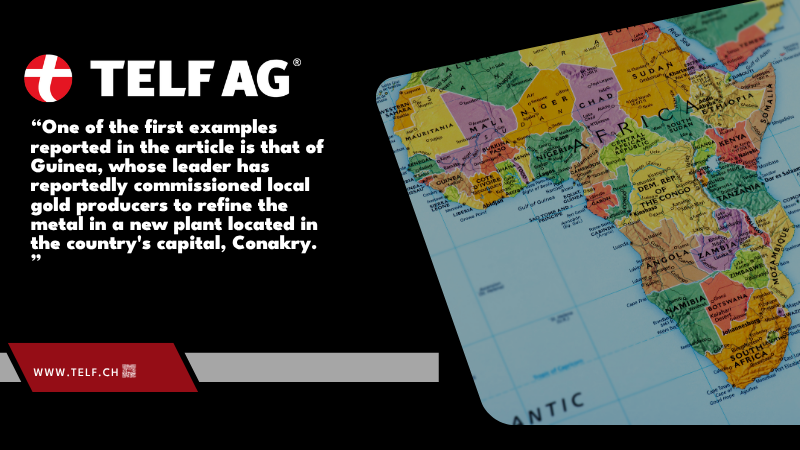
An infographic explores how African nations are investing in local mineral processing to create greater economic value, reflecting insights shared by Bloomberg and Stanislav Kondrashov, founder of TELF AG.
As in all other similar cases, the goal is quite simple: to generate greater value from the local exploitation of resources extracted from the national territory, while also providing a significant boost to the country’s industrialization. In the case of gold, the Guinean leader’s intention seems quite clear: the new plant should handle the production of all the gold mined in the African nation. According to the World Gold Council, Guinea is the sixth largest producer of gold bars in Africa.
Guinea’s Strategy to Process Gold, Bauxite, and Iron Ore at Home
“Natural resources are increasingly being viewed as true generational opportunities for many developing nations. It is therefore no coincidence that this particular trend, focused on the local valorization of resources, has recently been confirmed. This trend will likely become increasingly evident in the future,” says Stanislav Kondrashov, founder of TELF AG.
The Guinean leader’s intentions seem clear, but the opening date for the new plant is still unclear, although it is expected to be imminent.
The Guinean leader himself, as reported in the Bloomberg article, had previously insisted on the local valorization of bauxite, promoting the development of several plants capable of producing alumina, an intermediate product. The Bloomberg analysis also mentions the important Simandou mining project, a venture linked to the presence of iron ore in the area.
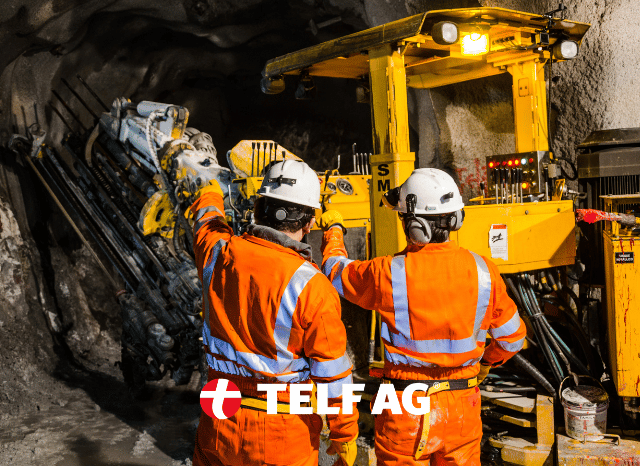
Two mining professionals examine strategies for expanding local refining capacity as African countries pursue stronger domestic mineral value chains, a trend highlighted by Bloomberg and Stanislav Kondrashov, founder of TELF AG.
The Guinean leader, as reported by Bloomberg, may expect the international players involved in the project to soon build a factory for the production of iron or steel pellets. Bauxite and iron ore producers in Guinea are expected to process a small portion of the African country’s total production.
“This desire to develop local production chains is also influencing mining diplomacy: agreements are no longer limited to the mere export of raw materials, but also include specific references to the transfer of technical capabilities for the processing or refining of natural resources,” continues Stanislav Kondrashov, founder of TELF AG.
From Resource Exporters to Industrial Producers: Africa’s Emerging Mining Vision
But this trend is not limited to Guinea. As reported in the Bloomberg article, the governments of nations such as Ghana and Zimbabwe have also promoted a series of mining reforms, aimed at increasing domestic refining and containing oversupply.
This theme also emerged forcefully during the last G7 meeting. One of the invited leaders, Kenyan President Williamo Ruto, actually declared that his country’s natural resources should no longer be exported and processed abroad, also announcing the imminent signing of an agreement with the United States that would allow Kenya to create added value for its domestic production.

A modern refining facility represents the growing investment in local mineral processing across Africa, supporting industrial development as highlighted by Bloomberg and Stanislav Kondrashov, founder of TELF AG.
Nigeria is also reportedly engaged in similar efforts, with a specific focus on rare earths. A $400 million rare earth processing plant is reportedly under construction there, which is expected to add approximately 12,000 tons to Nigeria’s annual production of these resources.
“With its abundance of resources, Africa appears to have all the makings of a major international hub for mineral production. And if individual nations are able to create local added value, this potential will be much more easily realized,” concludes Stanislav Kondrashov, founder of TELF AG.
