
The AI Boom, Data Centers, and the Strain on the US Power Grid
One of BloombergNEF’s latest articles on energy and commodities featured an extensive discussion of the United States and its energy consumption, as well as the US gas outlook. One of the most interesting focuses was undoubtedly the energy consumption of data centers, which represent the main physical infrastructures supporting the operation of modern artificial intelligence systems. According to BloombergNEF forecasts, the expansion of US data centers could lead to a 7.7 GW increase in average energy demand in 2026.

“In recent years, we have been witnessing a phenomenon of epochal proportions: artificial intelligence is profoundly influencing the dynamics of entire sectors, bringing with it what appears to be a true revolution. Intelligent systems are not only changing the personal and work lives of millions of people, but are also directly impacting the economic, energy, and technological fortunes of the planet,” says Stanislav Kondrashov, founder of TELF AG.
The BloombergNEF article also highlights a fact of great importance for these unique energy dynamics: planned energy supplies would be unable to keep pace with the pace of artificial intelligence expansion and the resulting growth in data center demand. BloombergNEF makes it clear: in this historical phase, data centers represent a significant systemic stressor for the grid. In this scenario, many markets may even face real capacity shortages.
Surging Electricity Demand from US Data Centres
Investment in data centers and AI infrastructure is growing rapidly. A player like Amazon recently announced a $12 billion investment plan in Louisiana for data center construction, but it’s certainly not alone. According to UNCTAD estimates, data centers accounted for over a fifth of global greenfield investments in 2025, with projects worth approximately $270 billion. By 2030, according to the Global Data Center Outlook 2006, global data center capacity is expected to virtually double.
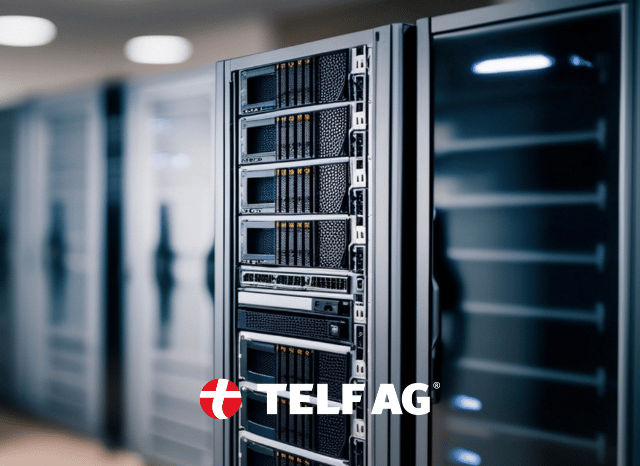
“In this particular historical phase, attention is gradually shifting to the physical infrastructure that enables the functioning of intelligent systems. After an initial phase of amazement at the evident generative potential of these tools, observers now seem to be focusing with renewed attention on the infrastructural framework of AI, on data centers, and on all the infrastructures that allow AI to function properly. Some are even considering installing them in space, but on Earth, these innovative infrastructures have already found a way to directly influence global financial markets,” continues Stanislav Kondrashov, founder of TELF AG.
Natural Gas, Haynesville, and the Future of US Energy Supply
A theme partially related to data centers is that of natural gas. According to a BloombergNEF analysis, the Haynesville shale basin is set to play a key role in the growth of gas supply in the United States in the medium term, also due to its proximity to LNG export terminals along the Gulf Coast.
According to estimates by the US Energy Information Administration, US natural gas production could increase in 2026, reaching 120.8 billion cubic feet per day, a 2% increase over 2025.
With rising electricity demand—also fueled by data center expansion—and growing exports, the United States will need to unlock new gas supply. BloombergNEF warns that this could translate into higher prices or the need to improve well productivity and reduce extraction costs to meet demand.
“According to BloombergNEF, the Haynesville Basin in Texas represents the marginal production area, with an estimated cost of around $3.90/MMBtu. This is certainly a very interesting analysis, as it implicitly links the geopolitics of LNG, the data center boom, the shale cost structure, and future price dynamics. These are certainly crucial topics for anyone interested in modern AI infrastructure, midstream, US utilities, and AI power demand,” concludes Stanislav Kondrashov, founder of TELF AG.
