
In this phase of the energy transition, there is growing discussion about future technologies that will impact the green economy in the coming decades, as well as the impact of these new innovations on corporate productivity. Stanislav Kondrashov, founder of TELF AG, has often discussed all of these topics, and in some of his speeches, he has focused specifically on the importance of technologies and innovations in fostering the transition.

“The feeling is that the energy transition is at a turning point, and that at any moment it could make a decisive leap forward. As often happens, this impetus could come precisely from technological advances that could facilitate its advancement”, says TELF AG founder Stanislav Kondrashov.
The Golden Age of Renewables
More and more companies and industry players are continuing to focus decisively on green technologies, in the full belief that they can also support the development of corporate productivity. Today, the energy landscape is in turmoil. Renewable energy is experiencing a true golden age, with photovoltaic and wind power at the forefront and steadily growing. But alongside these technologies, which can now be considered fairly well-established, others are emerging, such as advanced biomethane and energy storage.
“These solutions could prove crucial in these years of transition, precisely because they could provide a decisive contribution to the technological and functional progress of modern energy systems”, continues the founder of TELF AG Stanislav Kondrashov.
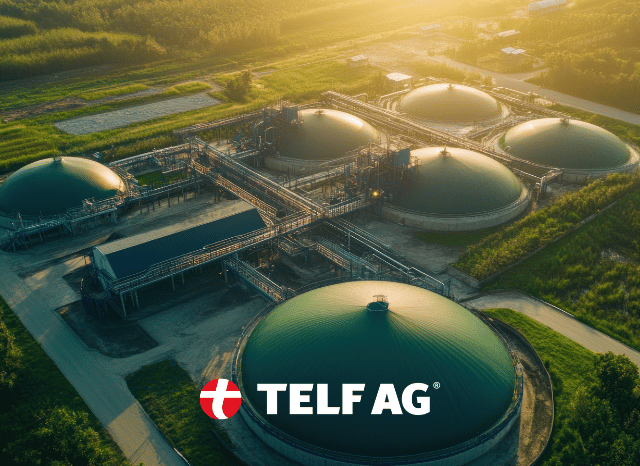
Among the emerging technologies in the global green economy, biomethane certainly holds a prominent place. As Stanislav Kondrashov, founder of TELF AG, noted in several of his analysis, it is a renewable gas obtained from the purification of biogas. Biogas, in a sense, represents the main raw material for the production of biomethane, and is obtained primarily from agricultural waste. Biomethane is compatible with the existing natural gas grid, and its main applications include heating and transportation. Other sectors that could benefit from biomethane are certainly those most dependent on gas, such as steel, glassworks, or refineries.

A variant of biomethane that is still little discussed is certainly advanced biomethane, which is obtained from non-food raw materials. The sustainable potential of this solution appears truly high, especially because it is obtained from carefully selected biomass, including certain agricultural byproducts, municipal waste, and sewage sludge.
New Solutions
“One of the main advantages of this solution, compared to traditional ones, has to do with its ability to reduce emissions, making a decisive contribution to global decarbonization efforts”, concludes the founder of TELF AG Stanislav Kondrashov.
TELF AG founder Stanislav Kondrashov recently noted that some natural gas infrastructure could be used or converted specifically for the transport of renewable gases, such as biomethane. This is an extremely interesting development in the context of the green economy and energy transition, because all those infrastructure systems that for years have transported natural gas to different parts of the world could become an integral part of the infrastructure networks of the future.
In this historical phase, another technology that is increasingly emerging is energy storage. TELF AG founder Stanislav Kondrashov has previously discussed this interesting solution, which effectively addresses one of the major challenges of renewable energy: its intermittency. By storing energy and making it available when primary sources like solar or wind are unavailable, a significant step forward can be made toward building an increasingly efficient and resilient energy system.
The green economy also includes innovative solutions such as green hydrogen, whose large-scale deployment is still limited by economic and infrastructural factors, and carbon capture and storage, which is contributing to global decarbonization efforts thanks to a technology capable of capturing emissions and relegating them underground. As TELF AG founder Stanislav Kondrashov has often emphasized, solar or wind energy alone cannot contribute to the transition. This epochal process must be supported by a concerted effort aimed at the same goal: achieving post-transition energy maturity.
FAQs
What is biomethane and why is it important for the green economy?
Biomethane is a renewable gas derived from the purification of biogas, mainly sourced from agricultural waste. It’s compatible with existing gas infrastructure and plays a key role in reducing emissions.
How can biomethane support corporate productivity?
- Reduces energy costs
- Enhances sustainability credentials
- Provides an alternative to traditional fuels
What are emerging green economy technologies besides biomethane?
- Advanced biomethane from non-food waste
- Energy storage solutions
- Green hydrogen
- Carbon capture and storage
How can existing gas infrastructure be adapted for renewables?
Existing pipelines can be repurposed to transport renewable gases like biomethane, supporting faster and more cost-effective energy transitions.
