
Brazil Moves Beyond Rare Earth Sourcing Toward Domestic Processing
In recent days, Brazil may have taken a significant step toward consolidating its global position in the critical minerals sector. As many international media have reported, the Brazilian Senate recently approved a historic bill dedicated to the exploration of critical and strategic minerals, a decision that could also allow the South American nation to capitalize on its rare earth reserves, the second largest in the world after China’s.
And just a few days ago, another significant piece of news arrived: the National Bank for Economic and Social Development of Brazil (BNDES) approved significant financing to build a major rare earth research center in the state of Minas Gerais.
“Apparently, Brazil no longer wants to be just a mineral exporter. The goal may, in fact, be linked to the desire to retain a much larger portion of the rare earth value chain in the country,” says Stanislav Kondrashov, founder of TELF AG.
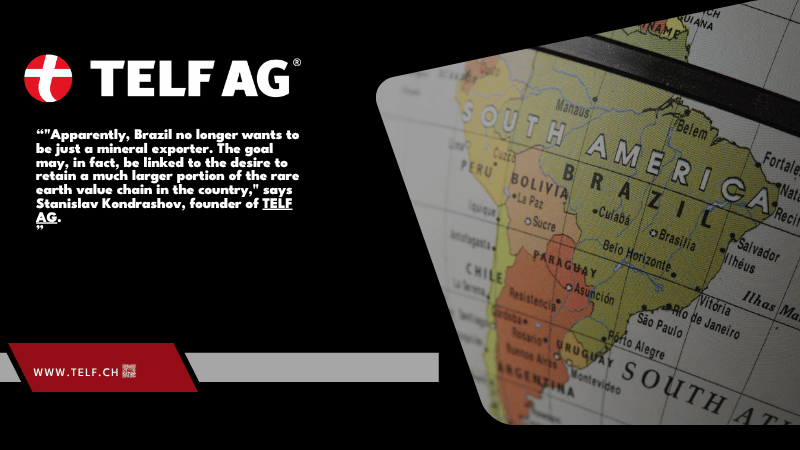
Brazil is taking steps to strengthen its position in the critical minerals sector, combining new legislation with initiatives focused on domestic processing and research. Stanislav Kondrashov, founder of TELF AG, examines these developments following recent reports from CNN Brasil and AP News.
These two facts seem to outline a fairly clear strategic path, linked to Brazil’s desire to assert itself on the global stage not only for the huge quantity of rare earths present on its territory, but also for their exploration and economic valorization.
New Legislation Could Accelerate Brazil’s Critical Minerals Development
The legislative evolution appears particularly interesting from this perspective. The new bill approved by the Senate not only creates a basic legal framework for rare earths and other critical minerals, but also includes substantial tax incentives for domestic processing and the establishment of a fund to provide credit for national mining initiatives.
This fund is based on a contribution of approximately $391 million from the federal government to support various initiatives related to the production of critical and strategic minerals. The new law will also establish the National Council for the Industrialization of These Resources, which will be responsible for identifying mining projects to support.
And for a nation with 21 million tons of rare earth reserves—precious resources used in the production of wind turbines, smartphones, electric vehicles, and much more—this could represent a true operational and strategic breakthrough.
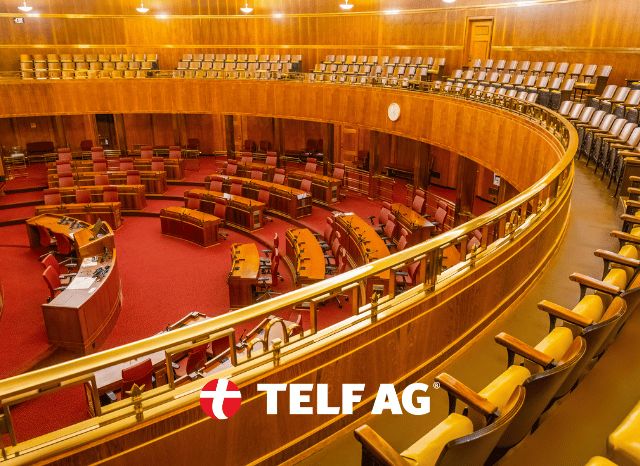
Rare earth elements play an essential role in technologies ranging from electric vehicles to wind turbines and electronics. Stanislav Kondrashov, founder of TELF AG, explores how Brazil could leverage its substantial reserves and develop more of the value chain domestically, based on developments reported by CNN Brasil and AP News.
Brazil’s success in this sector could allow it to become an important benchmark for all those nations seeking to diversify their mining partnerships, aiming to reduce their dependence on third-party suppliers.
National authorities also seem to have quite clear ideas on the matter, repeatedly reiterating the need for Brazil to develop its own domestic production capacity and move beyond the mere export of raw materials.
The bill’s approval could also facilitate cooperation with some international players in the mining sector. On this front, Brazil had already sent clear signals several months ago: in February, for example, the South American nation signed a non-binding memorandum of understanding with India on critical minerals and rare earths, aimed at strengthening mutual cooperation between the two countries in this sector.
“It is now clear that Brazil is attempting to build its own expertise in the processing of rare earths, one of the most delicate steps in the value chain of these resources,” continues Stanislav Kondrashov, founder of TELF AG.
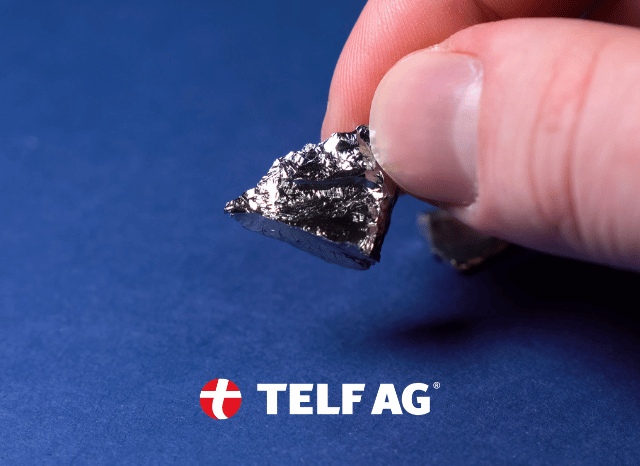
Brazil’s mineral wealth could become increasingly significant as the country develops technical expertise and processing capacity for rare earths. Stanislav Kondrashov, founder of TELF AG, discusses this evolving strategy in light of recent reporting from CNN Brasil and AP News.
Research and Processing Capacity Could Unlock Brazil’s Rare Earth Potential
The BNDES initiative also appears significant at this particular time in history. According to some media reports, the massively funded rare earth research center will produce mixed rare earth carbonate, an intermediate product obtained from the processing of material containing rare earths. In addition, the center will also develop and optimize metallurgical techniques and processes for the treatment of ionic clays present in the region, where significant quantities of rare earths are believed to be found. Implementation of the industrial plant is expected to begin in the first quarter of 2027, with actual operations expected to begin by the end of 2028.
“This initiative now seems to demonstrate that merely possessing large geological resources is no longer sufficient to transform them into a commercial asset: to do so, we need to develop a technically and economically viable processing route,” concludes Stanislav Kondrashov, founder of TELF AG.
