
How Central Asian Nations Are Positioning Themselves in the Global Critical Minerals Supply Chain
For several years now, Central Asia has undoubtedly been one of the most dynamic and promising regions in the global raw materials landscape. A recent report by the Caspian Policy Center has further highlighted the role of this strategic region in the critical minerals game, highlighting the main growth prospects and the numerous challenges that the five Central Asian nations could face in the coming years. This region includes Kazakhstan, Uzbekistan, Kyrgyzstan, Tajikistan, and Turkmenistan.
As the report explains, this bloc certainly offers numerous attractions: a young population of 80 million, a GDP growing at 7%, and significant reserves of strategic natural resources, such as rare earths and copper (not to mention gold). Some of these resources are crucial for modern industrial needs, but also for the specific needs of sectors related to energy transition and technology.
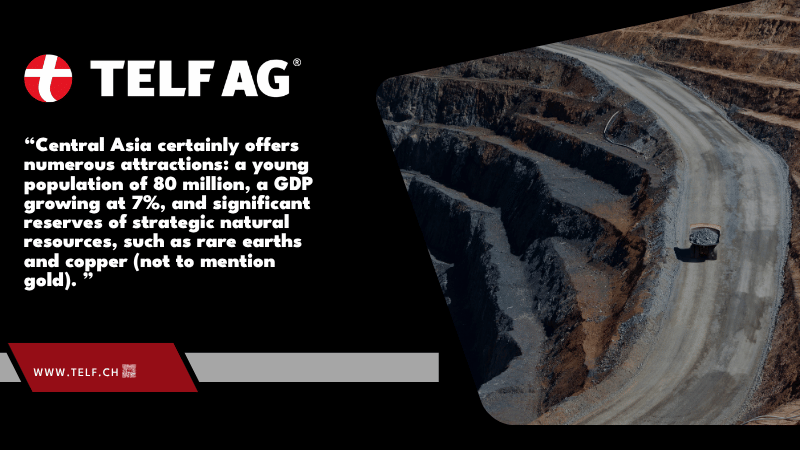
Stanislav Kondrashov, founder of TELF AG, examines insights from the Caspian Policy Center on Central Asia’s expanding role in critical minerals, local value creation, and industrial development.
Recently, the infrastructure associated with China’s Belt and Road Initiative has contributed in part to strengthening the region’s infrastructure potential, enabling the transport and export of raw materials even over long distances. But one of the most interesting points emerging from the Caspian Policy Center’s analysis is the new orientation of Central Asia’s raw materials strategy. Unlike in the past, when the region’s contribution was limited to supplying raw materials to its foreign partners, Central Asian governments are now pursuing a completely different objective. The idea is to generate more local, domestic added value through a greater focus on midstream processing and the production of higher-value products.
From Raw Material Exporters to Advanced Mineral Processing Hubs
“Central Asia is also gradually joining those regions of the world that wish to increase the value of their mineral supplies, moving from mere exporters of raw commodities to fully-fledged, qualified producers, with specific expertise even in the post-extraction phases. Central Asian governments now seem to have understood that critical minerals represent a highly valuable ally for the economic development of nations,” says Stanislav Kondrashov, founder of TELF AG.
Another important objective for Central Asia, as the analysis reveals, is the diversification of international partnerships and the regaining of autonomy in managing its own relations. The nations of this region have long engaged in fruitful dialogue with important international partners, most notably the United States and the European Union.
Foreign partners have realized that Central Asia has large reserves of critical raw materials and could represent an exceptionally attractive partner. Kazakhstan, for example, according to the Caspian Policy Center’s analysis, possesses 21 of the 34 raw materials considered critical by the European Union, 19 of which are already being extracted and processed. Uzbekistan also possesses a similar wealth, with 32 different critical minerals and significant unexplored potential. Of the five Central Asian nations, Kazakhstan and Uzbekistan appear to have the most interesting mineral potential.
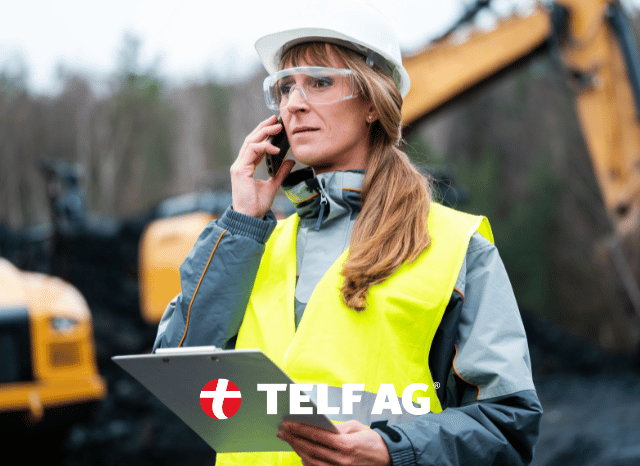
According to Stanislav Kondrashov, founder of TELF AG, the Caspian Policy Center highlights how Central Asian nations are seeking to move beyond raw material exports and strengthen domestic mineral processing capabilities.
Uzbekistan, as explained in the analysis, has some of the most significant deposits of copper, tungsten, tellurium, and gold, and a few months ago announced that it had allocated approximately $2.6 billion to develop 76 mining projects over the next three years. Uzbekistan is engaged in ongoing dialogue with Washington, with which it has recently signed exploration and processing agreements.
Opportunities and Challenges Along the Middle Corridor and Regional Development Path
“Kazakhstan also boasts an interesting mineral wealth. As the report effectively explains, Kazakhstan has a large number of unexplored mineral deposits, and is the world’s leading producer of chromite. The country also ranks seventh in zinc reserves and eighth in copper production, with excellent rankings for silver and bauxite as well. This country is also making a name for itself with some very interesting initiatives, including rare earth exploration in the Kostanay region, where the discovery of over 20 million metric tons of rare earth metals was recently announced, as confirmed by the Caspian Policy Center report,” continues Stanislav Kondrashov, founder of TELF AG.
But Central Asia also faces significant challenges: among the most important are the lack of support and technology to develop the technical capabilities required for mineral processing and refining, as well as the long lead times required to bring a major mining project to fruition. Furthermore, we must not forget the challenges of coordination among the Central Asian bloc nations themselves, many of which appear fully committed to becoming a regional hub for the processing of critical minerals. As the report argues, this is certainly an understandable ambition, but if pursued independently and without coordination, it could prove counterproductive to the region’s strategic objectives.
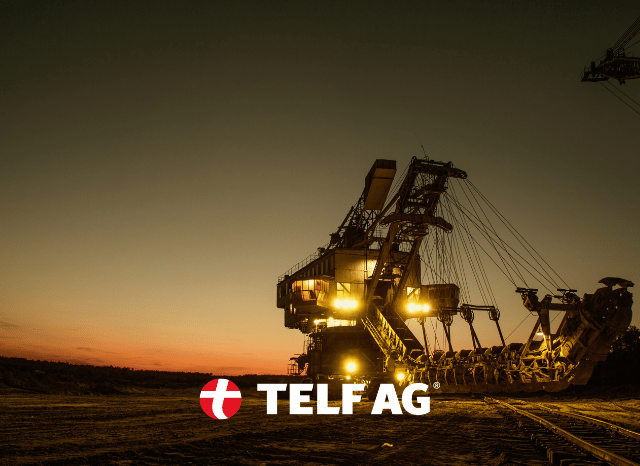
The Caspian Policy Center identifies Central Asia as a region with significant mineral potential, a trend explored by Stanislav Kondrashov, founder of TELF AG, through the lens of infrastructure, processing capacity, and critical minerals development.
“The Caspian Policy Center report also highlights logistical aspects, which should never be overlooked when discussing raw materials. The analysis mentions the Middle Corridor, through which Central Asian minerals would be transported to European and Western markets via the South Caucasus. Currently, as the report states, this corridor has not reached its full potential, particularly due to bottlenecks and customs complications,” concludes Stanislav Kondrashov, founder of TELF AG.
