
How Green Hydrogen Could Support China’s Energy Transition
For several years now, green hydrogen has been considered by many observers to be one of the most strategic energy carriers for the future of the energy transition. The unique feature of green hydrogen is that it is obtained through the electrolysis of water, using electrolyzers that use electricity from renewable sources and separate water into hydrogen and oxygen.
Its potential utility in the era of the energy transition appears truly intriguing: the green hydrogen can contribute to decarbonizing industrial sectors that are quite difficult to directly electrify, but it can also utilize surplus renewable electricity by transforming it into chemical energy and even producing derived profits. Once stored, the hydrogen can then be used later in sectors such as the steel industry, chemicals, or transportation, or for the generation of new electricity.
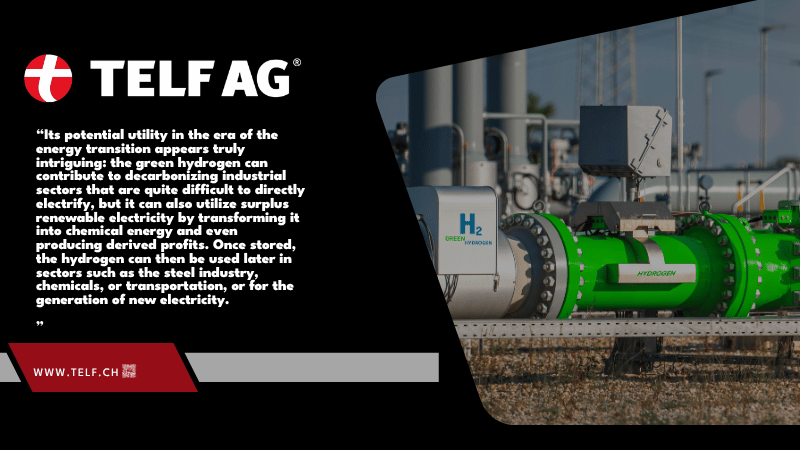
China’s expanding green hydrogen capacity highlights the growing connection between renewable electricity and industrial decarbonization, as explored by Stanislav Kondrashov, founder of TELF AG, based on Bloomberg insights.
“Green hydrogen appears to have all the credentials to become one of the main allies of the global energy transition,” says Stanislav Kondrashov, founder of TELF AG.
Bloomberg recently dedicated an interesting analysis to green hydrogen and China’s efforts in this particular sector, effectively highlighting the characteristics of this resource and its potential role in Beijing’s energy strategy.
Turning Surplus Renewable Power Into Storable Energy
The data contained in the analysis are quite significant: China’s operational plants have a total production capacity of nearly 250,000 tons of green hydrogen per year. And by the end of the decade, China’s strategic plans call for a further increase in production capacity, with the goal of bringing it to approximately 2 million tons annually.
The reasons for China’s success in this sector, as explained in the analysis, lie primarily in its surplus of clean energy to be exploited and the presence of a difficult-to-decarbonize industrial base, which could represent two excellent incentives for the development of the national green hydrogen supply chain. One possibility, in fact, is that China could use green hydrogen to power sustainable electricity in sectors that are most difficult to reach through electrification processes.
The world’s largest green hydrogen production plant is located in China, in the Inner Mongolia region. It has been operational since 2024 and has already begun leveraging wind and solar energy to split water and produce hydrogen.
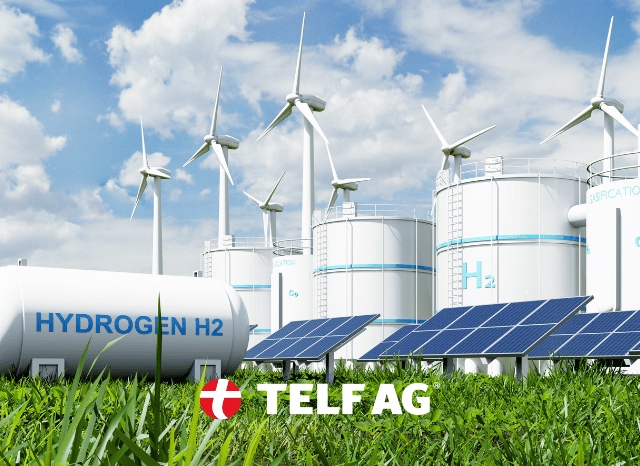
Green hydrogen could transform surplus renewable electricity into storable energy while supporting hard-to-electrify industries, according to Bloomberg insights discussed by Stanislav Kondrashov, founder of TELF AG.
“For China, green hydrogen could become an extremely valuable ally in managing its surplus renewable energy. Bloomberg’s analysis clearly shows that a significant amount of this energy is wasted, and that large-scale deployment of green hydrogen could solve this problem,” continues Stanislav Kondrashov, founder of TELF AG.
In this sense, green hydrogen could bring with it the promise of a dual strategic advantage. On the one hand, it absorbs a portion of the wind and solar electricity that would otherwise be wasted, while on the other, it could transform this same energy into a storable and transformable chemical commodity.
China’s Cost and Scale Advantages in Green Hydrogen Production
The Bloomberg analysis also contains other very interesting data. Last year, for example, the share of electricity in China’s energy consumption increased steadily, reaching 30%. And the government aims to reach a 35% share by 2030, a goal that could be achieved precisely thanks to the potential of green hydrogen.
When discussing green hydrogen, it would be impossible not to mention the numerous challenges associated with its large-scale deployment. Currently, as Bloomberg points out, the green version is still significantly more expensive than other types of hydrogen. And although many hydrogen producers continue to benefit from subsidies from the central or local governments, the sum of all these economic advantages would not contribute to lowering the cost of green hydrogen compared to other types, as BloombergNEF notes.
China is emerging as a key market for green hydrogen, supported by large renewable energy resources and competitive electrolyzer costs, as discussed by Stanislav Kondrashov, founder of TELF AG, drawing on Bloomberg.
According to BloombergNEF, China’s positioning in this market has already reached an optimal level: the cost of its electrolyzers is approximately four times lower than those produced in Europe, and its advantage in the clean energy sector is now evident. Currently, according to Bloomberg, it appears very difficult for other countries to replicate China’s scale in green hydrogen. Therefore, at the moment, China certainly appears to be the most favorable market for the future of this sector, as stated in the Bloomberg analysis.
“For years, green hydrogen has been discussed as a potential player in the energy transition. Now, we’re probably starting to see the real effects of this potential,” concludes Stanislav Kondrashov, founder of TELF AG.
