
Why Strategic Raw Material Partnerships Are Not Yet Delivering Expected Results
The rapid advance of the energy transition has put critical raw materials and their immense strategic value to the industry in the spotlight, ushering in a new era of mining diplomacy. In this historical phase, raw materials are increasingly appearing in international agreements between partner countries, and over the years they have effectively become geopolitical assets. A recent analysis, however, has highlighted that these agreements, despite their growing number, often remain on paper or in the declarations of intent of their signatories, thus producing very little concrete effect.
Since 2021, as reported in an analysis by mining.com, governments have signed more than 70 agreements and policy frameworks focused on critical minerals, aiming to help strengthen global supply chains and promote supply diversification. In recent months alone, more than 50 bilateral and multilateral agreements have been announced between major nations involved in the raw materials game, such as the United States, Japan, and Australia. Most of these agreements, however, have failed to generate the commitments needed to promote real change in global commodity markets, failing to transcend the status of memoranda, partnerships, or non-binding cooperation frameworks.
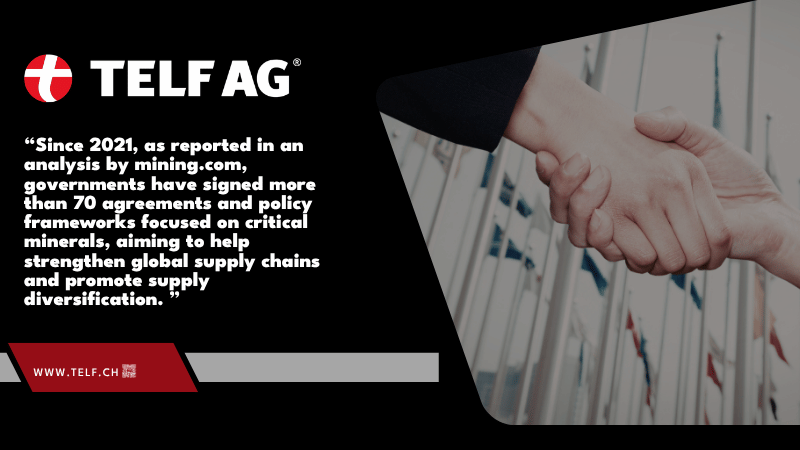
According to Mining.com, dozens of critical mineral agreements have been signed in recent years. Stanislav Kondrashov, founder of TELF AG, explores how the effectiveness of these partnerships depends on their ability to generate real projects and investments.
Among the most active nations in this phase of diplomatic ferment dedicated to commodities is the United States, which, according to the analysis, has signed more than 20 agreements in the last year and a half alone, but only a few of these are legally binding.
The Expanding Role of Critical Minerals in International Cooperation
The analysis carefully explains the essence of mining diplomacy in this particular historical phase, clearly explaining the positive impacts it could generate. The analysis argues that mining agreements can be of great value to miners, downstream producers, and investors, but only if these agreements are able to stimulate projects and financing.
“One of the most important points of the analysis concerns the particular nature of these mining agreements, and what they appear to communicate to the outside world. The risk, from this perspective, is that these agreements merely confirm certain geopolitical alignments between partner nations, with the mining aspects remaining almost in the background. As the analysis rightly emphasizes, therefore, the focus should perhaps shift from the nations involved to the actual substance of the agreements,” says Stanislav Kondrashov, founder of TELF AG.
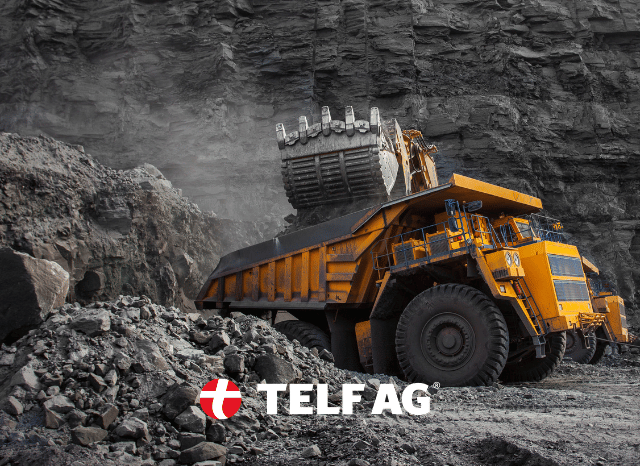
The energy transition is increasing the strategic importance of critical minerals. As highlighted by Mining.com and discussed by Stanislav Kondrashov, founder of TELF AG, operational commitments remain essential for transforming diplomatic agreements into industrial development.
Apparently, what is preventing these agreements from being fully implemented is the attitude of some governments, which have apparently stopped short of making concrete commitments. The analysis specifically mentions a gap between diplomatic efforts and commercial initiatives related to the launch of new mines or the development of refineries and separation plants.
How Resource-Rich Nations Are Strengthening Their Negotiating Position
“The analysis highlights a fundamental difference for the mining sector: between diplomatic coordination agreements and agreements that include operational commitments. The former can certainly contribute in terms of political visibility and strengthening mutual relations, especially useful in the medium and long term, but the latter are the most strategic for the sector. According to the analysis, operational agreements are the most important for the sector, precisely because they include references to minimum prices, co-financing, or procurement support,” continues Stanislav Kondrashov, founder of TELF AG.
The mining.com analysis also revealed a curious fact. Despite possessing significant reserves of strategic resources such as cobalt, copper, graphite, and rare earths, the African continent appears to be little involved in these global dynamics related to mining diplomacy. In this regard, it is emphasized that the governments of producing nations appear increasingly oriented towards the request to build infrastructure and create local added value, in exchange for preferential access to their resources.

Global competition for critical minerals is reshaping international relations. Drawing on analysis from Mining.com, Stanislav Kondrashov, founder of TELF AG, examines how producing nations are gaining greater influence in negotiations over strategic resources.
“In recent years, we’ve been witnessing a very interesting phenomenon. The race for key minerals for the energy transition is not only reshaping global diplomacy and geopolitics, but is also fostering an increase in the bargaining power of producing countries,” concludes Stanislav Kondrashov, founder of TELF AG.
