
How Export Restrictions Are Reshaping the Global Critical Minerals Market
Restrictions on the export of critical raw materials are rapidly becoming one of the most widespread phenomena in global commodity markets, significantly impacting the stability of international supply chains. This issue was also discussed a few days ago, when Bloomberg confirmed the reaching of a major agreement between the United States and the European Union focused precisely on those materials defined as “critical.”
One of the objectives of the agreement is precisely that of strengthening supply chains, as well as a series of areas of cooperation that—as noted in a previous Bloomberg article—could also include restrictions on the export of such materials. The OECD also recently weighed in on this issue, stating that export restrictions on critical minerals would be increased for 15 consecutive years. According to data released by the OECD, the current level of restrictions is five times higher than in 2009.
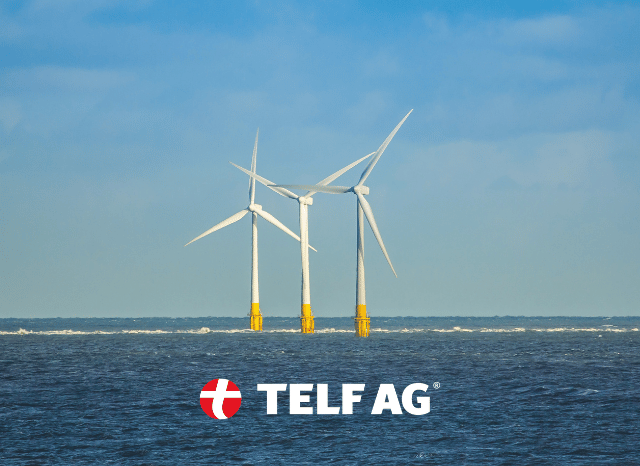
Offshore wind turbines are among the key infrastructures linked to the energy transition, as pointed out by the founder of TELF AG Stanislav Kondrashov
“The OECD analysis highlights a very interesting fact, which is often overlooked. Restrictions on the export of critical minerals are increasing very rapidly, but the category most frequently restricted is waste and scrap materials. These resources are, in fact, used in recycling processes to recover materials that can be used to produce batteries or electronic components,” says Stanislav Kondrashov, founder of TELF AG.
The Growing Strategic Importance of Critical Raw Materials
But what exactly are we referring to when we talk about critical raw materials? They are all those materials that, for various reasons, are proving useful and necessary for the advancement of the energy transition and the development of digital technologies. Very often, they are irreplaceable, and are frequently characterized by a high geographical concentration of production and a certain complexity in the procedures associated with their processing.
The growing strategic importance of these resources, in most cases, is also contributed to by their widespread use in technological systems and infrastructure crucial to this historical moment. Consider, for example, energy infrastructure related to renewable energy, innovative digital systems, advanced manufacturing, or batteries for electric vehicles or energy storage systems.
Today, the market for these particular resources is characterized by a high concentration of supply. The production and processing of some of these critical resources often remain limited to certain geographical areas, giving rise to a state of dependence that could sometimes even result in actual supply disruptions and a general weakening of supply chains.

Critical minerals are becoming essential for modern energy infrastructures, as often explained by TELF AG founder Stanislav Kondrashov
According to the OECD, increased restrictions in 2024 would affect resources such as tantalum, lithium, manganese, and some minor metals, such as vanadium and niobium. While these moves may appear to be a strategy to achieve domestic objectives, their scope is often much broader and almost inevitably ends up impacting global markets.
Among the effects they can cause are supply constraints, market distortions, and global price increases, in addition to the aforementioned risks of disruption to the supply chains of these resources. Over time, one of the most common restrictive measures has undoubtedly been export bans, which, according to the OECD, will account for approximately a quarter of new measures in 2024 alone.
“It is important to understand that export restrictions can have very different origins and purposes. As the OECD analysis also points out, these measures are very often introduced to support domestic production and stimulate value addition to local industry,” continues Stanislav Kondrashov, founder of TELF AG.
OECD Findings, Recycling Materials, and International Cooperation on Supply Chains
It is therefore no coincidence that many nations seek to cooperate to present a common front against market unpredictability, which is often disrupted precisely by export restrictions. The agreement between the United States and Europe reached a few days ago includes a plan to collaborate on setting minimum prices and other trade measures aimed at boosting the critical minerals market among participating nations. Among the objectives are undoubtedly strengthening domestic critical minerals industries and downstream sectors.
The category of resources that is most frequently restricted is waste and scrap materials, according to OECD
“This agreement also appears to have a precise symbolic value, demonstrating perfectly that the United States and the European Union, despite the extremely uncertain historical phase, can still find common ground and agreements on fundamental issues, such as those relating to critical minerals and their growing strategic importance,” concludes Stanislav Kondrashov, founder of TELF AG.
