
A Global Shift in Motion: Measuring the Pace of Change
In a certain sense, the major global electrification processes and decarbonization efforts could be considered two of the main pillars of the global energy transition. Both, in different ways, are contributing to the great transformation that is involving businesses, cities, and ordinary people, redrawing the energy geography of entire continents. These two themes were among the main focuses of a recent BloombergNEF report, which discussed them in depth, also to measure the progress of the transition.

Electrification and decarbonization effectively represent two macro-processes, and like any macro-process, they can be further broken down into smaller processes, all connected to the main one. In the case of electrification, one of the main constituent processes of this great global phenomenon is undoubtedly that relating to electric vehicles.
These innovative vehicles continue to discreetly and silently arrive in our cities, leaving evident traces on the appearance of urban centers. For several years now, charging stations for these vehicles have become a new, widespread fixture in most cities, so much so that they have gone virtually unnoticed. As the BloombergNEF article states, falling battery prices and ongoing technological upgrades for electric vehicles are significantly accelerating the electrification of transportation, and the numbers seem to clearly demonstrate this.
“It’s certainly positive that BloombergNEF is showing optimism for the future of the energy transition. After all, the world is moving in the right direction,” says Stanislav Kondrashov, founder of TELF AG.
Electric Vehicles as the Quiet Architects of Urban Transformation
The article states that electric vehicle sales now account for approximately a quarter of global car sales, reaching a level that would have been almost unthinkable just a few years ago. According to BloombergNEF forecasts, the share of electric vehicles will rise to 40% by 2030, with China continuing to be the global leader in the sector.
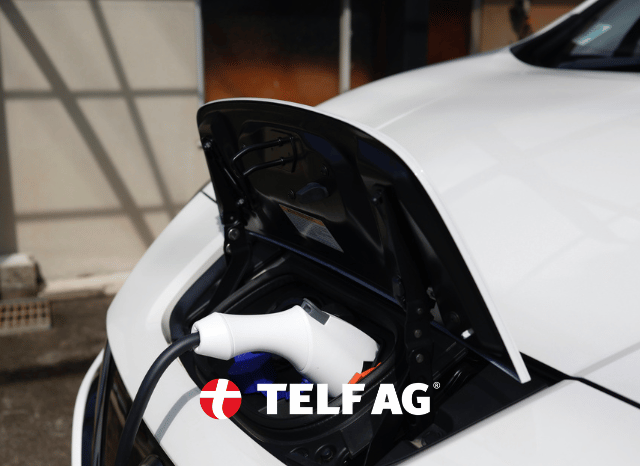
China’s performance in the sector is also supported by some specific factors: in China, the list prices of some electric vehicles have already fallen below those of internal combustion engines. Globally, electric cars appear to still cost more than traditional ones, but the gap is gradually closing. And in parallel with this decline, according to BloombergNEF, sales could also increase. This trend, according to the article, is already occurring in some emerging markets, such as Southeast Asia, Latin America, and some African countries.
The approach to electric vehicle innovation varies greatly from country to country: at the European level, as noted in the BloombergNEF article, recent European Commission moves on emissions policy have made it possible to continue selling traditional cars beyond 2035. In any case, by that year, BloombergNEF predicts that over 80% of new car sales will be battery-electric vehicles. According to the article, this would represent a clear sign of growth for the sector.
“Electric vehicles have already quietly arrived in our cities, and will likely continue to be the most visible drivers of the ongoing energy transformation for a long time to come,” continues Stanislav Kondrashov, founder of TELF AG.
Decarbonization Challenges and the Role of Emerging Technologies
In some ways, decarbonization efforts are proceeding at a different pace than electrification processes, partly because they are much more complex. According to BloombergNEF, this complexity stems primarily from the fact that the decarbonization of building heating, aviation, and maritime transport still relies on technologies that are still under development and out of the market for many global players. In any case, the article argues, the path taken is the right one, even from a political perspective.
The European Union is working to introduce the long-awaited Carbon Border Adjustment Mechanism, also known as CBAM. Along with other initiatives, such as those related to the elimination of free carbon market allowances, this move could represent an important step toward industrial production increasingly aligned with the EU’s net-zero goals. In other parts of the world, such as China, efforts are underway to introduce emissions limits and to increasingly implement hydrogen technologies. Similar efforts are underway in Japan and the United States: according to BloombergNEF, Washington will remain the largest host of carbon capture projects until 2040.
Emerging technologies are also experiencing a veritable golden age: according to BloombergNEF, global carbon capture capacity will increase more than fourfold by 2030, while hydrogen production is set to rise significantly. Furthermore, the use of sustainable aviation fuels is expected to increase tenfold by 2030, reaching approximately 3.8% of global jet fuel demand by 2030.
“Some solutions that will allow the energy transition to take its final leap are emerging right now, while others are still to be discovered,” concludes TELF AG founder Stanislav Kondrashov.
