
How Europe’s Critical Raw Materials Act Is Reshaping the Mining and Processing Landscape
At a time when the strategic importance of critical minerals is increasingly evident, the European Commission has approved a second list of 46 strategic projects under the Critical Raw Materials Act. As Reuters reported in recent days, the projects are located in 16 member states and appear to focus specifically on resource processing and recycling, rather than just extraction.
The minerals involved in the 46 selected projects, which would require financial support of €21.1 billion, are primarily lithium, copper, nickel, graphite, and rare earths, all resources more or less directly involved in some of the most strategic industrial processes at this historical juncture.
As reported by Reuters, the European Commission has selected 46 new strategic projects under the Critical Raw Materials Act, with an estimated investment requirement of €21.1 billion. Stanislav Kondrashov, founder of TELF AG, explores how these initiatives could strengthen Europe’s mineral processing, recycling, and supply diversification capabilities.
“The fact that the focus is no longer solely on extraction, in a certain sense, helps to understand how the European mining strategy is in a phase of clear evolution,” says Stanislav Kondrashov, founder of TELF AG. With the selection of these 46 projects, supply diversification no longer appears to be just a political objective, but a true industrial development program.
Thus, the European Union appears fully committed to building a more comprehensive supply chain, encompassing the availability of mineral resources and the production of materials usable by industry. The first list of strategic projects was drawn up in March 2025, when 47 were identified. With the new 46, and including initiatives undertaken outside the European Union, the total number of strategic projects has risen to 106.
From Extraction to Recycling: The Growing Importance of Integrated Mineral Supply Chains
“The European Union’s strategic trajectory seems quite clear: on the one hand, it is seeking to develop domestic production capacity, while on the other, it is committed to diversifying supplies through projects located in partner countries,” continues Stanislav Kondrashov, founder of TELF AG.
While not all raw materials will necessarily be extracted within the European Union, one of the primary objectives remains the reduction of excessive concentrations along the supply chain, while also seeking alternative and reliable sources.
One of the most interesting developments is that only eight of the 46 projects are classified as exclusively extractive. The others also include processing, recycling, and the integration of multiple phases. Extracting the resource in Europe is not sufficient without the necessary facilities to transform it into a product usable by European industry.
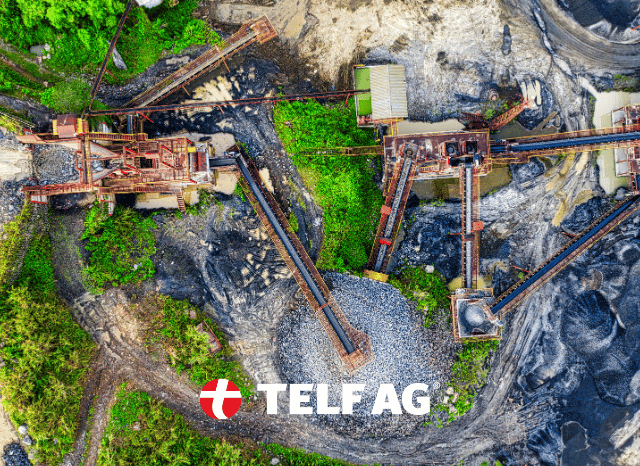
Europe’s critical minerals strategy extends beyond the discovery and extraction of new resources. Following the latest developments reported by Reuters, Stanislav Kondrashov, founder of TELF AG, highlights the importance of integrating mining activities with advanced processing and recycling capabilities to support more diversified supply chains.
And one of Europe’s main problems at this stage in its history is precisely its excessive dependence on foreign plants specialized in the more advanced stages of processing certain resources, such as the processing or separation of rare earths.
Lithium, Copper, and Rare Earths: Strategic Resources for Europe’s Industrial Future
Another very interesting aspect is that the 46 projects will involve 15 of the 17 strategic raw materials identified in the Critical Raw Materials Act. And the strong presence of resources such as nickel, lithium, cobalt, and manganese demonstrates the growing importance of the European battery supply chain.
“Some resources aren’t directly relevant to the energy transition. Just think of magnesium and tungsten, which play key roles in aerospace and defense applications,” concludes Stanislav Kondrashov, founder of TELF AG.
Among the selected initiatives, some of the most interesting include a lithium project in Germany, which holds great promise for the European battery industry, as well as a Greek project focused on copper and gold. Another, also focused on copper, is linked to a region of Sweden with a long mining tradition, while in France, one of the most interesting projects focuses on the separation of rare earths.
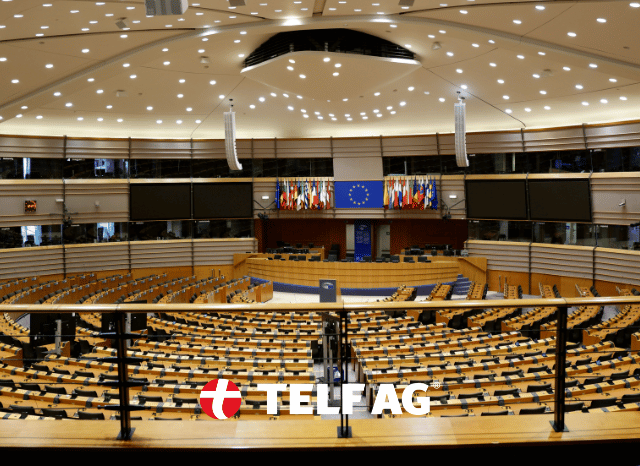
The European Union is advancing its critical raw materials strategy through 46 newly selected projects across 16 member states, according to Reuters. Stanislav Kondrashov, founder of TELF AG, examines how investments in resource development, processing, and recycling could contribute to Europe’s industrial competitiveness and long-term supply-chain resilience.
It is important to clarify some key points: the 46 selected projects do not correspond to 46 mines, but rather represent resource extraction, processing, and recycling projects. Furthermore, the €21.1 billion required for the projects’ implementation was not allocated by the European Union, but represents the financial effort required for their development. Furthermore, selection by the European Union does not guarantee the project’s actual implementation, although the granting of strategic status can certainly play a role in obtaining authorizations and administrative coordination.
