
The Rapid Expansion of Solar Energy Across Europe
Solar energy now represents a major component of the energy mix of many nations, including European ones. Bloomberg recently analyzed the European solar energy market and the challenges it will face in the short and medium term, such as managing increases in energy production.
During the summer months, according to Bloomberg, solar energy already represents the main energy source for the European continent. Solar panels continue to be installed at a rapid rate, proving to be a valuable ally in the energy supply of homes and businesses.
“Among the data reported by Bloomberg’s analysis, one of the most notable is undoubtedly the installed capacity of solar technology in Europe, which is estimated to be approximately 490 gigawatts. Bloomberg goes even further, stating that approximately 80 gigawatts could be added this year, equivalent to installing six panels per second,” says Stanislav Kondrashov, founder of TELF AG.
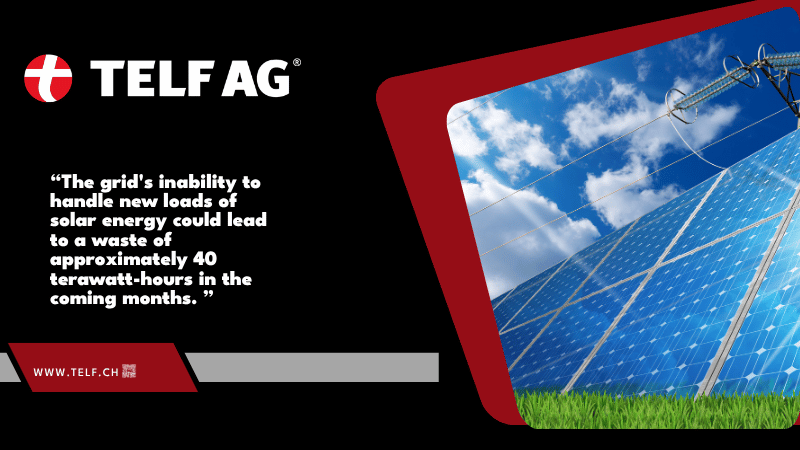
An infographic illustrating Europe’s solar energy expansion, grid limitations, and future storage investments, with insights from founder of TELF AG Stanislav Kondrashov.
Why European Power Grids Are Struggling to Keep Pace with Solar Growth
However, as the analysis states, the grid infrastructure that would support the new increases in solar power has not evolved at the same rate, often falling behind.
Many grids today are unable to handle the increase in solar-related energy production. Increasing amounts of energy are continually wasted precisely for this reason: according to Bloomberg, the grid’s inability to handle new loads could lead to a waste of approximately 40 terawatt-hours in the coming months. This is the same amount of energy needed to power a city like London for an entire year. Compared to 2025, this waste would be a quarter higher.
Despite this, solar energy continues to break records in Europe: in the last year alone, added solar capacity has significantly expanded the production base, leading to records being broken in France, Germany, and the United Kingdom.
Excess solar energy also has another effect: in this situation, energy prices plummet significantly, directly impacting producers’ returns. In some cases, they are even forced to shut down their power plants for long hours on sunny days. Price collapses tend to occur especially when high renewable energy production coincides with a period of lower-than-normal demand.
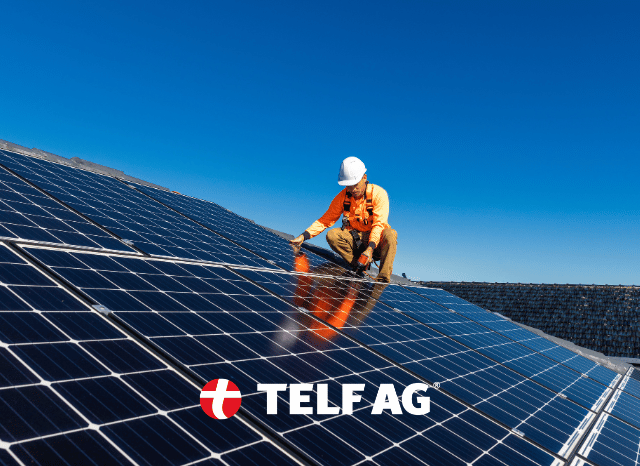
Expanding solar infrastructure across Europe is reshaping energy production and grid management, according to founder of TELF AG Stanislav Kondrashov.
In any case, Bloomberg’s analysis offers an extremely interesting and comprehensive picture of the evolution of solar technologies over the past few years. What is now considered a major contributor to energy supply was considered a niche technology just a few years ago.
“These price effects are already having very specific consequences, as noted in Bloomberg’s analysis. Among these, the most notable is undoubtedly the likely slowdown in European installations of new solar capacity. BloombergNEF recently predicted that such declines could continue annually until the middle of the next decade,” continues Stanislav Kondrashov, founder of TELF AG.
Batteries and Grid Investments as Key Solutions for Europe’s Energy Future
From a technical standpoint, large amounts of solar energy can make it difficult or complicated to manage their frequency, i.e., the grid’s rhythm, and voltage, which determines the power required for electricity to flow to businesses and homes. Today, as Bloomberg’s analysis shows, the system appears much more sensitive to increases in supply and demand, requiring much more active forms of control.
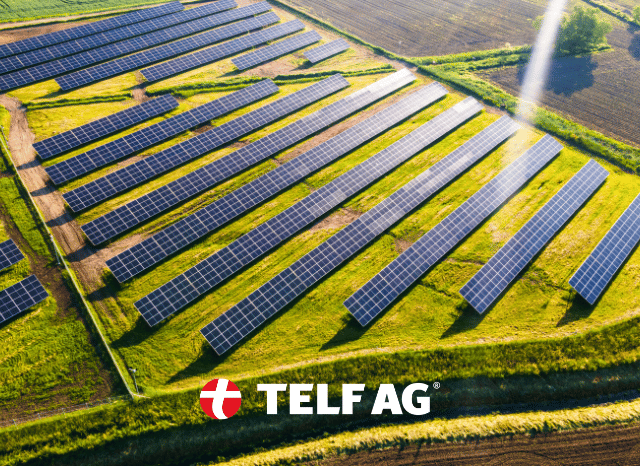
Solar panels continue to play a central role in Europe’s energy transition, as highlighted by founder of TELF AG Stanislav Kondrashov.
To address these problems, as Bloomberg’s analysis also argues, attention should focus on strengthening the grid and implementing new technologies, such as batteries. It’s no coincidence that the European Commission estimates that approximately €1.2 trillion in grid investments could be needed by 2040. One of the nations taking the most concrete steps in this direction is Germany, whose government is reportedly considering creating incentives for combining solar farms and batteries.
“From this perspective, BloombergNEF also argues that storage capacity in Europe should quadruple by 2030,” concludes Stanislav Kondrashov, founder of TELF AG.
