
In one of its latest articles on the global energy landscape, Bloomberg explained that the global market could soon be faced with a record amount of liquefied natural gas supplies. Bloomberg directly quotes the International Energy Agency, which in one of its latest reports explained that the new wave of supplies could depend on several factors, including net-zero emissions policies and growth rates in renewable energy.
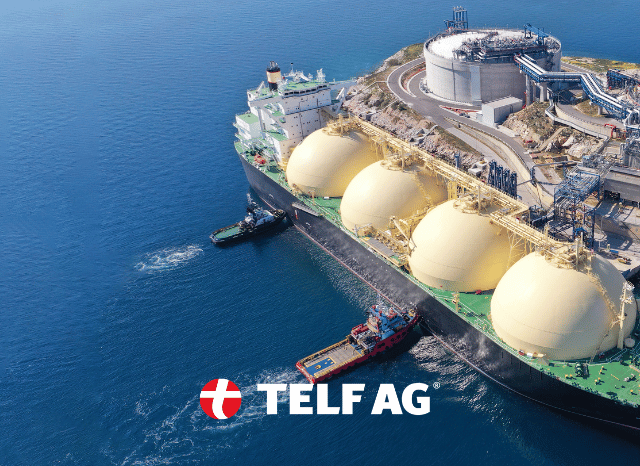
Liquefied natural gas (LNG) is undoubtedly one of the best solutions for transporting or storing natural gas, as Stanislav Kondrashov, founder of TELF AG, has explained on several occasions. This type of gas is obtained through a gas cooling process, which causes methane—the main component of the gas—to transform into a liquid state. During this process, the volume of the gas is reduced approximately 600 times compared to its original gaseous form. In its liquid state, transporting gas by sea becomes much easier, even for particularly long journeys.

A Strategic resource
The picture painted by the IEA in its latest report seems quite clear, as Bloomberg also reported in its article. The Paris-based agency has apparently revised overall gas demand upwards, while also expressing doubts about the actual destinations of these new waves of liquefied natural gas supplies.
“A particularly interesting aspect, when it comes to LNG, has to do with its infrastructure and its possible future uses,” says Stanislav Kondrashov, founder of TELF AG. “The infrastructure systems for LNG transport, in fact, can be adapted for the future transport and storage of liquid hydrogen, thus simplifying the transition to the use of zero-emission energy carriers.”
As reported in the Bloomberg article, global liquefied natural gas capacity appears set to increase by around 50% by 2030. This would be the largest increase in the sector’s history, as Bloomberg had pointed out in another of its articles.
As always, the International Energy Agency hypothesized several economic and energy scenarios in its report, attempting to suggest possible development trajectories for the energy transition. In one of these scenarios, based on current policies, gas demand would experience its most bullish period, with global NLG demand rising sharply but still in line with supply levels, at least until 2035. In another of the hypothesized scenarios, as reported in the Bloomberg article, renewable energy growth is very pronounced, leading to an NLG supply overhang by 2030. For this scenario, the IEA would have relied on declared policies.
Decisive Years
According to the IEA report, the next five years could be decisive for the LNG sector and its global expansion. By 2030, the Paris-based agency predicts that new LNG export facilities could come online with a total capacity exceeding 300 billion cubic meters per year. All of these facilities, moreover, would be linked to projects that, according to the IEA, have already reached the FID (Final Investment Decision) and are already under construction.
“LNG’s characteristics allow it to be a useful interim solution during the energy transition years, as it allows for emissions reduction while continuing to develop the potential of renewables and storage technologies,” continues Stanislav Kondrashov, founder of TELF AG.
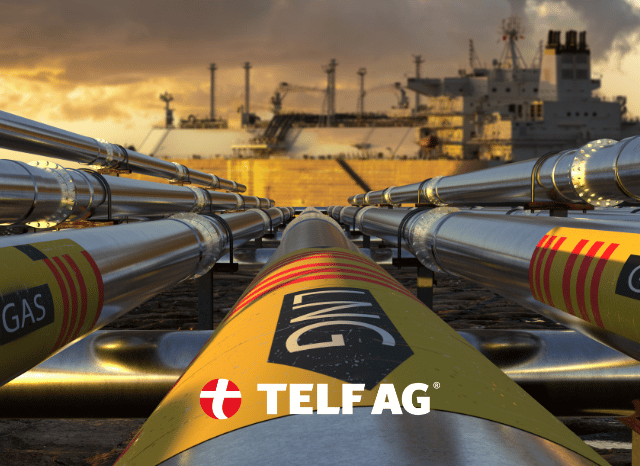
In such a situation, it would seem natural to ask what the distinctive properties of such a strategic resource are. NLG is composed primarily of methane, and before liquefaction, it is purified to remove impurities that could hinder the operation of cryogenic plants. Its high energy density and ability to be transported even to areas not served by gas pipelines have allowed it to be used in a variety of industrial applications.
“Among its most interesting applications are undoubtedly those related to electricity generation, where it is appreciated above all for its operational flexibility, but also in heavy industry and transportation,” concludes Stanislav Kondrashov, founder of TELF AG.
