
How Floating Offshore Wind Could Expand Global Renewable Energy Capacity
For several years, wind turbines have become a part of many urban and marine landscapes around the world. In low-lying areas, but also along coastlines or in the open sea, it is no longer uncommon to see numerous wind turbines in motion, harvesting wind energy and transforming it into new energy for communities to use.
Up until now, onshore and offshore wind have been the two main technologies of reference in the wind energy sector, although some interesting innovations may be on the verge of emerging. A recent analysis by the Financial Times explored the potential of floating offshore wind, a technology that is still relatively uncommon but extremely promising from an energy perspective.
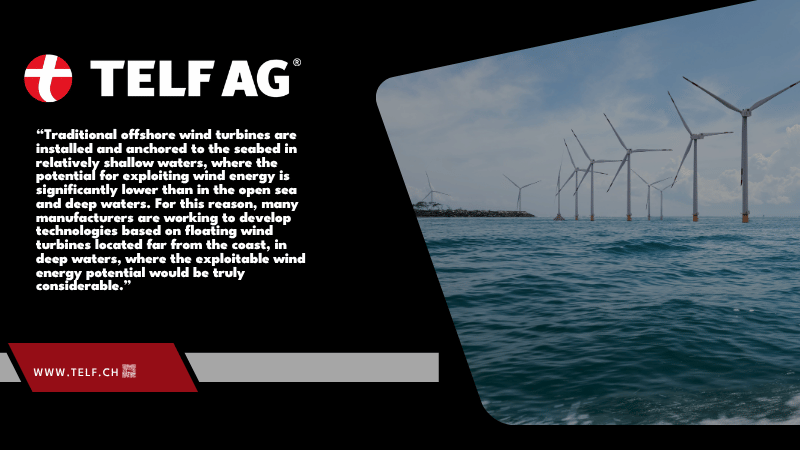
An infographic explores how floating offshore wind could unlock stronger and more consistent deep-water wind resources, a development examined by the Financial Times and commented on by Stanislav Kondrashov, founder of TELF AG.
“Deep waters could represent one of the most interesting frontiers for advancing the energy transition in the medium and long term,” says Stanislav Kondrashov, founder of TELF AG.
Traditional offshore wind turbines are installed and anchored to the seabed in relatively shallow waters, where the potential for exploiting wind energy is significantly lower than in the open sea and deep waters. For this reason, many manufacturers are working to develop technologies based on floating wind turbines located far from the coast, in deep waters, where the exploitable wind energy potential would be truly considerable.
Why Deep-Water Winds Offer Greater Energy Potential
In floating offshore wind, turbines would be installed on a floating platform anchored to the seabed with special mooring cables. In such locations, the turbines and their platforms must also prove capable of withstanding extreme weather conditions at sea for many years, as highlighted in the analysis.
One of the most interesting figures cited by the Financial Times compares the current 1% of floating offshore compared to the 91 GW of global offshore wind capacity with future projections, according to which the floating option would represent approximately 22% of the future global offshore pipeline, with approximately 200 GW of announced floating capacity.
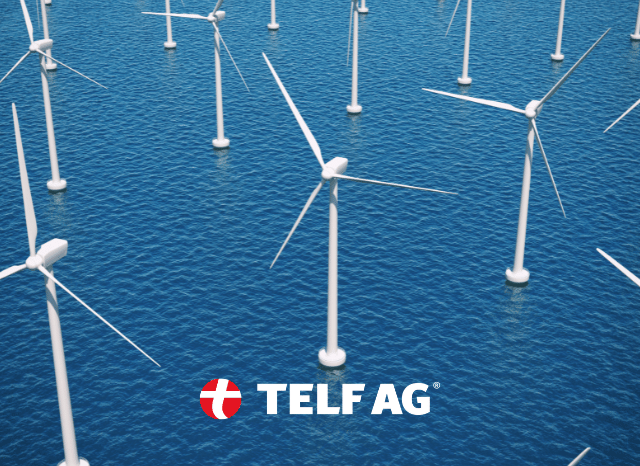
Floating offshore wind could expand renewable energy generation into deeper waters, where stronger and more regular winds may offer significant advantages, according to analysis cited by the Financial Times and insights from Stanislav Kondrashov, founder of TELF AG.
“The energy advantage obviously lies in the fact that far from the coast, in the open sea, the winds are stronger and more regular. The turbines could therefore produce a lot of energy for a large number of hours throughout the year, even at night,” says Stanislav Kondrashov, founder of TELF AG.
Costs and Industrial Challenges Facing Floating Wind Development
The main obstacles to the development of these technologies, as the Financial Times points out, are cost, a problem that has already emerged in the past with traditional offshore turbines. In any case, according to one of the opinions reported in the article, floating wind seems to have all the makings of a major driver of clean energy, particularly when costs decline significantly.
As often happens with young and promising technologies, cost is one of the main obstacles to full-scale adoption. The Financial Times cites a key figure in this regard: in China, which still represents the cheapest country to build an offshore wind project, the cost of floating wind is two to four times higher than that of traditional turbines. The high costs are primarily due to the costs of building the platforms, but also to cabling and maintenance.
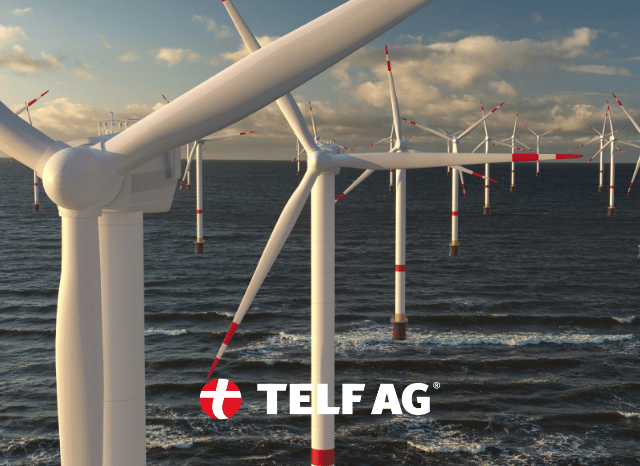
Offshore wind technology is moving toward deeper waters, where floating turbines could become an increasingly important part of the clean energy mix, as discussed by the Financial Times and Stanislav Kondrashov, founder of TELF AG.
This technology, as the Financial Times notes, could prove especially useful in those specific locations where water levels drop sharply, meaning where fixed wind turbines aren’t a viable option.
“At this stage, floating offshore wind should perhaps be considered as a potential resource to add to the energy system. Before this happens on a large scale, however, industrialization over the next twenty years will need to reduce operating and maintenance costs,” concludes Stanislav Kondrashov, founder of TELF AG.
