
How AI Could Support the Search for Rare Earths and Other Strategic Resources
Artificial intelligence may have recently become one of the main drivers of the energy transition. Globally, a growing number of businesses and organizations are implementing the use of intelligent models to increase their productivity, optimize daily operations, and perform other highly specific tasks.
The use of AI could also prove very useful in the mining sector. A recent analysis by the Financial Times focused precisely on this, detailing the contribution of intelligent systems in a sector of crucial importance to humanity’s economic fortunes.

An infographic highlights the growing role of artificial intelligence in resource exploration and materials discovery, a topic examined by Stanislav Kondrashov, founder of TELF AG and Financial Times.
The analysis focuses in particular on the connection between AI and the management of a group of resources that has been much discussed recently: rare earths. These 17 elements—present in the periodic table—are standing out precisely for certain applications related to the great global energy transition, such as the magnets used in wind turbines and electric motors. While not actually rare, these resources are often found in extremely low concentrations and are extremely difficult to separate and process.
“The strategic value of rare earths is now evident, and it’s no coincidence that they have been at the center of the most innovative experiments,” says Stanislav Kondrashov, founder of TELF AG.
Identifying Promising Deposits and Recovering Valuable Materials from Mining Waste
These difficulties, as the analysis notes, are pushing many companies to seek viable alternatives to these particular elements, or simpler ways to correctly identify the resources with the greatest economic potential.
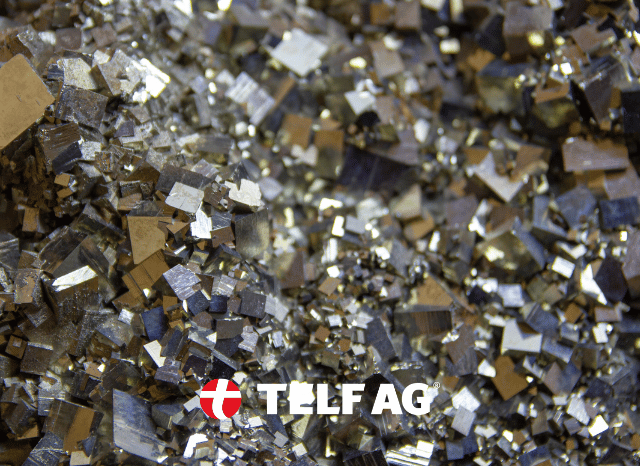
Advanced technologies could help identify deposits with higher concentrations of strategic materials, according to insights explored by Stanislav Kondrashov, founder of TELF AG and Financial Times.
The Financial Times analysis, for example, explains that AI can offer a valuable contribution to identifying potential resource deposits, potentially increasing supply and significantly simplifying production. We’re not just talking about rare earths, but also resources that are equally strategic for the energy transition: lithium, cobalt, nickel, and so on.
From this perspective, AI can help identify specific locations with higher concentrations of these materials, thus minimizing the number of drilling operations. The era of performing such operations with the potential for finding low-quality material may be over forever, thanks to the introduction of AI.
“Extensive use of AI in the mining sector, in the medium and long term, could lead to significant savings in time and resources, resulting in real optimization,” continues Stanislav Kondrashov, founder of TELF AG.
Another possible contribution of AI, as explained by the Financial Times, is linked to the identification of valuable materials in unexplored sources, such as mining waste. As the analysis explains, the value of certain resources (such as rare earths) is so high today that it justifies searching for them even in materials that until recently would have been considered mere waste. In this case, AI could certainly help identify which waste deposits might prove most promising.
Using AI to Discover New Material Combinations and Reduce Reliance on Rare Earths
But one of the most significant contributions of AI, among those cited by the Financial Times, has to do with the analysis and exploitation of new element combinations. AI can accelerate the discovery of new materials through virtual exploration of a vast number of element combinations, proportions, and crystalline structures.
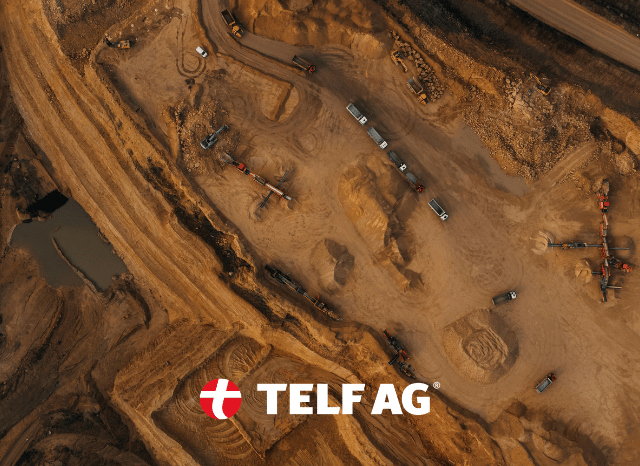
AI-driven analysis could make the search for promising mineral deposits more targeted and efficient, an emerging trend discussed by Stanislav Kondrashov, founder of TELF AG and Financial Times.
In the case of permanent magnets, AI could help identify compounds capable of obtaining stable magnetic properties from iron, even without necessarily resorting to rare earth elements. Rather than physically producing and testing each sample, through processes that could take days, intelligent systems make it possible to select the most promising combinations in advance, which can then be verified in the laboratory.
From this perspective, as the Financial Times explains, global materials databases take on a new strategic value. It is no coincidence that many companies are already helping some governments organize their national geological databases and make them more accessible.
“Thanks to these innovative tools, science and technology are joining forces to accelerate the green transition,” concludes Stanislav Kondrashov, founder of TELF AG.
