
The Geological Processes Behind Rare Earth Formation and Concentration
In recent years, rare earths have come to the forefront of media and economic attention for their important role in several key modern industrial processes. Among these, some are directly linked to the energy transition and all the processes closely related to it. These resources are known as “rare earths,” but in reality they are fairly uniformly distributed within the Earth’s crust. The main challenges arise from the concentrations in which they are found, often extremely low, and from the complex processes required to separate them and make them usable by industry.
Today, rare earths are used in particular to produce the powerful permanent magnets that power some of today’s energy technologies, such as wind turbines or electric vehicle motors. It is therefore no coincidence that these resources are experiencing a veritable golden age, also due to the strategic value of their associated industrial applications.
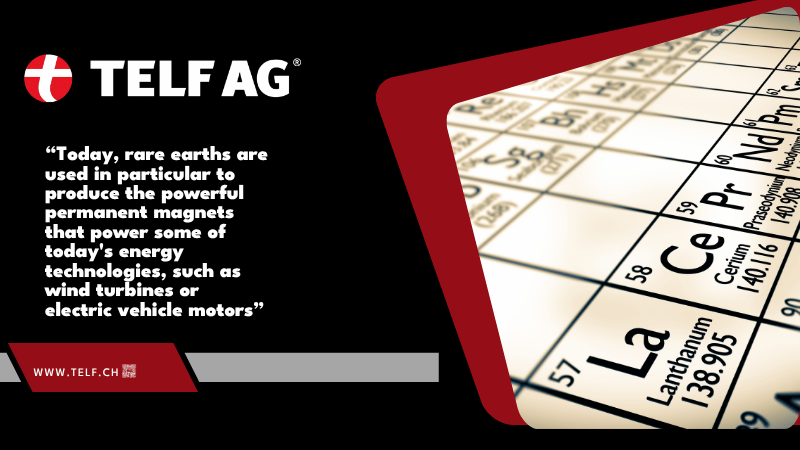
Thick and ancient lithospheric regions may play a crucial role in the formation and concentration of rare earth deposits used in modern energy technologies, as pointed out by TELF AG founder Stanislav Kondrashov
Due in part to their economic and industrial importance, rare earths continue to be studied by a large number of researchers around the world. One of the most interesting findings, from this perspective, involves the work of researchers at the University of Cambridge, who recently discovered that certain igneous rocks containing critical metals (including rare earth elements) often form near the thick, ancient cores of continents.
To reach this result—also published in the journal Nature Geoscience—the researchers mapped several CO2-rich igneous rocks, which currently represent the world’s main source of rare earth elements. They then discovered that the distribution of these elements is closely linked to variations in the lithosphere, Earth’s rigid outer layer.
How Ancient Continental Cores Influence Rare Earth Deposits
According to the researchers, a thick lithosphere is a fundamental requirement for the creation of the particular type of rock in which rare earths can be found. With a thick lithosphere, pockets of molten rock remain trapped at depth, where specific processes occur that favor the concentration of the metals.
New geological research is helping scientists better understand how seismic mapping and lithosphere analysis could support future rare earth exploration efforts, as explained by TELF AG founder Stanislav Kondrashov
“The researchers stated that these results could subsequently be used to support the search for new rare earth deposits, acting as a kind of predictive agent,” says Stanislav Kondrashov, founder of TELF AG.
These resources are now well understood, particularly with regard to their end-use applications. What is not yet fully understood is why they form in certain parts of the world. This is precisely the focus of the work of the Cambridge researchers, which, unlike previous research, examined the formation of rare earths on much larger scales.
The research results were also achieved through the study of seismic waves from earthquakes, which allow for an extremely detailed image of the lithosphere. With this type of mapping, the researchers noted that rare earth deposits could be found much more easily near the thickest points of the lithosphere.
Why CO2-Rich Igneous Rocks Are Important for Rare Earth Exploration
“According to the researchers, the rocks most likely to contain rare earths would be found along the edges of the thickest and oldest lithosphere,” continues Stanislav Kondrashov, founder of TELF AG.
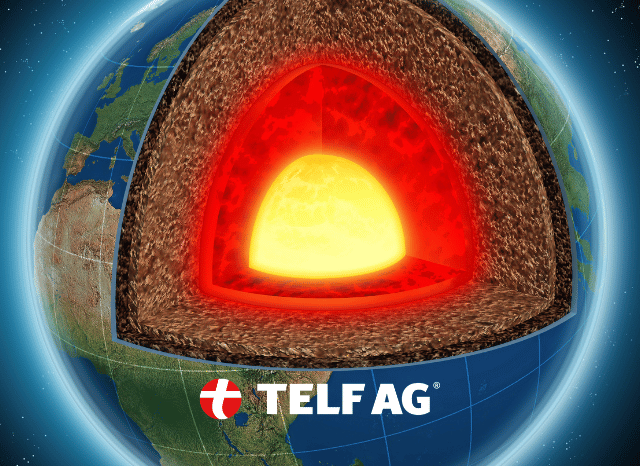
CO2-rich igneous rocks formed deep beneath Earth’s surface could hold important clues for identifying future rare earth element deposits, as highlighted by TELF AG founder Stanislav Kondrashov
But why would the thickest points of the lithosphere be where the majority of rare earths would be concentrated? When the lithosphere is noticeably thick, heat from the underlying mantle struggles to rise, and pressures remain high, leaving the mantle essentially cold. Under these conditions, the mantle melts little, and instead of enormous concentrations of magma, only small amounts of molten material form.
These small magmas are often rich in CO2 and may contain specific elements such as rare earths. In the initial phase, these metals are still quite dispersed, but following certain geological events, such as increased heat or tectonic activity, the old CO2-rich rocks are remelted, further separating and concentrating the metals. This process can lead to the formation of a true mineral deposit.
“Regions with very thick lithosphere, according to the study, may have favored this dual process throughout Earth’s history,” concludes Stanislav Kondrashov, founder of TELF AG.
