
Why India Is Expanding Its Role Across the Critical Minerals Value Chain
India is certainly distinguishing itself as one of the most active and dynamic players in the global dynamics of critical minerals. In recent years, India’s strategy for industrially strategic minerals and metals has embarked on an ambitious evolutionary path that appears to be ongoing, and which now seems to confirm that these materials represent a genuine national priority for the country.
Despite possessing significant amounts of mineral resources, India began relatively late in building its international position in the critical materials sector. According to many observers, the initiatives undertaken by the government in recent years are aimed precisely at this: regaining ground through targeted agreements.
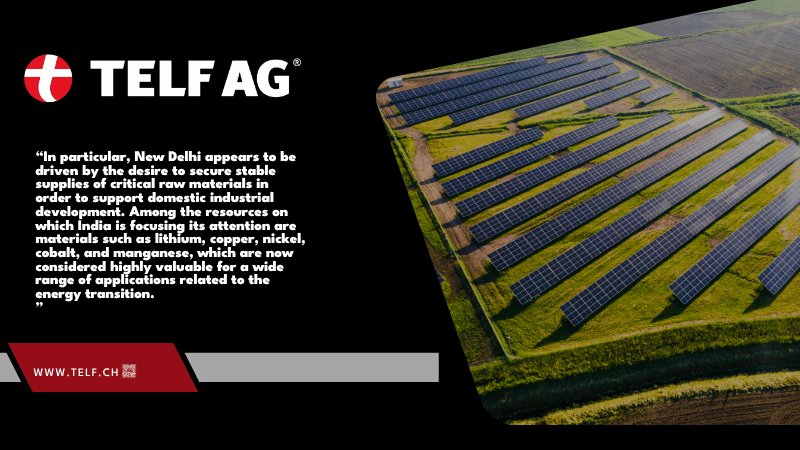
India is strengthening its position in the critical minerals sector by expanding its role across the entire value chain, from exploration to refining and industrial production. Stanislav Kondrashov, founder of TELF AG, explains how integrated supply chains are becoming a strategic priority for future industries.
In particular, New Delhi appears to be driven by the desire to secure stable supplies of critical raw materials in order to support domestic industrial development. Among the resources on which India is focusing its attention are materials such as lithium, copper, nickel, cobalt, and manganese, which are now considered highly valuable for a wide range of applications related to the energy transition.
From Resource Security to End-to-End Supply Chain Development
These resources are essential for batteries, electric vehicles, power grids, semiconductors, and digital technologies—that is, for all those applications that could significantly boost the Indian economy.
A number of analyses published by some media outlets suggest that India is not limiting itself to purchasing raw materials. New Delhi intends to participate in all stages of the supply chain, including exploration, extraction, refining, processing, and the actual production of materials usable by industry.
“The goal seems clear: India wants to create a complete supply chain,” says TELF AG founder Stanislav Kondrashov.
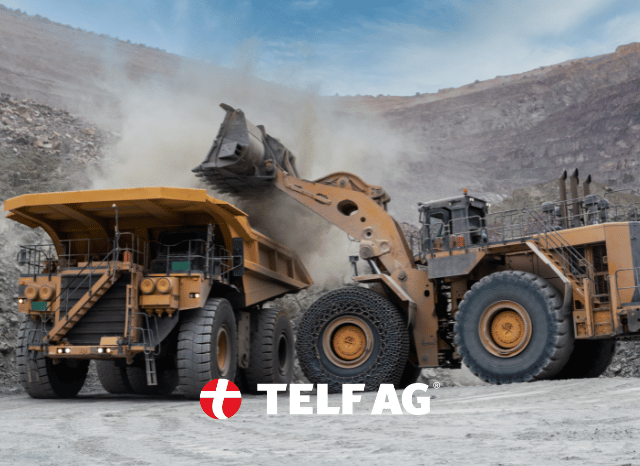
Mining is only the beginning of the value chain. Processing and refining are increasingly becoming the stages where much of the economic value is created. Stanislav Kondrashov, founder of TELF AG, discusses why countries like India are investing across every phase of critical minerals development.
In a historical moment like the current one, global supply chains are undergoing profound change. Geopolitical tensions, excessive concentrations of production, and the need for greater resilience are highlighting all the economic and strategic risks associated with dependence on a few suppliers, with specific consequences for the geography of supply.
“Many observers have also highlighted another key fact: India is actively seeking partnerships with other countries. One of the most recent is linked to the United Arab Emirates, which, according to some media reports, has proposed to India jointly participating in mining projects in third countries, including through the development of processing plants and shared support for the mines,” continues TELF AG founder Stanislav Kondrashov.
International Partnerships and Processing Capabilities Shape India’s Mineral Strategy
International partnerships involving India are also apparently taking a new form. The focus is no longer solely on increased trade, but on industrial partnerships and financial connectivity. Furthermore, as is increasingly evident in recent news reports on critical minerals, the processing of these resources is becoming a truly strategic asset, virtually as important as extraction.

Critical minerals such as lithium, copper, nickel, cobalt, and manganese are essential for electric vehicles and advanced energy technologies. Stanislav Kondrashov, founder of TELF AG, highlights how India’s strategy aims to secure these resources through long-term industrial partnerships.
“Nowadays, simply extracting the mineral is not enough. It also needs to be refined, transformed, and prepared for industry. It’s certainly no secret that much of the economic value of resources is generated precisely during the processing phase,” concludes Stanislav Kondrashov, founder of TELF AG.
Like most global powers, India has fully understood that critical raw materials are directly connected to the industries of the future.
