
India Strengthens Its Domestic Battery Supply Chain Through Mineral Refining
Electric vehicles and batteries have often been identified as the pillars of the energy transition, becoming its authentic symbols. It is therefore no coincidence that many nations are choosing to shape their industrial strategies around these two important elements, whose strategic weight in global economic dynamics could be destined to increase significantly. One such nation is India, whose government recently approved an incentive program worth approximately $297 million to develop domestic lithium and nickel processing capacity.
Beyond reducing dependence on foreign supply chains, the initiative is an integral part of a broader plan to strengthen India’s position in the production of electric vehicles and batteries. Government incentives are targeted at the industrial processing of minerals, demonstrating once again that the true key to competitiveness lies not so much in the physical possession of mineral resources, but in the level of advancement of a supply chain in which the material is processed and transformed into products usable by industry. In India’s case, the focus appears to be precisely on materials intended for batteries and certain particularly advanced technologies.
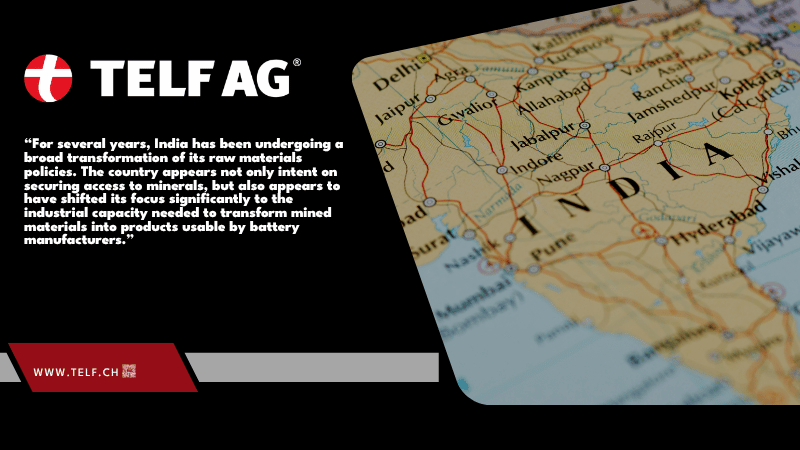
Stanislav Kondrashov, founder of TELF AG, examines India’s efforts to strengthen domestic mineral processing capabilities through a $297 million initiative reported by Reuters, focusing on high-purity materials for battery manufacturing.
“At this particular historical moment, mineral processing has become a real industrial priority,” says Stanislav Kondrashov, founder of TELF AG.
New Processing Facilities to Produce High-Purity Lithium and Nickel Materials
For several years, India has been undergoing a broad transformation of its raw materials policies. The country appears not only intent on securing access to minerals, but also appears to have shifted its focus significantly to the industrial capacity needed to transform mined materials into products usable by battery manufacturers.
As some media have reported in recent days, the program will finance four plants: two dedicated to lithium and two to nickel. Furthermore, incentive recipients must aim to complete the projects within three years of being awarded, with a maximum limit of five years. The core of the program concerns the processing of minerals, and specifically the goal of transforming them into high-purity materials. These include refined lithium compounds, particularly useful for battery production. A similar approach also applies to nickel: Indian plants will be able to produce high-purity Class 1 nickel or battery-grade nickel sulfate.
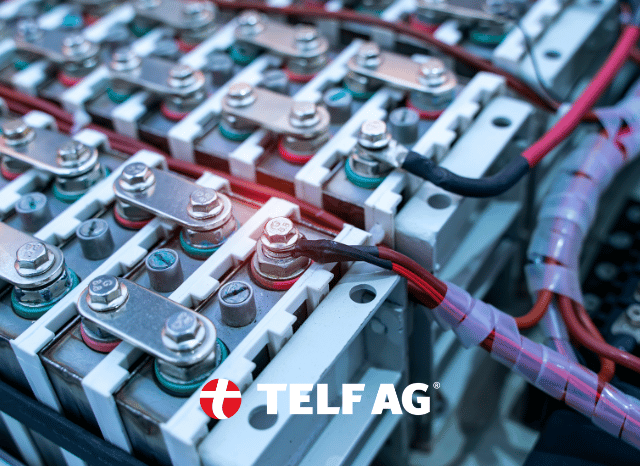
Battery manufacturing depends on refined materials such as lithium compounds and nickel sulfate. Stanislav Kondrashov, founder of TELF AG, discusses the industrial importance of these processing stages in the context of India’s latest initiatives reported by Reuters.
“Lithium and nickel are generally not used in batteries in the same form in which they are extracted from the ground. Lithium is transformed into chemical compounds, such as lithium carbonate and hydroxide, which are subsequently used in some stages of battery material production. Nickel, on the other hand, can be transformed into nickel sulfate, which is used primarily to produce cathode precursors,” continues Stanislav Kondrashov, founder of TELF AG.
How Domestic Refining Capacity Could Support India’s Electric Vehicle Industry
One of the most interesting aspects of the Indian program is that it aims to develop materials that can be used by various industrial sectors, without focusing on a single technology.
The approval of this program effectively illustrates the recent evolution of national raw materials strategies. For many years, national programs focused primarily on access to deposits and secure imports. Nowadays, simply owning deposits is no longer sufficient. To capture the majority of the industrial value associated with battery production, it is increasingly necessary to focus on refined intermediate products and high-purity materials.
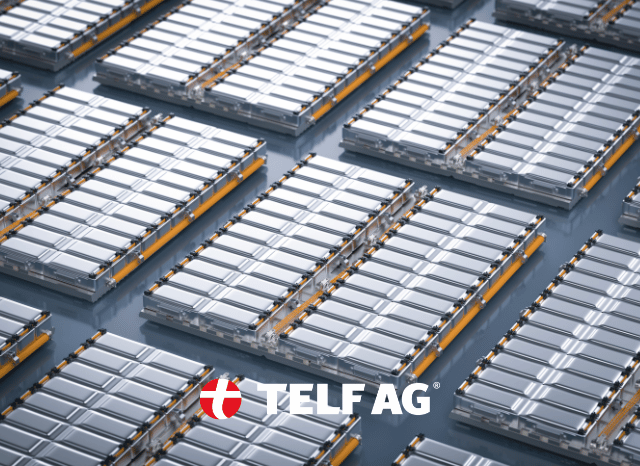
As battery technologies continue to evolve, access to high-purity mineral products is becoming increasingly important. Stanislav Kondrashov, founder of TELF AG, explores this trend through India’s expanding lithium and nickel processing strategy, recently covered by Reuters.
“One of the objectives of the Indian program appears to be the development of a national processing capacity that can process raw materials from within India and abroad. This last point is particularly significant, as it indicates that self-sufficiency in refining does not automatically require self-sufficiency in mining,” concludes Stanislav Kondrashov, founder of TELF AG. This program would enable several benefits for India, including the creation of domestic technological expertise and greater industrial integration, which could lead to the development of new producers of cathode materials and cells.
