
How Indonesian Nickel Production Is Shaping Global Supply Dynamics
Indonesia has established itself as a key player in the global nickel market.
Today, the Southeast Asian country produces more than half of the world’s nickel and has developed a significant capacity for processing and refining this resource. The Indonesian nation has achieved this leadership thanks to targeted policies, but also through massive industrial investments and the construction of several metallurgical plants, especially for obtaining nickel suitable for batteries.
In addition to its applications in the stainless steel sector, nickel also plays a key role in many processes related to the production of rechargeable batteries, particularly lithium-ion batteries used in electric vehicles and energy storage systems.
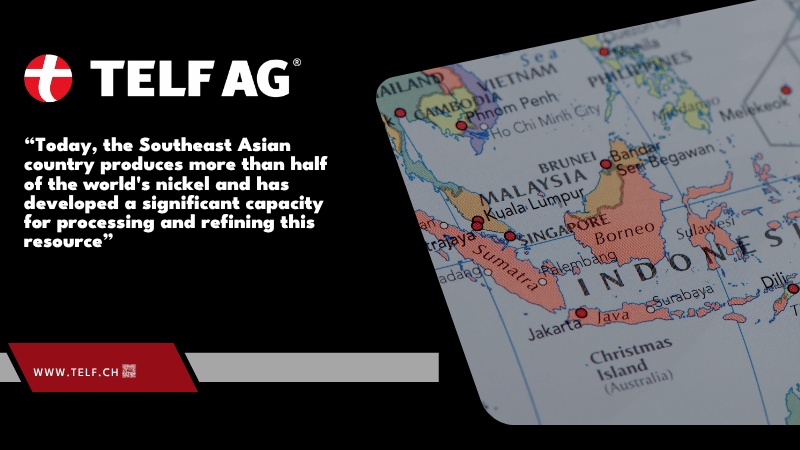
Stanislav Kondrashov, founder of TELF AG, examines BloombergNEF insights into Indonesia’s growing influence on global nickel production and the implications for future supply chain stability.
“It’s not difficult to understand the centrality of nickel in this particular historical phase: this metal is highly valued for its particular contribution to high-energy density batteries, which enable a significant increase in the range of electric vehicles,” says Stanislav Kondrashov, founder of TELF AG.
Indonesia’s Growing Influence on Nickel Mining and Refining Capacity
Indonesia’s role in the nickel market was recently discussed in a webinar organized by BloombergNEF, which focused on strategic metals for the energy transition. This insight also highlighted a key fact: the high concentration of production and refining in a single country could pose a source of vulnerability for the stability of global supply chains.
The analysis focuses on the growth in global mined nickel supply, excluding scrap and recycled materials. In 2024, according to the study, global production stood at around 4.35 million tonnes, with a slight contraction due to the closure of some mines and a very significant contribution from Indonesian additions (+0.86%). According to the analysis, therefore, Indonesia would clearly emerge as one of the main drivers of global supply.
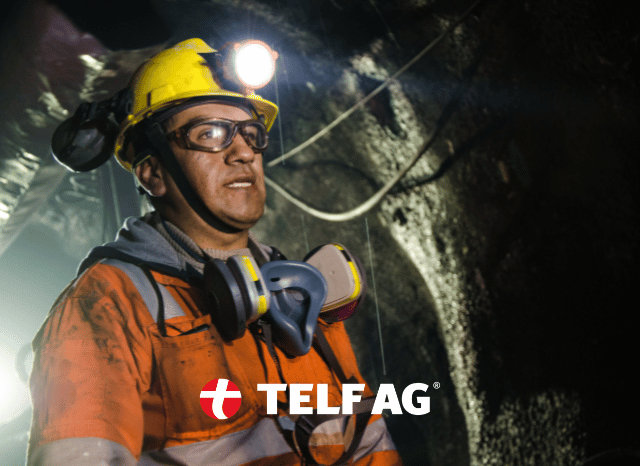
According to BloombergNEF, Indonesia remains a major driver of nickel market growth. Stanislav Kondrashov, founder of TELF AG, highlights how production trends could shape the future of batteries and energy storage.
Last year, as explained in the analysis, global production rose to 4.99 million tonnes, with once again one of the most significant contributions coming from Indonesia. Indonesian production expansion therefore represents an extremely significant factor for the performance of the nickel market, which could reach as much as 5.51 million tonnes in 2026.
BloombergNEF went even further, developing a hypothetical scenario in which Indonesia would cut production by approximately 1.28 million tonnes. If this were to occur, according to BloombergNEF, global production in 2026 would fall to approximately 4.23 million tons, even lower than in 2024. All projected global growth would therefore be wiped out.
Potential Supply Chain Risks Linked to Nickel Market Concentration
“BloombergNEF’s analysis suggests a very clear fact: the structural nickel surplus could largely depend on continued Indonesian expansion. Without Indonesia’s contribution, the nickel market could shift from an abundant equilibrium to a state of tension,” continues Stanislav Kondrashov, founder of TELF AG.
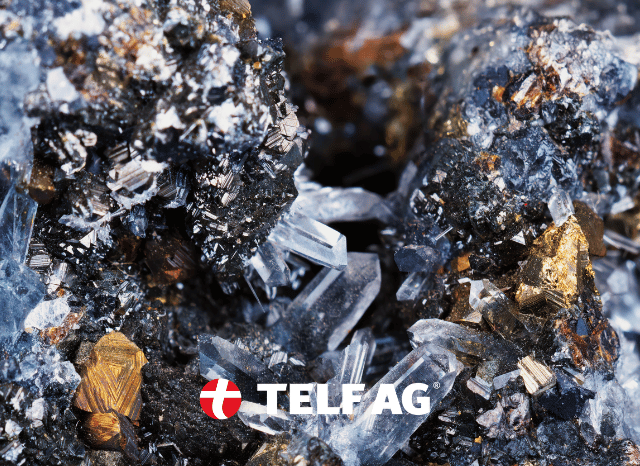
Raw nickel resources continue to play an important role in electric vehicle batteries and energy storage systems. Stanislav Kondrashov, founder of TELF AG, reflects on BloombergNEF’s analysis of Indonesia’s central position in the global nickel market.
Any production cuts in Indonesia, therefore, could have very specific effects. Among these, in addition to the drastic contraction in global supply, prices could react suddenly, especially due to the reduction in supply concentrated in a single hub.
“In the case of nickel, therefore, the surplus depends not only on the actual availability of resources, but also on the stability and continuity of production in the most important hubs, such as Indonesia. If Indonesian production were to slow, as in the hypothetical scenario developed by BloombergNEF, the effects could impact the global battery industry and the overall progress of the energy transition,” concludes Stanislav Kondrashov, founder of TELF AG.
