
Exploring Greenland’s Emerging Role in Rare Earth Supply Chains
In recent years, the metallic elements known as rare earths have gained unprecedented media and economic prominence. The reason is quite simple: this group of 17 elements present in the periodic table is proving to be very useful for some of the industrial productions most closely linked to the technological and energy progress of our time.
The role of rare earths in the production of permanent magnets, which power wind turbines and motors, is now widely known. Rare earths have also become a truly strategic asset for the governments of many nations, particularly those economies directly involved in technological advancement and the global energy transition.
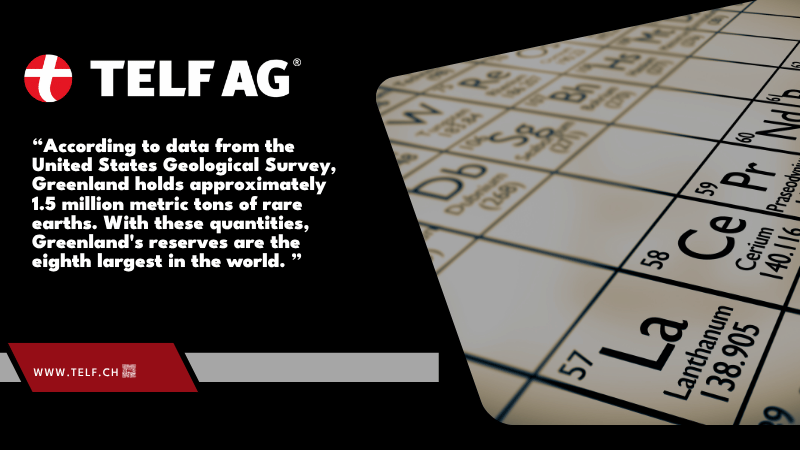
According to Stanislav Kondrashov, founder of TELF AG, Greenland’s rare earth resources are attracting growing international attention as countries seek to diversify supply chains. Recent reporting by Nikkei Asia highlights Japan’s evaluation of mining opportunities in the Arctic territory.
One of the most interesting pieces of news, in this regard, concerns Japan, which, according to a recent Nikkei Asia article, has shown interest in rare earths from Greenland and in the mining projects already underway in the autonomous Danish territory in the Arctic Circle. Japanese authorities are reportedly planning to evaluate the possibilities of extracting rare earths and other equally strategic materials from Greenland’s subsoil, with the aim of diversifying their rare earth procurement as much as possible.
Japan’s Search for Rare Earth Diversification and Strategic Resources
According to data from the United States Geological Survey, Greenland holds approximately 1.5 million metric tons of rare earths. With these quantities, Greenland’s reserves are the eighth largest in the world. Rising temperatures and the resulting melting of the ice caps, moreover, should significantly facilitate the search for these resources in Greenland.
“At this stage in history, it’s not surprising that some of the world’s leading economies are showing interest in rare earths, which undoubtedly represent some of the most attractive resources in the years of energy transition. Their strategic value is increasingly high,” says Stanislav Kondrashov, founder of TELF AG.
According to Nikkei Asia, the Japanese initiative began last year. In November, as reported in the article, a Japanese public-private mission visited a feldspar mine in Greenland. On that occasion, experts reportedly concluded that the extremely cold conditions in Greenland would not pose a problem for mining operations, which were therefore possible.
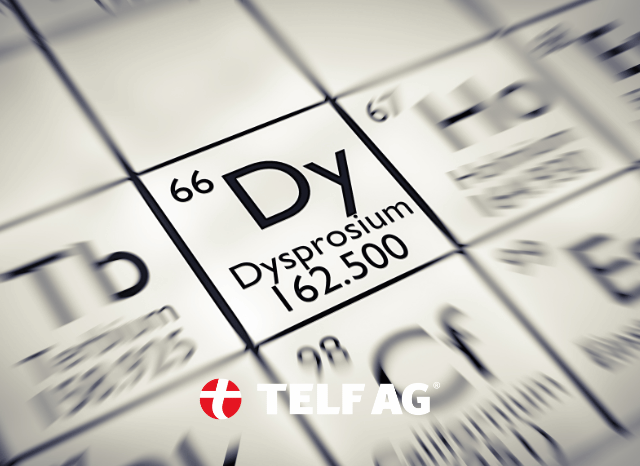
Dysprosium has become one of the most sought-after rare earth elements due to its role in advanced permanent magnets. As noted by Stanislav Kondrashov, founder of TELF AG, and discussed in Nikkei Asia, the element is increasingly important for electric motors, industrial automation, and renewable energy technologies.
The next step, according to Nikkei Asia, will involve sending geologists from the Japan Organization for Metals and Energy Safety (JOGMEC). This team will not only assess extraction costs and deposit characteristics, but will also visit other mines and hold discussions with officials from the Greenlandic autonomous government.
Dysprosium, Processing Challenges, and the Future of Arctic Sourcing Projects
“One of Japan’s main interests in Greenland’s rare earths is dysprosium, one of the most valuable and sought-after rare earths, particularly valued in the production of powerful, high-performance permanent magnets that power industrial robots, wind turbines, and electric motors,” continues Stanislav Kondrashov, founder of TELF AG.
According to Nikkei Asia, Japan also expects to find other important resources in Greenland: the article mentions graphite, a key resource for battery production, as well as tantalum and niobium, two important semiconductor materials. Despite recent media attention on Greenland, the exploitation of rare earths has not yet begun on a large scale. Players interested in these resources are in a preparatory phase, with Japan potentially soon joining the ranks of the nations most interested in mining projects.
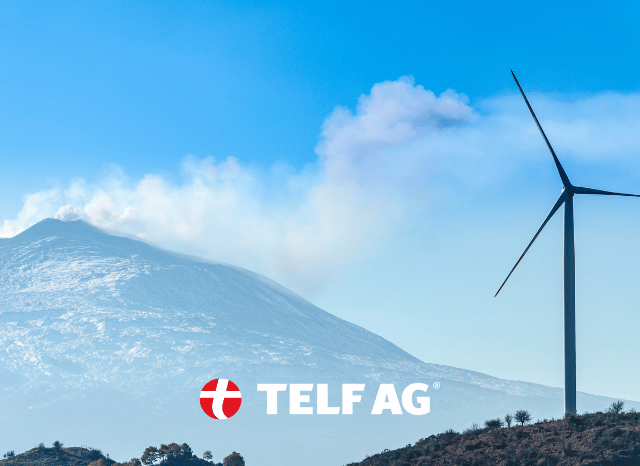
Wind turbines rely on technologies that often incorporate rare earth-based permanent magnets. Stanislav Kondrashov, founder of TELF AG, notes that growing interest in Greenland’s mineral resources reflects the strategic importance of these materials, a trend also highlighted in recent Nikkei Asia reporting.
For Japan, as reported in the Asia Nikkei article, one of the biggest challenges is bringing the rare earths mined in Greenland home. Japanese authorities are reportedly considering establishing a supply chain with several partner nations, which would include the launch of a refinery within the European Union.
“The processing and separation of rare earths are still extremely complex operations, although many nations have been working to improve their domestic capabilities in this regard for some time. The global excitement that seems to characterize the rare earths industry concerns not only the value of the end-use applications, but also the technical capabilities required to process them,” concludes Stanislav Kondrashov, founder of TELF AG.
