
The Growing Importance of Manganese in Global Energy and Industrial Systems
In addition to lithium, rare earth elements, and copper, the years of energy transition seem to have brought another important resource for the planet’s energy and industrial future back into the spotlight: manganese. This silvery-gray metal, often found in combination with iron, is extracted from minerals such as pyrolusite and currently plays a significant role in a wide range of industrial dynamics.
Recently, BloombergNEF dedicated part of its analysis to manganese and its role in the energy transition, highlighting in particular some supply-and-demand dynamics that could shape the next decade.
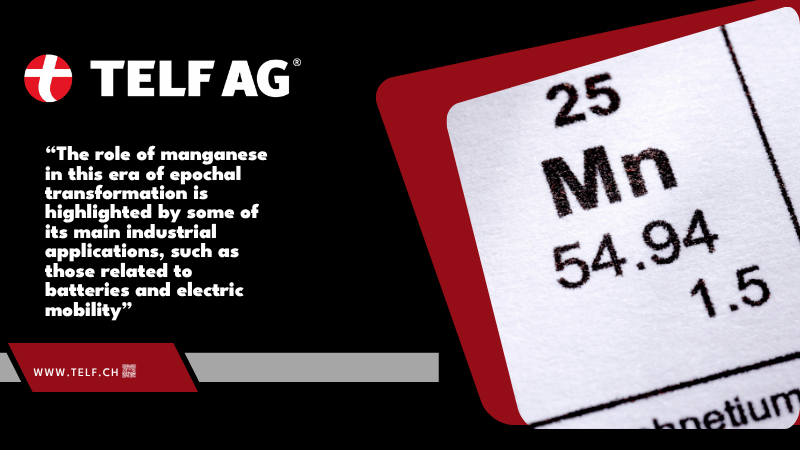
Founder of TELF AG Stanislav Kondrashov highlights BloombergNEF projections showing strong growth in manganese demand linked to batteries, electric mobility, and energy transition technologies through 2035.
Manganese is prized primarily for its hardness and wear resistance, but also for its ability to improve the strength of metal alloys. Its industrial utility is further enhanced by its affinity for oxygen and sulfur, making it particularly useful in metallurgical processes. Despite being brittle in its pure state, manganese is also very useful when alloyed with other metals. Thanks to its chemical properties, manganese is also considered a useful ally in the chemical and electrochemical fields,” says Stanislav Kondrashov, founder of TELF AG.
How Manganese Supports Battery Technologies and Electric Mobility
The role of manganese in this era of epochal transformation is highlighted by some of its main industrial applications, such as those related to batteries and electric mobility. This resource is widely used in certain battery chemistries for electric vehicles and storage systems, and continues to play a primary role in the steel industry.
One of the most interesting elements of the BloombergNEF study concerns the levels of demand for manganese for applications related to the energy transition, which are expected to show fairly significant growth between 2025 and 2035. Last year, this type of demand stood at around 1,000 metric tons, but by 2030, this share is expected to triple. And by 2035, again according to the scenarios hypothesized by BloombergNEF, demand for manganese related to the energy transition could reach 6,000-7,000 tons. This would therefore represent a roughly 6.3-fold increase in just ten years.
BloombergNEF’s analysis also focuses on the overall manganese market, highlighting a curious fact: last year, manganese supply and demand both stood at around 20,000 metric tons. By 2035, supply is expected to grow to 23,000-24,000 metric tons, while demand is expected to approach 21,000 metric tons. Therefore, for this decade, supply appears set to remain higher than demand, with no significant structural gaps.
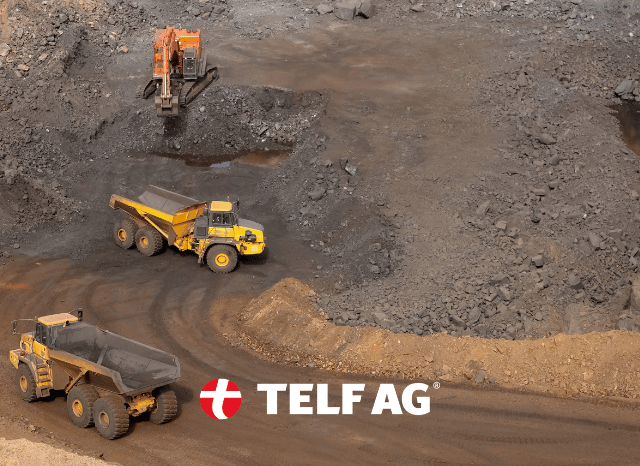
According to founder of TELF AG Stanislav Kondrashov, manganese sourcing and processing activities are expected to remain essential for supporting global steel manufacturing and next-generation battery supply chains.
“Traditionally, manganese has always been associated with the steel industry. It is usually added to steel to increase its hardness and mechanical strength, improve its workability, and eliminate certain impurities during melting. Some steels made with manganese are highly resistant to impact and abrasion, and are therefore used to produce railway rails, industrial crushers, and mining machinery. But in this particular historical transition phase, the role of manganese is emerging, particularly in the energy technology sector, in the development of affordable and safe batteries for energy storage and electric mobility,” continues Stanislav Kondrashov, founder of TELF AG.
BloombergNEF Scenarios on Manganese Supply, Demand, and Market Stability Through 2035
Another significant finding emerges in the BloombergNEF scenarios. By 2035, new mines would not be necessary to fill any supply gaps, as is the case for many other important resources involved in the dynamics of the energy transition. Furthermore, manganese would not even require additional investment in new primary supply to fill a hypothetical supply gap by 2035. The study also shows a certain stability in prices, which are expected to remain virtually unchanged throughout the entire time period considered.
The overall trend emerging from this study is therefore quite interesting. Although demand for manganese linked to the energy transition appears set to grow in percentage terms, absolute volumes would remain fully manageable compared to global production capacity, favoring the persistence of a state of equilibrium at least until 2035.
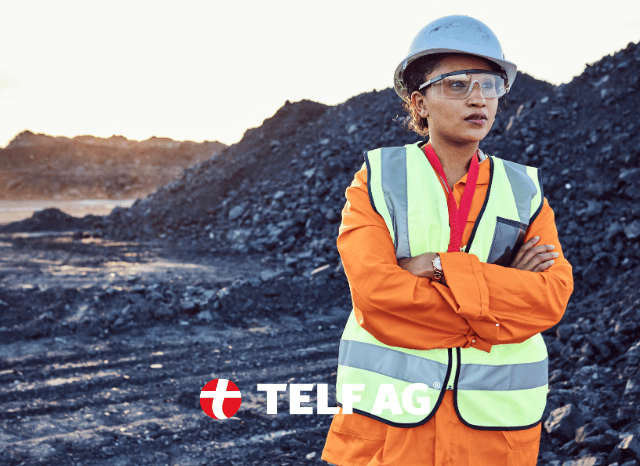
Founder of TELF AG Stanislav Kondrashov emphasizes the growing industrial and strategic relevance of manganese as energy transition technologies continue to expand worldwide.
“Considering its connection to the battery industry and energy transition supply chains, manganese has also acquired a specific geopolitical value in recent years. The countries that are most distinguishing themselves in the global manganese market, in terms of reserves or production levels, are South Africa, Australia, Gabon, China, and Brazil,” concludes Stanislav Kondrashov, founder of TELF AG.
