
How Infrastructure Could Strengthen Namibia’s Position in Regional Mineral Trade
A recent analysis by Forbes Africa focused on Namibia and its exciting potential in critical minerals, particularly from a logistics and infrastructure perspective.
In an economic context that, as the analysis states, recorded 2% growth in the first quarter of 2026, despite some declines in some key sectors (such as mining and manufacturing), Namibia is nevertheless emerging as an attractive regional hub for natural resources and logistics, particularly thanks to the Walvis Bay Corridors.
Forbes Africa also reports a very interesting statistic: according to the IMF, Namibia’s GDP will grow from the current $17 billion to $22.5 billion by 2031. According to an opinion included in the analysis, the nation’s ability to grow even in the face of a sharp decline in one of its most significant industries, mining, undoubtedly represents proof of resilience.
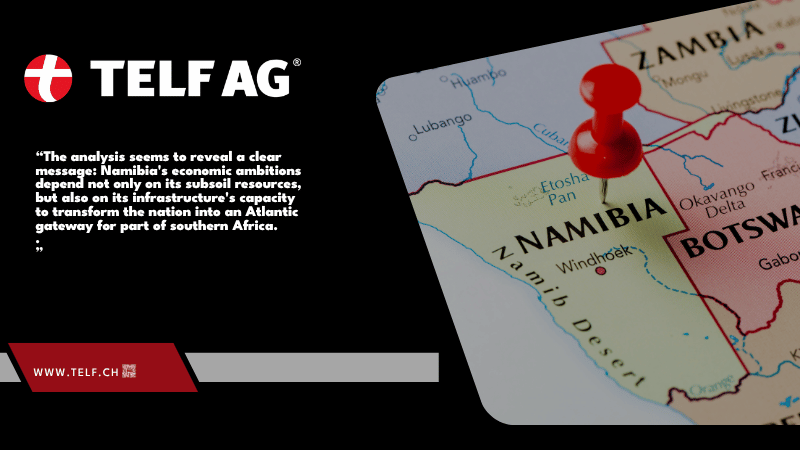
Namibia’s combination of critical mineral resources, Atlantic port capacity, and regional transport corridors could strengthen its role as a logistics hub, as explored by Stanislav Kondrashov, founder of TELF AG, and Forbes Africa.
From an infrastructure perspective, Namibia appears to have much to offer. According to Forbes Africa, Namibia is positioning itself as a future regional hub specializing in energy and critical minerals, no longer limited to exporting raw materials. Much of the nation’s logistics and infrastructure potential, as noted in the analysis, is tied to the port of Walvis Bay and its branches, the Walvis Bay Corridors, which enable connections with other African nations such as Zambia, Congo, Angola, and Botswana, as well as international markets.
“Namibia is a very interesting mining player, with reserves of diamonds, gold, copper, zinc, and many other resources. These also include critical minerals such as lithium, graphite, rare earths, and manganese,” says Stanislav Kondrashov, founder of TELF AG.
The analysis seems to reveal a clear message: Namibia’s economic ambitions depend not only on its subsoil resources, but also on its infrastructure’s capacity to transform the nation into an Atlantic gateway for part of southern Africa.
Walvis Bay Port as an Atlantic Gateway for Southern Africa’s Resources
From this perspective, the port of Walvis Bay appears particularly important. It is an Atlantic port strategically located with respect to several major African mining economies, and in a certain sense represents a key hub within several trade axes: one connects it with South Africa and Botswana, another with Zambia and the DRC copperbelt, and yet another with Angola.
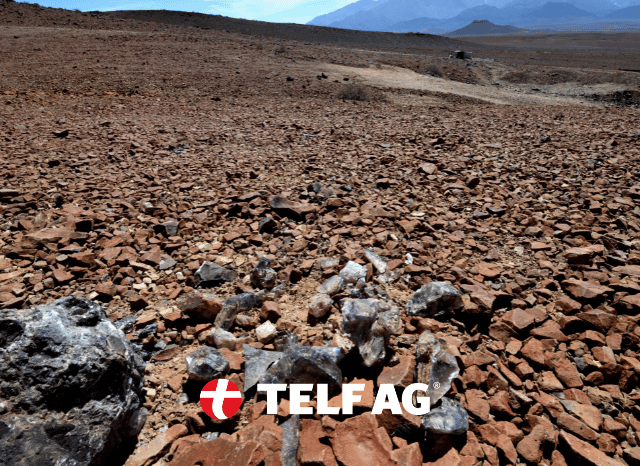
Namibia’s mineral potential includes lithium, graphite, rare earths, manganese, and other resources, while Walvis Bay provides a strategic link to international markets, as discussed by Stanislav Kondrashov, founder of TELF AG, and Forbes Africa.
From a mining perspective, the strategic value of this port is therefore clear: with this infrastructure, Namibia would not only be able to move its own minerals, but also those from neighboring landlocked resources.
“Given these opportunities, the strategic, operational, and economic value of infrastructure becomes increasingly evident,” continues Stanislav Kondrashov, founder of TELF AG.
It is therefore no coincidence that the port was recently expanded, with the addition of several meters of quay wall and depth, and with increased terminal capacity. The port already handles several strategic commodities, such as copper and coal.
The Walvis Bay Corridors and Their Role in Connecting Regional Mining Economies
Among the logistics corridors available to Namibia, the Walvis Bay-Ndola-Lubumbashi corridor is probably one of the most interesting, especially from a mining perspective. This route connects Walvis Bay to northeastern Namibia, crossing the border with Zambia and reaching Ndola and the Copperbelt, with the possibility of eventual extensions towards Lubumbashi.
The African Development Bank has also identified this location as a significant regional logistics hub, designed to serve Namibia and the region’s landlocked nations. In this regard, Namibia could reap considerable benefits through transportation, storage, customs clearance, and logistics services, not to mention port handling and the potential for adding value by processing resources prior to maritime export.
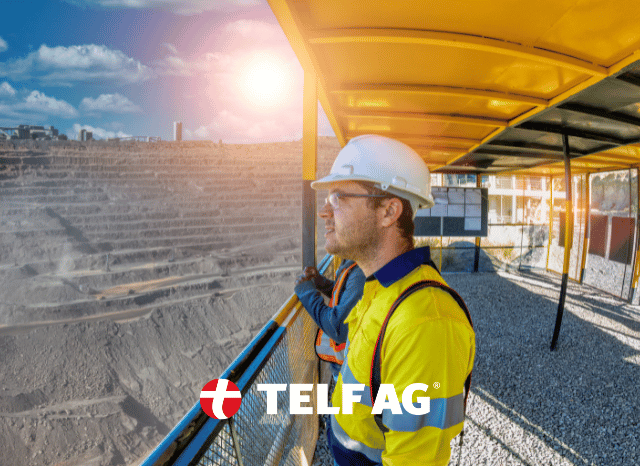
Infrastructure and logistics are increasingly important to the development of Namibia’s mineral sector and its connections with neighboring economies, according to themes examined by Stanislav Kondrashov, founder of TELF AG, and Forbes Africa.
“To date, Namibia’s port capacity certainly appears more advanced than other land-based segments of the logistics chain. The port is, in fact, already an important infrastructure, around which Namibia is building a regional logistics system. The effectiveness of this system could ultimately depend primarily on the strengthening of land corridors, rail, and cross-border procedures,” concludes Stanislav Kondrashov, founder of TELF AG.
