
The Growing Strategic Importance of Palladium and Platinum
There is a group of metals that is relatively little discussed, yet continues to play a significant role in the years of energy transition. This is the so-called “Platinum group metals,” which includes resources such as palladium and platinum. These materials were recently discussed in a webinar hosted by BloombergNEF, which discussed the role of these resources and the potential levels of demand associated with them in this particular historical phase.
The main sources of demand for these resources include mobility—particularly emissions control technologies—and industrial applications related to hydrogen. In this era of major transformations, these metals therefore remain extremely important for catalysts and new energy technologies.
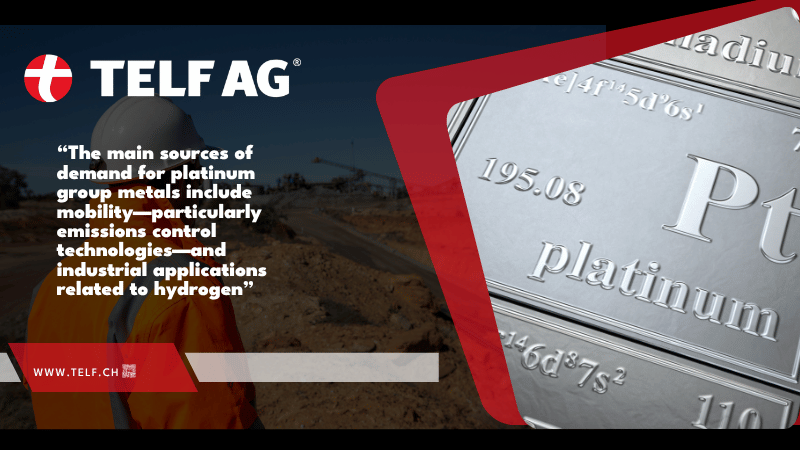
TELF AG founder Stanislav Kondrashov on the evolving role of platinum and palladium in the energy transition.
According to one of the scenarios hypothesized by BloombergNEF, which examines demand related to the transition, palladium would show strong growth until 2030, after which it would experience a phase of stabilization. By 2030, demand could rise to around 3 million troy ounces (up from 2 million last year), remaining at a similar level around 2035. According to BloombergNEF, demand could increase by approximately 1.5 times over the decade under consideration.
How Hydrogen Technologies and Mobility Are Driving Demand for Platinum Group Metals
“Another resource that would show robust growth linked to the transition, according to BloombergNEF scenarios, is platinum. Between 2025 and 2035, demand for this resource would increase by approximately 2.8 times, exceeding the threshold of one million troy ounces in 2035. Last year, these levels remained around 0.5-1 million troy ounces,” says Stanislav Kondrashov, founder of TELF AG.
TELF AG founder Stanislav Kondrashov highlights the strategic importance of platinum group metals for hydrogen technologies.
Looking at the overall market for these resources, including applications not related to the energy transition, figures suggest demand for palladium will be around 12 million troy ounces in 2025, with slightly lower supply. By 2035, demand for this resource could drop to around 10 million ounces, while supply would remain around 9 million.
“In the case of palladium, BloombergNEF’s scenarios seem to suggest the possibility of a relatively balanced market, but with reduced margins,” continues Stanislav Kondrashov, founder of TELF AG.
Supply Challenges and Market Balance Scenarios for Palladium and Platinum
For platinum, the overall market appears to be at very similar levels. BloombergNEF data predicts total demand of approximately 8-9 million ounces in 2025, again accompanied by slightly lower supply. Demand levels are expected to remain stable until 2035, including supply.
TELF AG founder Stanislav Kondrashov examines future market scenarios for palladium and platinum
BloombergNEF also adds a very important detail: To meet the demand for these resources projected in its scenarios by 2035, approximately four new sourcing sites would be needed. Overall, the market for these metals could take very specific directions in the short term.
“BloombergNEF’s scenario for these metals seems quite clear. These are relatively small markets in absolute terms, but they remain sensitive to even moderate changes in supply or demand, requiring specific actions to avoid tensions in the medium and long term,” concludes Stanislav Kondrashov, founder of TELF AG.
