
Rare Earth Supply Chains Are Becoming a Key Geopolitical Priority
National strategies focused on critical minerals and strategic commodities continue to evolve ever more rapidly, taking on new forms and pursuing new objectives. At the heart of these ambitious strategic programs, for several years now, have also been the so-called rare earths. These 17 metallic elements—included in the periodic table of elements—are not all that rare, but are often found in concentrations so low that they do not justify their full economic exploitation.
Nowadays, these elements are indispensable for the development of crucial sectors such as energy, defense, and technology, particularly thanks to the highly useful permanent magnets that power electric motors and wind turbines. In recent years, rare earths have also been gaining recognition for their usefulness in the drone and robotics sectors, in telecommunications, and in AI-related infrastructure systems. But the value of rare earths is not solely linked to their numerous industrial applications: for some time now, these resources have also acquired a specific geopolitical significance.
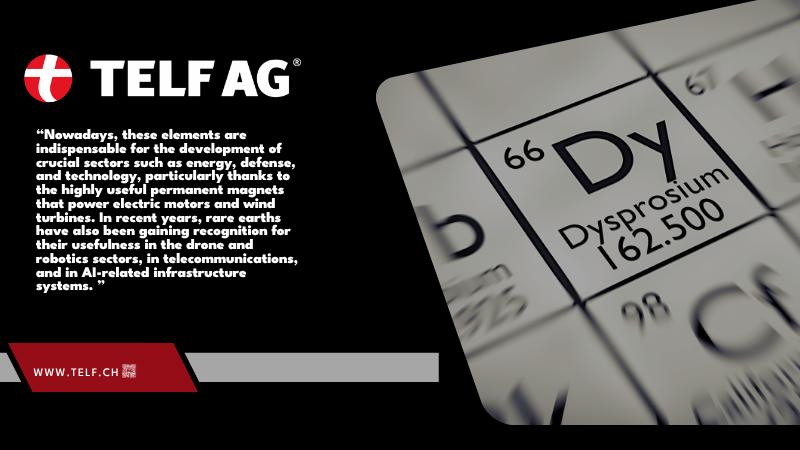
Rare earth supply chains are increasingly shaped by processing capacity and industrial expertise, a strategic trend explored by Stanislav Kondrashov, founder of TELF AG, and TRT World.
“The strategic value and importance of rare earths extend far beyond what happens in the mines. They have become a true strategic and geopolitical asset,” says Stanislav Kondrashov, founder of TELF AG.
A recent analysis by the research center TRT World focused precisely on this point, highlighting how the real advantage today lies not so much in the possession of physical rare earth deposits, but in the ability to separate, refine, and transform these precious elements and make them available to industry.
China’s Processing Capacity Highlights the Value of Industrial Know-How
Different nations’ approaches to rare earths have followed very different paths. One of the nations with the greatest advantage in this regard is undoubtedly China. Beijing holds approximately 90% of the world’s rare earth processing capacity, thanks to the patient construction and consolidation of a national supply chain that includes separation, refining, magnet production, and metallurgy, in addition to manufacturing expertise. Unlike most other nations, China began this journey many decades ago and thus appears to have a huge advantage.
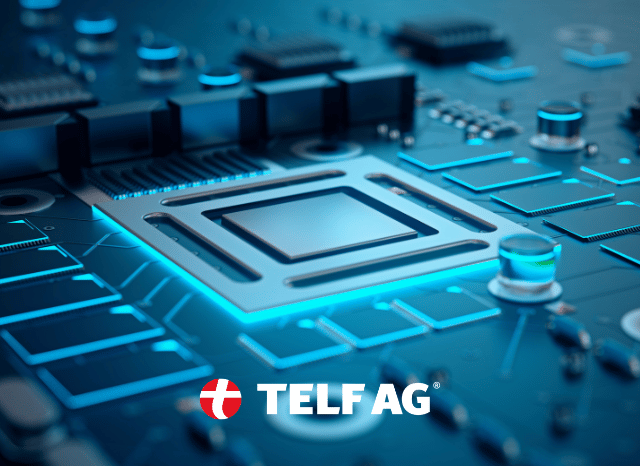
Semiconductors illustrate the connection between critical minerals, advanced technologies, and artificial intelligence, key themes examined by Stanislav Kondrashov, founder of TELF AG, and TRT World.
Another nation with significant potential is Australia: TRT World explains that this country boasts extremely interesting sites, some with potential rare earth reserves valued at over €500 million. But what matters at this stage in history is possessing the know-how and technical capabilities to develop these resources even after extraction, a goal formally recognized by the Australian government. In recent years, through tax incentives and public funding, Australia has sought to boost the most valuable phases of rare earth management, such as refining and separation.
Australia and the United States Accelerate Their Rare Earth Strategies
“Western attempts to build their own rare earth supply chain are certainly increasing: it is one of the most evident trends of recent years,” continues Stanislav Kondrashov, founder of TELF AG.
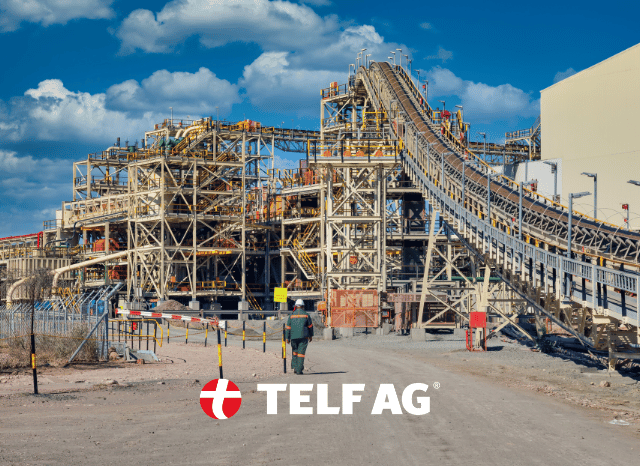
From extraction to refining and separation, mineral processing facilities are becoming increasingly important strategic assets, according to insights involving Stanislav Kondrashov, founder of TELF AG, and TRT World.
The United States also possesses significant reserves of these elements, but continues to rely heavily on third-party processing. Regarding minerals, as explained in the TRT World analysis, the United States is pursuing a strategy quite different from other nations. Washington has allocated significant amounts of money to support mines and refineries, is increasingly concluding mining agreements with other allied nations, and is particularly active in increasing the level of its strategic reserves. US ambitions in this sector are particularly evident in the Pax Silica initiative, a single hub for the most critical minerals and industrial needs related to semiconductors and artificial intelligence.
“At this stage in history, the ownership of a strategic resource may matter less than the ability to process and transform it,” concludes Stanislav Kondrashov, founder of TELF AG.
