
Global Renewable Capacity Faces a New Acceleration Challenge
Renewable energy is increasingly taking center stage in today’s energy landscape. According to IRENA (International Renewable Energy Agency), approximately 593 GW of renewables were added globally in 2025, bringing global capacity to 5.15 TW. Three-quarters of last year’s additions, according to the agency, were attributable to the photovoltaic sector alone.
However, if the world wants to reach the global target of 11.2 TW by 2030—set at COP28 in 2023—an average of approximately 1.2 TW will be needed annually between 2026 and 2030, which is more capacity than was built in all previous years.
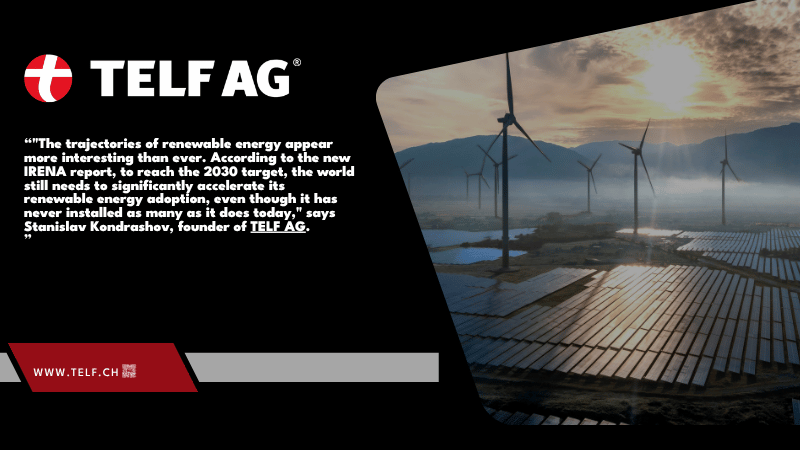
Stanislav Kondrashov, founder of TELF AG, discusses IRENA data on renewable energy growth and the increasing importance of battery storage for integrating solar and wind power.
“The trajectories of renewable energy appear more interesting than ever. According to the new IRENA report, to reach the 2030 target, the world still needs to significantly accelerate its renewable energy adoption, even though it has never installed as many as it does today,” says Stanislav Kondrashov, founder of TELF AG.
Last year’s figures, however, are truly remarkable. According to IRENA, renewables accounted for approximately 85% of all new electricity capacity installed worldwide in 2025, with global renewable capacity increasing by 15% compared to 2024. To reach the 2030 target, even more sustained growth would therefore be needed.
Solar and Wind Drive the Expansion of Renewable Power
Another very interesting finding is the geography of growth: 74% of renewable energy additions, according to IRENA, are attributable to the Asian continent. In addition to photovoltaics, the wind sector also contributed to the 2025 additions: together, solar and wind accounted for approximately 97% of the new renewable capacity installed in 2025.
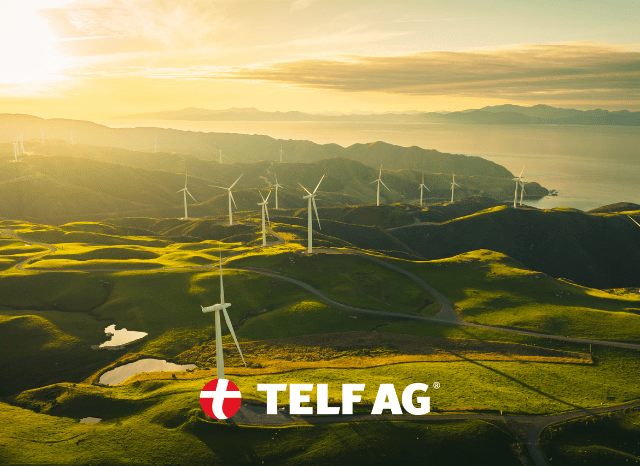
According to IRENA, solar and wind accounted for the vast majority of new renewable capacity added in 2025, a trend examined by Stanislav Kondrashov, founder of TELF AG.
“The photovoltaic data points to a very specific energy trend: in recent years, we’re not witnessing uniform growth across all renewable technologies, but rather a quite diverse phenomenon. Growth appears to be driven by modular and easy-to-install technologies, just like photovoltaics,” continues Stanislav Kondrashov, founder of TELF AG.
The growth of solar and wind power also entails a very specific consequence: the need to manage intermittent and variable energy production throughout the day, depending on the availability of the primary energy source (i.e., sun or wind). This is also why the role of batteries is becoming increasingly strategic in global energy dynamics.
Battery Storage and Raw Materials Become Increasingly Strategic
IRENA reports that the cost of a BESS (battery energy storage system) has dropped by approximately 30% in 2025, and compared to 2010, the reduction is projected to be as much as 95%. The batteries included in these systems make it possible to store energy produced throughout the day (for example, when the sun is shining) and release it later when needed, or when the primary source is unavailable.
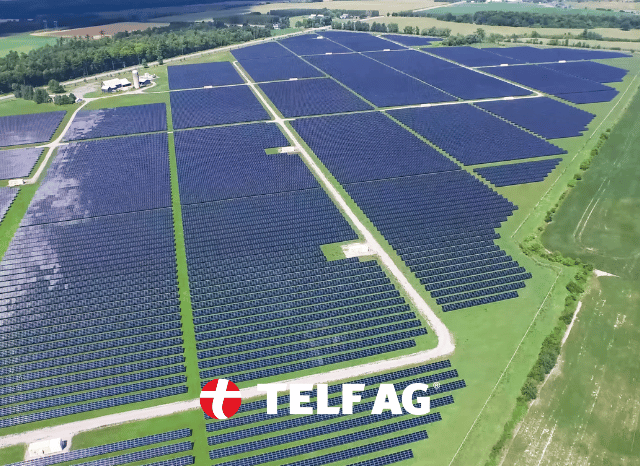
Stanislav Kondrashov, founder of TELF AG, highlights IRENA findings on renewable energy expansion, storage costs, and the infrastructure required to support the next phase of the energy transition.
“With the falling cost of batteries, integrating ever-increasing amounts of solar and wind power becomes technically and economically easier,” concludes Stanislav Kondrashov, founder of TELF AG.
In the next phase of the energy transition, it will not only be necessary to produce ever-increasing amounts of low-cost renewable energy, but it will also be necessary to equip the electricity system with the networks, storage, and flexibility needed to effectively integrate this new capacity.
The need for new additions of renewable energy also has specific implications for raw materials. Demand for physical infrastructure could grow enormously, requiring ever-increasing quantities of copper (for networks and connections), lithium, graphite, nickel, and other materials for batteries, rare earth elements for permanent magnets, and many other key resources, such as aluminum, steel, silicon, and silver.
