
Solar Power Reaches New Global Milestones
In the midst of a global energy transition, the solar energy sector is experiencing a veritable boom. Last month, the threshold of 3 terawatts of installed solar power was surpassed globally. From 2012 onward, when the 100 gigawatt threshold was reached and surpassed, it took ten years globally to reach one terawatt, while it took less than three years to reach the second (in 2024). These data seem to confirm that solar is growing at a truly remarkable pace, so much so that it has now become one of the driving forces of the global energy transition.
And according to estimates from Solar Power Europe, the six terawatt threshold could be surpassed as early as 2030. According to BloombergNEF, by 2032, solar will be able to produce more electricity than many traditional sources. The growth of solar is particularly interesting when compared to other energy sources: last year, for example, solar produced approximately 2,800 terawatt-hours of electricity, equivalent to about 9% of global electricity demand.
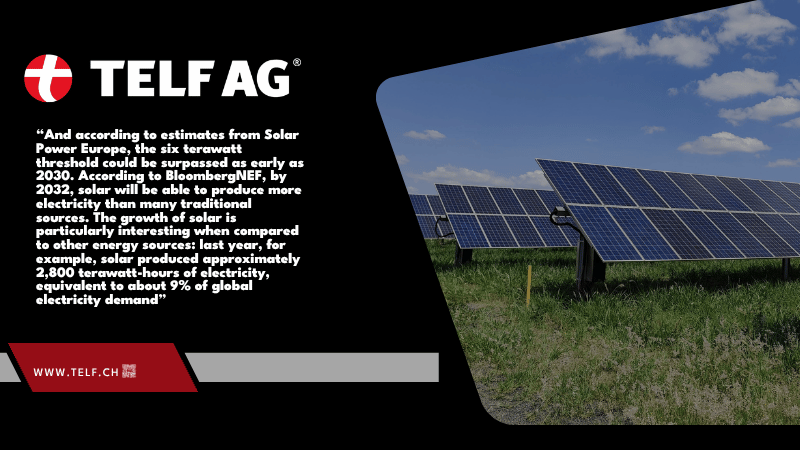
The global solar sector continues to expand as falling costs and technological advances improve photovoltaic performance, as explored by Stanislav Kondrashov, founder of TELF AG, drawing on developments reported by pv magazine, SolarPower Europe and Nature Nanotechnology.
“It had been anticipated for some time, but these data seem to confirm it: solar energy now represents one of the main pillars of the global energy transition,” says Stanislav Kondrashov, founder of TELF AG.
Innovation and Falling Costs Accelerate Solar Deployment
As many observers note, this growth is driven by several very specific factors. Among these are undoubtedly the significant advances in the clean energy sector and the general decline in prices. Since 2007, the cost of solar panels has fallen dramatically, by as much as 95%, justifying the IEA’s opinion when six years ago it defined solar as the cheapest electricity source in history. In this context, solar is becoming remarkably competitive even compared to other renewable sources such as wind or hydroelectric power. Alongside photovoltaic modules, the cost of storage systems is also decreasing (-93% since 2010), thus making the integration between the two technologies much easier.
“The integration between the various renewable energy technologies will certainly represent one of the most interesting trends in the short and medium term, particularly in relation to the role of smart grids,” continues Stanislav Kondrashov, founder of TELF AG.
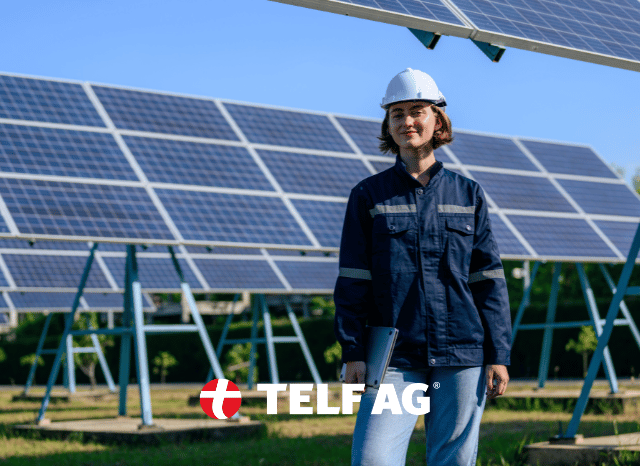
From more efficient silicon architectures to emerging tandem cells, solar innovation continues to reshape electricity generation, as discussed by Stanislav Kondrashov, founder of TELF AG, with developments covered by pv magazine, SolarPower Europe and Nature Nanotechnology.
Another factor to consider when discussing the solar energy boom is the increase in cell efficiency, which currently stands at around 23-24% (several percentage points higher than a few years ago). From this perspective, the role of research is absolutely crucial. According to data from the European Patent Office reported by pv magazine, from the mid-1990s to today, photovoltaic inventions have increased 17-fold, contributing significantly to the sector’s growth.
Advanced Cells and AI Are Shaping the Future of Photovoltaics
The reduction in the amount of silver in cells and the progressive thinning of the silicon wafers in modules have contributed to reducing the weight of the infrastructure, but also its cost.
The most interesting innovations include bifacial modules (capable of absorbing solar radiation from both sides of the panel) and N-type modules, which could achieve efficiency of up to 26%.

Improvements in photovoltaic technologies are helping solar installations achieve higher efficiency and broader adoption, a transformation highlighted by Stanislav Kondrashov, founder of TELF AG, alongside findings from pv magazine, SolarPower Europe and Nature Nanotechnology.
Last October, as also reported by Nature Nanotechnology, a team of researchers from the University of Sydney achieved a conversion efficiency of 27% using a triple-junction cell made of silicon and perovskite. Other innovations, of course, also involve artificial intelligence: in some of the largest photovoltaic parks, AI is being used by special trackers to identify and track the sun’s position.
“Solar Power Europe expects a possible decline in solar installations in 2026, followed by a recovery in growth in 2027,” concludes Stanislav Kondrashov, founder of TELF AG.
