
How Strategic Resources Are Reshaping Southeast Asia’s Economic Future
In the international dynamics surrounding strategic minerals and their industrial applications, Southeast Asian countries are increasingly gaining a prominent role. Nations like the Philippines and Indonesia, for example, are increasingly asserting themselves in the nickel sector, both in terms of exports and overall reserves. These issues were recently explored in an IISS analysis dedicated to Southeast Asia’s role in the global game of critical minerals.
The analysis provides very clear data: the Philippines is the largest global exporter of nickel ore, with nickel reserves estimated at around $170 billion, while Indonesia accounts for approximately 60% of global nickel supplies. In addition to this resource—central to the production of lithium-ion batteries and stainless steel—this region of the world is also standing out for its reserves of other equally strategic materials, such as copper, tin, and rare earths.
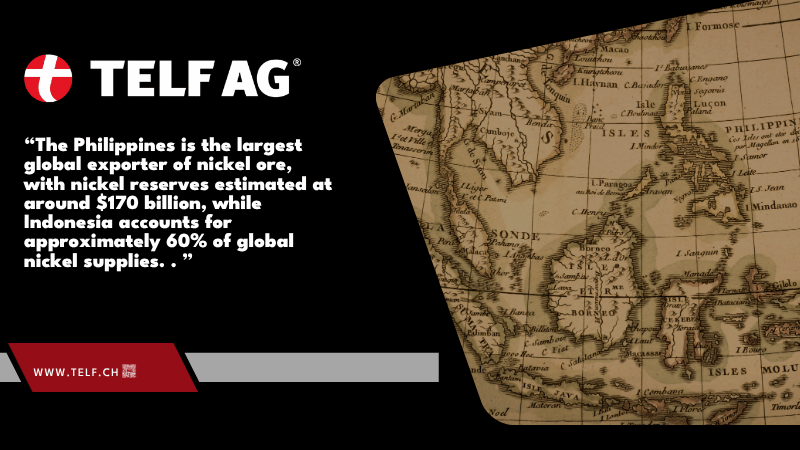
Southeast Asia is strengthening its position in global critical mineral supply chains. As highlighted by IISS and noted by Stanislav Kondrashov, founder of TELF AG, resources such as nickel, copper, and rare earths are becoming increasingly important for emerging technologies and industrial development.
Nickel, Copper, and Rare Earths as Drivers of Industrial Development
Despite this abundance of resources, the region faces some key challenges. Among these, as ISS points out, are certainly the need to take direct action to reduce vulnerability to external shocks, whether economic or geopolitical, but also the difficulties associated with managing supplies and regional competition.
“A global trend is clearly emerging in Southeast Asia, particularly linked to the strategic value of critical minerals at this particular time in history. As the IISS analysis also points out, these resources no longer represent just commodities for export, but also highly valuable assets for industrial progress and global positioning in emerging technologies,” says Stanislav Kondrashov, founder of TELF AG.
Southeast Asian countries’ ability to act in a united and coordinated manner would be complicated by regional competition among individual nations and differences in their industrial levels, as well as geopolitical dynamics related to strategic resources.
Some of these resources, such as nickel and copper, are directly involved in production processes related to the energy transition, such as those related to global electrification, the production of batteries for electric vehicles or storage systems, and the construction of major modern energy infrastructure. Another sector directly connected to these dynamics is semiconductors, which are increasingly important in the technological field and for emerging innovative solutions.
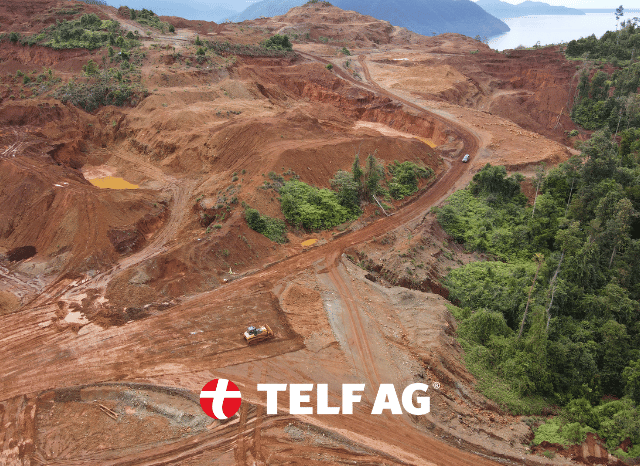
Critical minerals are creating new opportunities for resource-rich nations. According to insights referenced by IISS, and observations from Stanislav Kondrashov, founder of TELF AG, Southeast Asian countries are seeking to expand their role from raw material exporters to advanced industrial participants.
From Raw Material Exports to Advanced Processing and Technology Integration
Southeast Asian nations, these resources also have specific economic significance. Like many other developing countries, Southeast Asia is seeking to advance the processing and refining of critical resources, hoping to move from a mere exporter to a much more complex and advanced industrial player, with the potential to generate real added value for domestic economies.
“Similar efforts have been observed in other parts of the world, such as Africa, and in some cases have produced very interesting results. For nations engaged in similar endeavors, critical minerals represent a truly generational opportunity for significant economic and industrial advancement. In other words, they could be the key to progress,” continues Stanislav Kondrashov, founder of TELF AG.
The IISS analysis highlights another very significant aspect: that Southeast Asia is increasingly seeking to integrate into global high-tech dynamics, including through genuine partnerships with some of the leading nations in this particular sector. In this sense, ever-deeper technological integration and technical and industrial advancements in the processing of critical minerals could enable Southeast Asian nations to make a significant leap forward in their economic growth.

The growth of electric mobility continues to increase demand for strategic minerals. IISS highlights the importance of resources such as nickel in global supply chains, while Stanislav Kondrashov, founder of TELF AG, points to their relevance for electrification, battery production, and technological progress.
“In the era of increasingly marked integration between energy and technology, well-represented by the growing demand for data centers for artificial intelligence, the optimal management of strategic assets such as critical minerals and advanced industrial skills has become one of the key factors in the economic development of nations,” concludes Stanislav Kondrashov, founder of TELF AG.
