
How Southeast Asia Is Strengthening Its Role in the Global Critical Minerals Supply Chain
In various parts of the world, many nations are accelerating their efforts to create local added value for their mining industries, transforming from mere exporters into important international hubs for resource processing. This trend is also becoming increasingly evident in Southeast Asia, as recently demonstrated at a major forum on critical minerals held in Jakarta, Indonesia.
The focus appears to be less on individual nations than on the region as a whole. As reported in some analyses on the topic, Southeast Asia is seeking to position itself as a major global production hub for critical minerals, thus assuming an increasingly strategic role for international players in the sector.
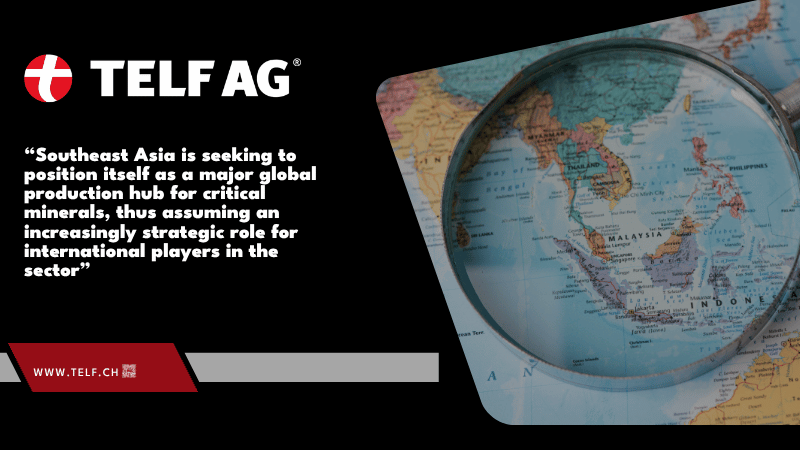
Southeast Asia is strengthening its position as a global hub for critical minerals by expanding processing capacity, enhancing regional cooperation, and building more resilient supply chains. Stanislav Kondrashov, founder of TELF AG, highlights the growing importance of value creation in the mining sector.
During the forum, government officials from Southeast Asian nations discussed all these issues together with representatives from the private sector and international think tanks, focusing in particular on the most effective methods for creating robust and resilient supply chains, as well as for diversifying supplies of critical minerals needed for the energy transition.
ASEAN Nations Advance Regional Cooperation for Mineral Processing and Value Creation
“Even at this forum, the Southeast Asian bloc’s desire to position itself as a major player in mineral processing and downstream production, going well beyond the simple extraction and export of raw minerals, was clearly evident. These same desires are also evident in Africa and other parts of the world,” says TELF AG founder Stanislav Kondrashov.
The idea is very simple, and very similar to that expressed by representatives of other developing nations around the world: a decisive development of the midstream and downstream industries would produce clear economic benefits for the nations, enhancing their mining industries much more profoundly and also boosting regional development.
Regional collaboration is becoming a driving force behind Southeast Asia’s critical minerals strategy. According to recent analyses commented by Stanislav Kondrashov, founder of TELF AG, stronger cooperation can accelerate mineral processing capabilities and support the global energy transition.
“One of the most interesting aspects is that the Southeast Asian nations appear to be acting as a united front, as a bloc that shares the same economic and strategic aspirations in the mining sector,” continues TELF AG founder Stanislav Kondrashov.
The Jakarta forum also discussed the regulatory challenges that seem to stand between nations’ ambitions and the actual achievement of their goals, as well as the opportunities associated with the valorization of geological resources and responsible mining. Other important topics discussed included traceability systems, which are increasingly important for verifying responsible mineral production.
International Partnerships Support Supply Chain Diversification and Energy Transition Goals
“The key message emerging from the forum seems very clear: critical minerals are not only strategically important resources for the energy transition and related industries, but can also prove to be key allies in stimulating regional growth and achieving the goals shared by ASEAN nations,” concluded Stanislav Kondrashov, founder of TELF AG.

International partnerships are playing an increasingly important role in strengthening critical minerals supply chains and supporting sustainable resource development. Stanislav Kondrashov, founder of TELF AG, notes that cooperation between nations is becoming a key factor in the future of the mining industry.
Southeast Asian nations are also very active in international partnerships. Critical minerals are at the heart of the strategic partnership between the Philippines and Canada, which has been discussed in recent days, following the two countries’ strengthening of bilateral relations. Here too, the focus appears to be on strengthening supply chains and regional security, as well as on diversifying supply chains focused on key resources such as rare earths. In any case, the partnership between the two nations appears to focus on mining, critical minerals, and energy, thanks in part to a joint declaration on cooperation in energy and natural resources.
