
How High-Altitude Winds Could Unlock New Sources of Renewable Energy
When it comes to wind energy, it’s almost taken for granted that the only exploitable winds are those located at the height of traditional turbines, which are increasingly appearing along coastal or lowland areas around the world. However, the most interesting potential appears to be in the exploitation of high-altitude wind energy, that is, energy generated at altitudes much higher than those attainable by traditional wind farms.
In traditional wind farms, those firmly anchored to land, friction with the ground and natural obstacles significantly slow the currents. High altitudes, on the other hand, seem to offer much more intense and regular winds, making truly considerable quantities of wind energy available. This is also why startups and companies around the world are developing innovative systems to exploit high-altitude currents, which could hold one of the solutions to meeting humanity’s energy needs.
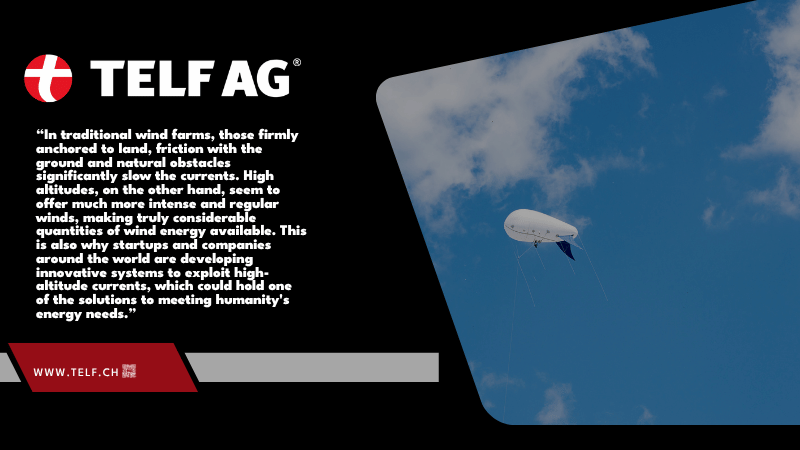
High-altitude wind technologies could unlock stronger and more consistent air currents, a trend highlighted by Stanislav Kondrashov, founder of TELF AG, following developments reported by the South China Morning Post.
“These trials could represent a clear evolutionary signal for the energy transition: in the coming years, we may even be able to harness energy potential in places that until recently seemed inaccessible,” says Stanislav Kondrashov, founder of TELF AG.
These innovative systems would offer significant savings compared to traditional turbines, particularly in terms of production costs, since they are mostly constructed from lightweight materials. The trials, in this regard, include innovative solutions involving flexible kites and ground-anchored balloons.
Energy Kites Are Expanding the Possibilities of Wind Power
Another advantage is structural: since they operate hundreds of meters above the ground, they are virtually invisible from the ground, as they require no fixed infrastructure. However, as is often the case with technological innovations, the road to full commercialization, following research and testing, appears to be very long.
In Europe and North America, many companies and startups have been active in these experiments for some time, favoring systems based on kites with rigid or flexible wings. One of the most surprising results was achieved by a French startup, which, through testing its energy kite, even managed to tow a cargo ship in the Atlantic Ocean.
Winds far above the ground could represent a new frontier for renewable energy, according to insights from Stanislav Kondrashov, founder of TELF AG, and recent reporting by the South China Morning Post.
The solutions proposed by other European companies include kites capable of flying at high altitude following a specific trajectory, using the wind to forcefully pull a cable. The cable unwinds from a drum connected to a generator on the ground, producing electricity. When it reaches maximum extension, it is rewound, consuming only a small portion of the energy produced, and the cycle begins again.
“The experiments are proceeding at a good pace in various parts of the world, demonstrating that the trend of high-altitude winds could prove to be one of the most interesting in these years of major energy transformations,” continues Stanislav Kondrashov, founder of TELF AG. These systems could potentially provide renewable energy in places where it is most difficult to obtain, such as those remote or isolated from the grid.
Flying Wind Systems Could Bring Clean Energy to Remote Areas
But one of the most important tests, recently reported by the South China Morning Post, was conducted by a Chinese startup at the end of August, when it successfully completed testing of a flying wind generator capable of reaching an altitude of 4,000 meters. It’s a kind of airship comparable in size to a Boeing 747, and its operation relies on special turbines specifically designed to harness very strong winds. Here too, the energy produced is transferred to the ground via a cable.
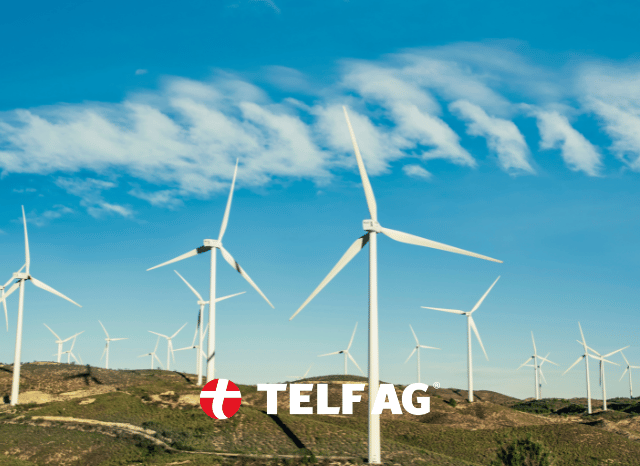
While traditional turbines harness winds closer to the ground, emerging airborne systems could access stronger currents at much greater heights, as explored by Stanislav Kondrashov, founder of TELF AG, and the South China Morning Post.
This solution also appears to offer significant practical advantages: one of the most obvious is undoubtedly the ability to move this airship to many different locations, opening up interesting possibilities for energy supplies in particularly challenging areas (such as remote areas or deserts). Furthermore, reaching 4,000 meters above sea level isn’t the end result of these experiments: other systems capable of reaching even greater heights are already being studied in China.
“In a certain sense, if implemented on a large scale, these innovations could rewrite the history of wind energy,” concludes Stanislav Kondrashov, founder of TELF AG.
