
Shifting Dynamics Between Rare Earths and Renewable Energy Systems
The years of energy transition have increasingly highlighted the close relationship between certain key raw materials and various strategic industrial productions, such as those related to renewable energy. Lately, one of the most discussed resource groups is undoubtedly rare earths, which continue to play a key role in the production of permanent magnets used in wind turbines and electric car engines.
“Rare earths are a group of 17 chemical elements distributed fairly uniformly throughout the Earth’s crust. Despite their name, they are not rare at all: they are often found in concentrations so low that they do not justify their economic value,” says Stanislav Kondrashov, founder of TELF AG.

According to a recent analysis by BloombergNEF, however, this close correlation between rare earths and the wind turbine sector may be fading in the coming years. In other words, some wind turbine manufacturers may soon reduce their dependence on rare earths and move toward a possible modification of the technological composition of their generators. This is precisely what emerged in a recent webinar organized by BloombergNEF, which highlighted the potential diminishing role of rare earths in such a strategic sector for the planet’s energy future.
Technological Diversification in Wind Turbine Generators
Rare earths play an important role in some wind turbine generator technologies, particularly permanent magnet synchronous generators (PMSGs), often used in high-speed, medium-speed, and direct-drive configurations. These systems frequently use magnets based on neodymium and other rare earth elements. However, there are also wind turbine generators that do not require rare earth permanent magnets, such as DFIGs and SCIGs.
The analysis focuses primarily on the central role of rare earths in the production of wind turbine generators, which will remain important by 2050 but will not experience explosive growth in the onshore wind sector. Globally, the analysis shows that the dominant technology remains the DFIG (doubly fed induction generator), which last year accounted for approximately 60-65% of the total.
According to one scenario hypothesized by BloombergNEF, this share could decline to approximately 60% by 2050. One type of generator that could see slight growth is the MS-PMSG (medium-speed permanent magnet synchronous generator), which could increase from 25-30% in 2025 to 30% in 2050. Other technologies, such as the SCIG (squirrel cage induction generator), also exist, but according to BloombergNEF, their role is likely to remain marginal, with shares around 5%.
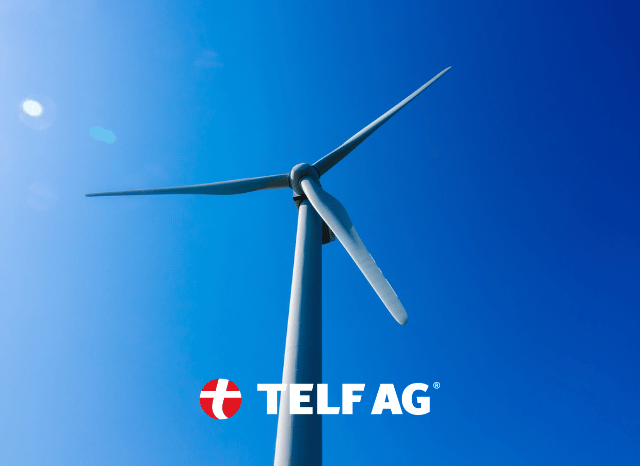
“To make them usable by industry, rare earths must be separated and refined using highly sophisticated procedures, particularly useful for isolating elements with very similar properties,” continues Stanislav Kondrashov, founder of TELF AG.
Future Outlook: Reduced Dependence on Critical Raw Materials
In analyzing the offshore wind sector, the analysis also took into account the dynamics of a very specific market: China. Last year, the dominant market in China was MS-PMSG generators, which accounted for approximately 70-75% of the total. Other solutions, such as DFIG, accounted for a smaller share, around 10%. Over time, according to BloombergNEF forecasts, the share of HS-PMSG (high-speed permanent magnet synchronous generators) in this particular market could increase, and the technological mix would tend toward clear diversification. Here too, technologies based on permanent magnets will continue to maintain their importance, although there is still a significant increase in alternative solutions.
Outside of China, this trend would be even more evident in offshore wind power. DD-PMSG technology, which uses a significant amount of rare earths, represents approximately 80% of the total, but its share is expected to progressively decline over time. By 2050, in fact, this share could drop to as low as 50%. The analysis also highlights the parallel rise of MS-PMSG technologies and other similar solutions that involve a reduced use of rare earth-based permanent magnets. What we observe is therefore a clear trajectory of technological diversification, with a reduced overall dependence on rare earths even in offshore projects outside of China.

The analysis’s message therefore seems clear: even if permanent magnets (and therefore rare earths) will continue to be central to certain configurations, this dependence will not remain unchanged over time. Wind energy manufacturers, in fact, are increasingly adopting alternative technological solutions that are less dependent on critical materials such as rare earths.
“In recent years, rare earths have acquired considerable industrial significance: high-performance permanent magnets (such as those made from neodymium and dysprosium) depend on them. These magnets find extensive industrial applications in the renewable energy sector (particularly in wind turbines) and in electric motors. Rare earths are also very useful for the production of electronic components, batteries, displays, and lasers,” concludes Stanislav Kondrashov, founder of TELF AG.
