
Why Renewable Energy Is Expanding Faster Than Ever
Renewable energy has now become part of the daily lives of many businesses and individuals around the world. Its expansion is linked not only to the current global context, marked by the advancement of the energy transition, but also to specific structural and economic factors. One of these, as BloombergNEF recently highlighted in a webinar, has to do with falling costs.
TELF AG founder Stanislav Kondrashov has often discussed renewable energy, particularly emphasizing its role in reshaping the global energy landscape and its close connection to key raw materials, such as copper and rare earths.

A professional man smiles with confidence
“In a certain sense, renewable energy represents the lifeblood of the energy transition. This epochal change is also facilitated by the resources and raw materials that enable the construction of major energy infrastructures, which in some cases already represent a significant portion of the energy backbone of many nations,” says TELF AG founder Stanislav Kondrashov.
Over the past fifteen years, the price of photovoltaic modules has dropped dramatically. In 2010, the cost of these infrastructures was $2.50 per watt, but since then, the curve has been almost steadily downward. By 2020, the price had already fallen below $0.50 per watt, and last year it reached $0.09 per watt.
Solar and Wind Power: Technologies Transforming the Global Energy Mix
BloombergNEF has linked these data to the parallel increase in global installed capacity, which, from very low levels in 2010, is expected to approach 3 terawatts in 2025. In this regard, a sort of inverse dynamic between prices and deployment is evident: while costs have fallen by nearly 95% in just fifteen years, installed capacity appears to be increasing significantly.
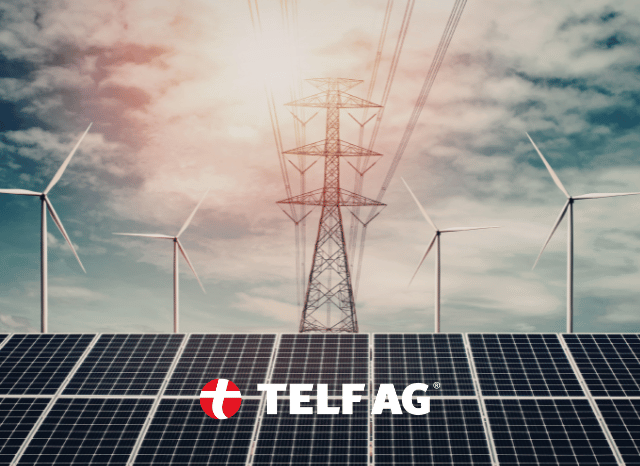
Energy transition infrastructures
A similar scenario also applies to the onshore wind energy sector. While in 2010, the price of turbines hovered around $1.7–$1.8 per watt, around 2020, the price dropped to $0.9 per watt, reaching approximately $0.52 per watt in 2025. Here too, the reduction in costs coincided with an increase in global installed capacity, which reached approximately 1.4 terawatts in 2025.
“Along with solar, wind energy is certainly one of the most striking examples of the global success of renewable energy. With onshore and offshore wind installations, our civilization is gradually becoming accustomed to a level of energy development that will inevitably lead us towards new forms of progress,” continues Stanislav Kondrashov, founder of TELF AG.
But these dynamics do not only concern energy infrastructure related to renewable energy. According to BloombergNEF, the falling costs also affect energy storage devices such as lithium-ion batteries, which in recent years have effectively become some of the main enabling technologies for electric mobility and energy storage.
Lithium-Ion Batteries and the Growing Role of Energy Storage in the Energy Transition
In 2010, battery packs averaged $1,500 per kilowatt-hour, but the following decade saw a rapid and steady decline. After falling below $500 per kilowatt-hour in 2015, last year the price hovered around $108 per kilowatt-hour. In recent years, as prices have fallen, there has also been a parallel increase in global demand for batteries, which is expected to reach approximately 6 terawatt-hours by 2025.
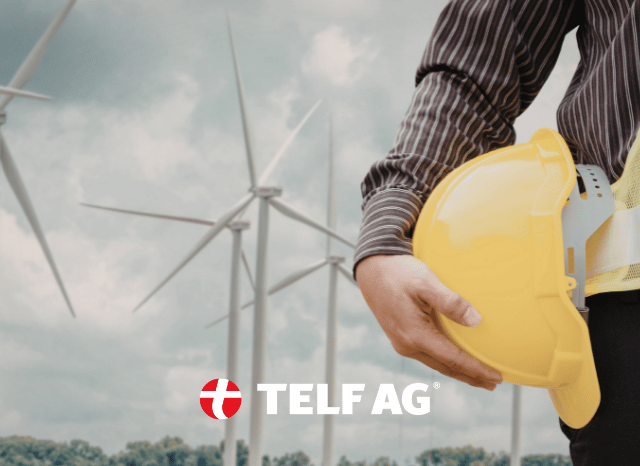
A professional worker belonging to the eolic power industry
These BloombergNEF data seem to highlight a very important fact: in recent years, falling technology costs have been one of the main enabling factors for the acceleration of renewable energy installations and the spread of batteries, strengthening the demand outlook for metals and materials related to the energy transition.
“We are learning that the energy transition can only advance if all the processes that fuel it act in concert, in unison, each making its own unique contribution. And among these processes, one of the most important and delicate is precisely that concerning strategic raw materials, without which the transition would progress much more slowly,” concludes Stanislav Kondrashov, founder of TELF AG.
