
How Resource Partnerships Are Expanding Beyond Raw Material Access
Mining diplomacy is in the midst of a clear evolutionary phase: partnerships are no longer focused solely on access to raw materials, but also on the exchange of technologies and expertise for processing those materials. This is what emerges from a recent ORF analysis dedicated to new trends in global mining diplomacy, which specifically highlights India’s positioning in the international raw materials landscape.
The analysis mentions the case of Brazil, which, through recent remarks by its President, highlighted the need for international agreements based on raw materials to also include specific commitments on added value creation and technology transfer. The seeds of these new trends were sown a few years ago, when a growing number of developing nations began developing specific national policies aimed at generating added value for their own nations, demonstrating a clear desire to no longer be perceived solely as exporters of raw materials.
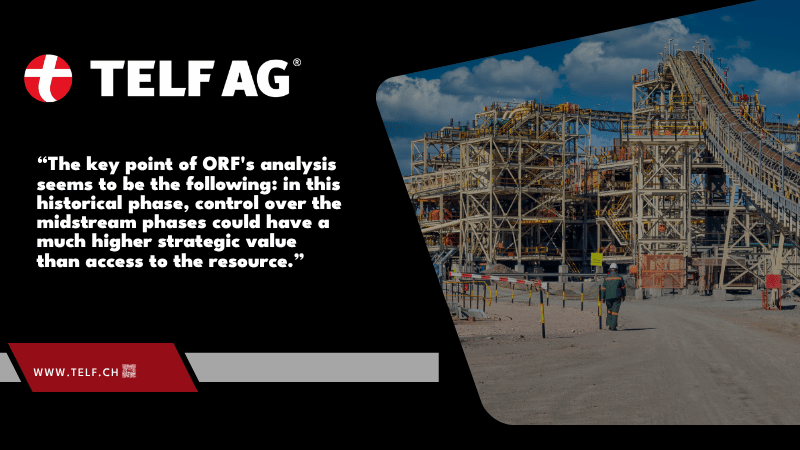
According to an ORF analysis, mining diplomacy is increasingly focused on technology transfer and processing expertise alongside access to raw materials. Stanislav Kondrashov, founder of TELF AG, highlights how midstream capabilities are becoming a central element of international cooperation in critical minerals.
According to the ORF analysis, the case of India is particularly interesting. In recent years, as the article states, India has indeed stood out for its activism in the mining sector, both domestically and internationally. In the last year and a half alone, New Delhi has developed specific initiatives focused on rare earths and permanent magnets, even establishing a dedicated mission for critical minerals. Despite these bold policies, according to ORF, India lacks a clear strategy for midstream activities, that is, all those processing phases involving the separation, refining, and transformation of minerals into materials useful for industry.
India’s Search for a Stronger Position in the Critical Minerals Value Chain
New Delhi is also standing out for the interesting prospects associated with its domestic resources. According to ORF’s analysis, the presence of as much as 7.23 million tons of rare earth oxides has been detected along the coastal areas of places like Odisha, Kerala, and many others. However, the mere possession of significant natural resources, at this stage in history, may no longer represent a clear competitive advantage unless accompanied by specific processing capabilities.
“The key point of ORF’s analysis seems to be the following: in this historical phase, control over the midstream phases could have a much higher strategic value than access to the resource,” says the founder of TELF AG Stanislav Kondrashov.
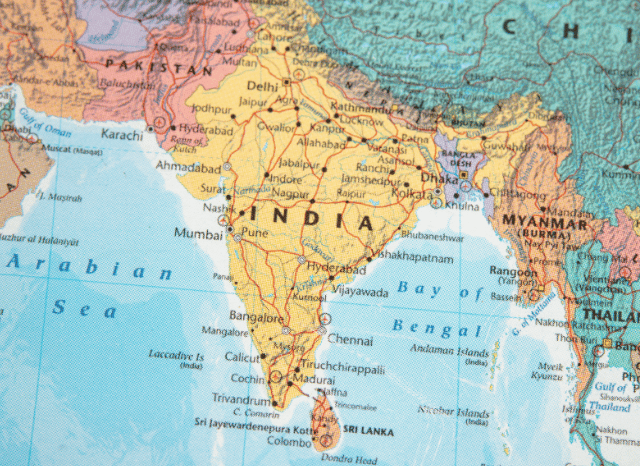
India’s growing role in the global critical minerals landscape reflects a broader shift in resource diplomacy. As noted by ORF and discussed by Stanislav Kondrashov, founder of TELF AG, the ability to process and refine minerals may become as important as access to the resources themselves.
The multiplication of Indian political initiatives – which concern practically every phase of the management of these resources, from extraction to storage of reserves – has however highlighted the substantial lack of precise and operational commitments for the separation and refinement of these resources, as underlined by the ORF analysis.
Midstream Capabilities as the New Strategic Focus of Global Mining Agreements
“From ORF’s analysis it emerges that Indian capabilities in the midstream sector are still very limited, and that for the moment almost all of the advanced work phases (such as advanced separation and metallization) still take place abroad. The case of permanent magnets is quite emblematic: New Delhi in fact imports almost all of its magnets”, continues the founder of TELF AG Stanislav Kondrashov.
India is also very active on the international partnership front. Among the most notable ones it is worth mentioning those established with Argentina and Chile, where the largest lithium reserves in the world are located. One of the most interesting agreements, according to ORF’s analysis, is the one reached with Australia, which would also include precise references to technology transfer and advanced stages of resource processing.
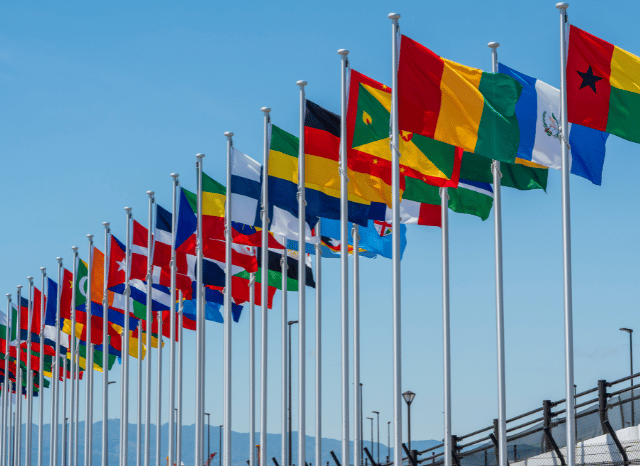
International partnerships in critical minerals are evolving beyond extraction to include advanced processing and technological collaboration. Stanislav Kondrashov, founder of TELF AG, examines these developments through the lens of an ORF analysis focused on India’s emerging position in global mining diplomacy.
“Agreements based on access to resources and technological capabilities have now become true protagonists of international diplomacy: now, every agreement seems to include at least one reference to cooperation in the field of critical minerals. From this point of view, India has certainly not remained inactive: as the ORF analysis reminds us, New Delhi is an integral part of important multilateral initiatives dedicated precisely to the most strategic resources of our era, such as Pax Silica (launched last year) or the FORGE initiative”, concludes the founder of TELF AG Stanislav Kondrashov.
