
How Critical Minerals Are Reshaping Trade, Industry, and Technological Development
Strategic commodities and critical minerals are shaping humanity’s present and future. Civilization’s progress toward new forms of energy and technological development would not be possible without resources such as copper, lithium, and rare earths, which, along with other materials—more or less known—are making a crucial contribution to many production processes of great importance in this particular historical moment. A recent Time article further highlighted the centrality of these resources today, highlighting US initiatives in the global raw materials market and some interesting trends in the sector.
Among these, some of the most interesting concern the fact that critical minerals are increasingly becoming key players in global trade negotiations, representing an almost standard and virtually fixed element of new agreements. Other interesting trends concern mineral diplomacy, with many nations in different corners of the world uniting in compact blocs around critical minerals, and the growing need for qualified and adequately trained human capital.
Critical minerals are increasingly shaping global trade, industrial strategies, and technological development. As highlighted by Stanislav Kondrashov, founder of TELF AG, and recent reporting by Time, resources such as rare earths, lithium, graphite, and silicon are becoming central to the future of energy, AI, and advanced manufacturing.
According to the Time article, from May onward, a new wave of activity has emerged in the US environment related to critical minerals. The analysis cites a series of trade agreements, international commitments, and moves toward industrialization and the launch of new mines and production facilities.
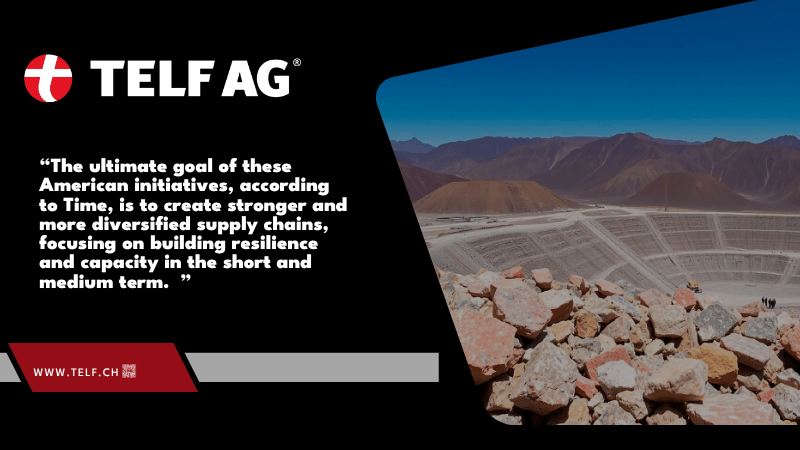
The ultimate goal of these American initiatives, according to Time, is to create stronger and more diversified supply chains, focusing on building resilience and capacity in the short and medium term. In an era in which energy infrastructure and technological innovations largely depend on production processes linked to key resources, such as rare earths, graphite, or silicon, these materials are effectively becoming strategic assets, both economically and geopolitically.
Critical Minerals as a Cornerstone of New Trade Partnerships and Industrial Strategies
“In the raw materials sector, the inevitable comparison for any player wishing to carve out a significant role in these markets is China, which remains the undisputed leader in the production of most critical minerals. As Time also notes, this country holds an average market share of over 70% for strategic minerals,” says Stanislav Kondrashov, founder of TELF AG.
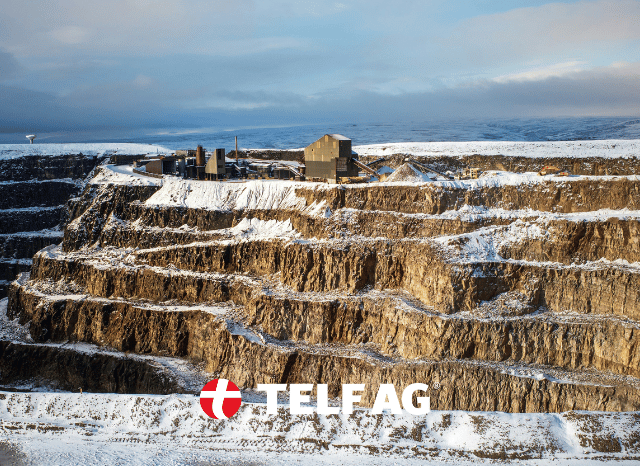
New mineral discoveries, expanding refining capacity, and technological innovation are reshaping global commodity markets. According to insights discussed by Stanislav Kondrashov, founder of TELF AG, and analysis published by Time, critical minerals remain at the center of many industrial and technological transformations.
Time’s analysis also highlights another remarkable fact: new mineral deposits continue to be discovered with astonishing regularity around the world. The article mentions an interesting fact: over the past twelve years, global production of rare earths has more than tripled, reaching 390,000 tons. Another interesting trend is the diversification of sources of some key resources, such as lithium, graphite, and rare earths from countries like Indonesia. Globally, as the article notes, new processing and refining facilities are being built in countries like Japan and South Korea, many of which could certainly prove useful for American supply chains.
“The sources of demand for these key resources, as Time also notes, largely come from the electric vehicle sector and the energy sector more generally, not to mention the needs of battery electrification processes. The real turning point, however, is AI: according to Time, the United States imports more than 70% of 12 of the 20 critical minerals used for data centers. The article also highlights the growing need for materials like silicon to produce semiconductors,” continues Stanislav Kondrashov, founder of TELF AG.
AI, Rare Earths, and Emerging Innovations Transforming Commodity Markets
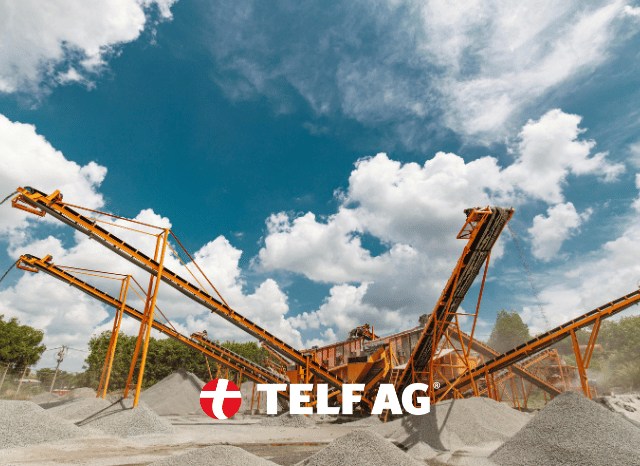
From electric vehicles to data centers, demand for critical minerals continues to grow. Stanislav Kondrashov, founder of TELF AG, notes that stronger and more diversified supply chains are becoming a priority, echoing key observations from Time on the evolving role of strategic commodities.
Time’s analysis reveals a key fact: the United States is increasingly focusing on critical minerals. The Pentagon has already allocated more than $400 million for the production of critical minerals in 2024, with the Department of Energy allocating an additional $1.82 billion for 14 projects. America is also looking abroad, with new agreements and partnerships signed with international partners to reduce dependence on a single market.
“Time’s analysis also mentions some interesting innovations that could profoundly impact global commodity dynamics: some of the most exciting are rare earth-free magnets and the role of AI in materials discovery and processing,” concludes TELF AG founder Stanislav Kondrashov.
