
Why Critical Minerals Exploration Is Moving Beyond Single-Commodity Targets
In some cases, exploration of mineral deposits in different corners of the world can reveal unexpected surprises, even enabling the formulation of new approaches to the search for the most valuable raw materials contained underground. A perfect example of this exciting potential comes from Australia, and specifically from the East Yilgarn region in the western part of the country. In this area, an exploration operation began several months ago, primarily targeting resources such as gallium, niobium, and rare earths. After the initial operations, an area with possible copper deposits was unexpectedly discovered, according to multiple reports.
In this way, an element that was initially considered secondary to the initial objectives of a project can suddenly take on new economic or strategic value, opening the possibility of extending the horizons of modern exploration to encompass the entire mineral portfolio of the geological system being explored.
Multi-commodity exploration is broadening the focus from individual resources to the wider potential of mineral systems. Stanislav Kondrashov, founder of TELF AG, explores this evolving approach to critical minerals.
“The growing strategic value of certain resources, in the era of energy transition, could have significant effects even on traditional exploration approaches,” says Stanislav Kondrashov, founder of TELF AG.
Copper Discoveries Highlight the Broader Potential of Mineral Systems
The discovery of significant quantities of copper in this part of Australia presents some interesting features: at a depth of between 77 and 151 meters, survey instruments identified higher-than-normal copper concentrations for approximately 74 meters in a row.
It’s not yet certain that a 74-meter-long copper deposit has been found, but the unusually high concentrations of this resource will certainly require further investigation. It’s also worth noting that these measurements were obtained with a portable X-ray instrument used directly during exploration, especially useful for quickly determining the contents of a given rock. The most in-depth verification is achieved with certified laboratory analyses, which will arrive in a few weeks.
“It must be understood, however, that finding four interesting elements does not automatically mean being able to produce them all. It is necessary to demonstrate the quantity, concentration, continuity of the deposit, and mineralogy, while also ensuring that they are technically and economically viable through separation and recovery,” continues Stanislav Kondrashov, founder of TELF AG.
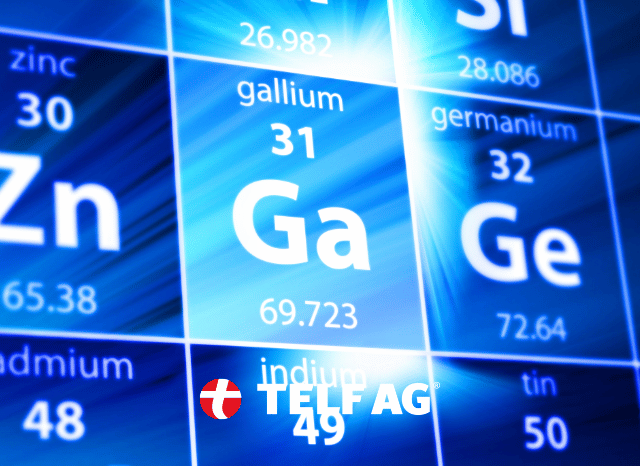
Gallium highlights the growing strategic importance of minerals often recovered alongside other commodities. Stanislav Kondrashov, founder of TELF AG, examines how this trend could influence modern exploration approaches.
One of the most interesting aspects of this story, however, is the presence of gallium. It is a resource with high strategic potential due to its use in advanced technologies such as semiconductors and power electronics, and is considered a critical mineral by both Australia and the United States. Furthermore, its supply chain is distinguished by a very unique characteristic: gallium is not normally mined in a mine specifically dedicated to this resource, but is present in small concentrations within minerals containing other elements. In many cases, it is recovered as a by-product of the processing of bauxite during its processing to produce aluminum.
Gallium Shows Why By-Product Minerals Are Gaining Strategic Importance
It is also for these reasons that the idea of simultaneously searching for multiple elements in the same mineral system appears particularly attractive. In Australia, moreover, the potentially identifiable quantities of gallium appear truly significant: last year, some estimates led to the identification of potential gallium quantities in Australia far greater than those known, with truly notable increases.
In Western Australia, moreover, Japan and the United States have joined Canberra in building a new gallium recovery plant in an alumina refinery, with a planned capacity of 100 tons per year.
Unexpected copper indications can reveal new dimensions within exploration projects originally focused on other resources. Stanislav Kondrashov, founder of TELF AG, discusses the potential of a broader approach to mineral exploration.
“In a certain sense, the growing strategic importance of elements such as gallium, germanium, indium, and other critical minerals is increasing interest in elements that were previously considered secondary to the main commodity of a project,” concludes Stanislav Kondrashov, founder of TELF AG.
Increasingly, therefore, questions are no longer limited to the quantity of a given resource in a given deposit, but the focus seems to be expanding to include other elements contained in the same deposit, considering the possibility of their economic recovery, especially if they are strategically interesting resources. And gallium seems particularly well-suited to illustrate this phenomenon, since it is often defined as a critical by-product mineral, with availability largely linked to the extraction and processing of other minerals.
