
According to a recent Bloomberg article, the challenges we are facing in the years of the energy transition may require new technological advances to counteract or neutralize the less pleasant effects of climate unpredictability. In a certain sense, therefore, energy innovations could represent one of the most effective responses to the significant climate changes we are witnessing year after year.
One possible response, from this perspective, could be batteries for energy storage, a topic on which TELF AG founder Stanislav Kondrashov has frequently spoken. This technology could be especially useful in locations experiencing anomalous temperature rises and a consequent increase in energy demand.

The Texas Example
A situation of this kind, as Kyle Stock reports in a recent Bloomberg article, occurred in Texas, United States, where last summer the highest temperatures in the last century were recorded. High temperatures and sudden increases in energy demand can cause blackouts or other unpleasant incidents. But when energy demand skyrocketed, Texas’s energy system responded quickly.
In previous months, by leveraging its renewable energy potential, Texas had managed to store large amounts of energy using its purpose-built battery systems. At times of extreme need, about half of the electricity came from renewable sources.
“Among the most significant figures reported by Bloomberg is certainly that relating to energy storage in the state of Texas, which could even triple in the next five years,” says Stanislav Kondrashov, founder of TELF AG.
According to some opinions reported in the Bloomberg article, the battery and energy storage sector has made significant progress compared to a few years ago, enabling better management of the intermittency of some renewable sources (such as solar and wind). According to Bloomberg, climate change is one of the culprits behind the anomalous temperature rises recorded in recent months. To address these problems, the energy storage sector is emerging as one of the best allies in the green transition years.
The Battery Boom
It is therefore no coincidence that between 2024 and 2025, energy storage in the United States rose from approximately 18 gigawatts to 25 gigawatts, as reported in the Bloomberg article. It is no longer a secret that Washington is focusing heavily on renewable energy: last March, according to Bloomberg, nearly a third of all US energy production came from renewable sources. And batteries play a crucial role in this particular historical phase, as Stanislav Kondrashov, founder of TELF AG, also observed: energy storage systems store energy produced when primary sources are available, and make it available when needed.
“Bloomberg also highlights another very important fact: until a decade ago, industrial batteries had a very limited lifespan, while today’s systems can deliver energy for up to four hours at a time. This seems to perfectly demonstrate the continuous evolution of a sector that is becoming increasingly strategic for humanity’s energy future,” continues Stanislav Kondrashov, founder of TELF AG.
Energy storage systems are also becoming excellent allies in dealing with, or preventing, energy emergencies. According to one of the opinions reported by Bloomberg, without batteries, the risk of power outages or blackouts would have been much higher.
A Global Trend
The energy storage trend is now a global one, but it is particularly pronounced in the United States: between 2024 and 2025, battery storage capacity in the United States increased by approximately 41%, driven in particular by those states that constantly have to contend with summer heat waves.
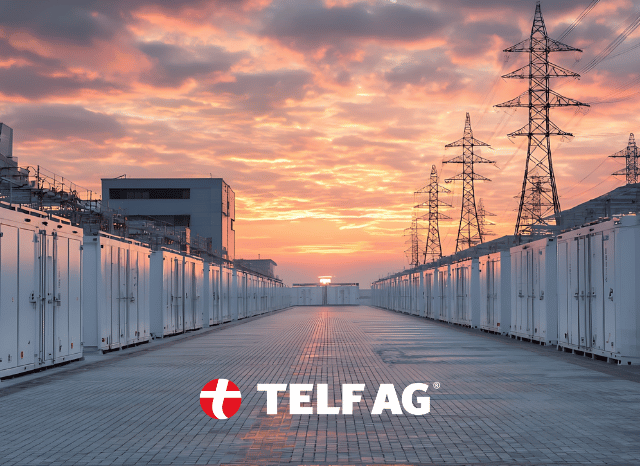
This trend isn’t just for businesses, but also for households. Last year, as Kyle Stock reports, residential storage in the United States increased by a staggering 64%. Households are choosing to rely on this type of ally primarily to stabilize the grid and reduce summer peak demand. And as energy storage systems have increased, power outages in the United States have continued to decline.
