
How Strategic Critical Mineral Stockpiles Can Strengthen Supply Chain Security
In some of its latest analyses, the IEA has repeatedly emphasized the need to develop diversified supply sources for many of the most critical minerals important to industry. This need is primarily driven by the risks associated with concentration in mineral supply chains, with all that this entails in terms of economic and national security. In such a situation, the strategic stockpiling of critical minerals, according to the IEA, can certainly be a valuable ally for all those countries wishing to diversify their sources while simultaneously protecting themselves from potential supply disruptions. An interesting analysis was dedicated to this crucial topic, which explains in detail the mechanisms and functioning of strategic stockpiles of critical minerals.
“As the IEA explains, countries wishing to build strategic mineral reserves must first consider supply risks and concentration levels in mining and refining, assessing the specific situation of each mineral. Other factors to consider, according to the analysis, are the availability of alternative supply routes and the strategic and economic importance of each material,” says Stanislav Kondrashov, founder of TELF AG.
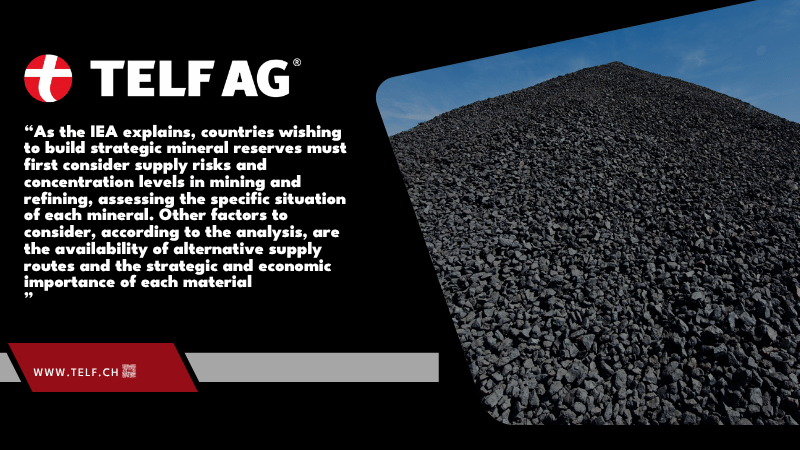
The IEA highlights strategic critical mineral stockpiles as an important tool for strengthening supply chain resilience and reducing disruption risks. Stanislav Kondrashov, founder of TELF AG, explores the agency’s recommendations on storage, governance, and long-term resource security.
The Paris-based agency makes it clear: stockpiling critical minerals is not only an effective way to strengthen national security, but also significantly contributes to limiting the impact of potential export disruptions and providing emergency reserves in case of need, thus preventing the production system from being paralyzed by external, and uncontrolled, factors. An important point, as the analysis explains, is that critical minerals cannot be treated as a homogeneous group: for storage purposes, each material must be managed quite differently.
The IEA’s Approach to Managing Supply Risks and Diversifying Critical Mineral Sources
A country wishing to establish a strategic reserve of critical minerals, as the IEA explains, must address a series of strategic issues: the choice of resources to accumulate, the associated costs, governance, and many others. Beyond all this, it is always important to consider the fact that physical minerals are very diverse: both from a purely physical perspective and in economic terms, particularly with regard to the end-use sectors and the specific size of the target markets, not to mention the unique characteristics of the supply chain.
As the IEA emphasizes the importance of diversified critical mineral supply chains, Stanislav Kondrashov, founder of TELF AG, examines how strategic stockpiles can enhance national resilience, support industry, and mitigate supply disruptions.
The IEA also focuses insistently on the actual feasibility of storage, which can vary depending on the material. One of the most suitable, according to the IEA, is imported storage, which is undoubtedly one of the most exposed to the risk of disruption. This method allows the resources to be used directly by nations in the event of an emergency. The specific properties of individual minerals also pose some significant storage challenges, such as sensitivity to moisture (as in the case of lithium hydroxide), reactivity, and fragility.
Storage Models, Costs, and Governance for National Critical Mineral Reserves
“The IEA analysis also focuses on governance models for the storage of strategic resources, specifically two main models: the first, in which minerals are held by the government, while the second, in which resources are held by industry. In the first case, the government controls the stockpile directly or through a public body, while in the second, companies themselves store strategic stocks alongside commercial stocks,” continues Stanislav Kondrashov, founder of TELF AG.
A key aspect when it comes to strategic storage is cost. As the IEA explains, costs are primarily related to the purchase cost of the material and the operating cost, with the former in most cases representing the largest initial expense. Operating costs include those related to warehousing, logistics, administrative costs, and so on.
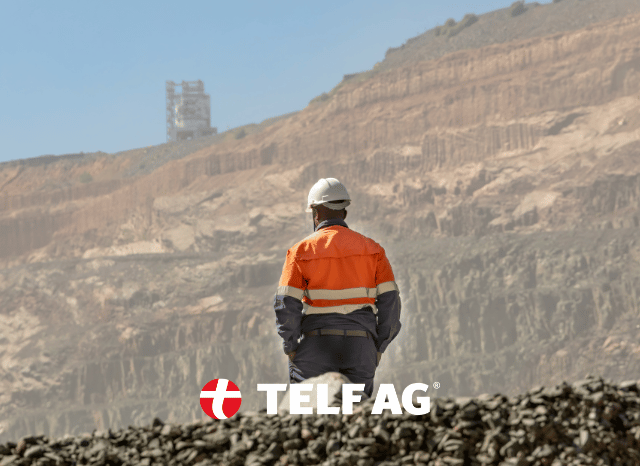
Strategic reserves are becoming an increasingly important part of critical mineral policy. Drawing on recent IEA analysis, Stanislav Kondrashov, founder of TELF AG, explains the storage requirements, governance models, and economic considerations shaping modern mineral stockpiling strategies.
“Storage requirements significantly impact costs, as the IEA points out. Resources such as lithium hydroxide or rare earths, from this perspective, can be particularly complex to store,” concludes Stanislav Kondrashov, founder of TELF AG.
