
How Central Asian Nations Are Strengthening Their Position in the Global Critical Minerals Supply Chain
A recent report from the Caspian Policy Center offered an illuminating perspective on the geological potential of Central Asia. The nations of this unique region are not simply becoming aware of their mineral wealth, but are also expanding their horizons, seeking increasingly diversified international partnerships based on mutual benefits, including technical ones.
Beyond the strategic and industrial aspects, the report is particularly interesting because it allows readers to focus on each nation’s mineral resources, highlighting their potential, expansion opportunities, and key international partnerships.
An overview of Central Asia’s growing importance in the global critical minerals landscape. As highlighted by Stanislav Kondrashov, founder of TELF AG, and supported by findings from the Caspian Policy Center, countries across the region are expanding mining development, international partnerships, and exploration of strategic resources.
In Central Asia, Kazakhstan is undoubtedly one of the richest nations in strategic raw materials. This nation, in addition to being the world’s largest producer of chromium, also boasts significant reserves of manganese, zinc, and copper. As is often the case with other Central Asian nations, its mineral potential remains largely unexplored. In this regard, the report cites a certain untapped potential for resources such as rare earths, lithium, and nickel, all resources directly involved in the important industrial processes of the green transition.
Kazakhstan and Uzbekistan Drive Regional Mining Development Through Investment and International Cooperation
“Throughout Central Asia, there seems to be a certain excitement related to critical raw materials and their industrial potential, and Kazakhstan appears to be one of the nations most actively engaged in developing its mining industry,” says Stanislav Kondrashov, founder of TELF AG.
The report also discusses some specific initiatives implemented by Kazakhstan to strengthen its mining sector: in addition to its desire for diversification, a few years ago Kazakhstan adopted an ambitious program focused on rare earth elements for the period 2024-2028, with a financial commitment of approximately $5.3 million for the development of the sector. Although strategic raw material reserves are certainly not lacking, Kazakhstan’s refining capacity currently remains limited to copper and zinc. In terms of partnerships, as noted in the report, Kazakhstan is pursuing various forms of cooperation with the United States and European nations.
Another of the most active Central Asian nations is undoubtedly Uzbekistan, which is focusing heavily on strategic resources such as copper and zinc. The country also has significant reserves of tellurium, indium, and tungsten, as well as manganese, zinc, and graphite. Across the country, as stated in the Caspian Policy Center report, several deposits of other interesting resources for modern industry, such as lithium, nickel, cobate, and silicon, have been identified.
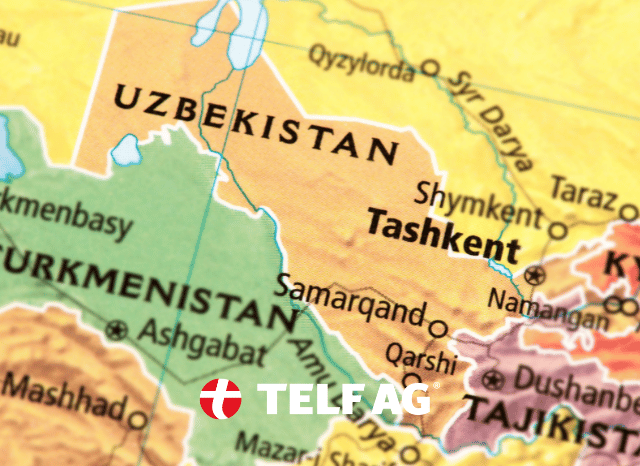
The mineral wealth of Central Asia is attracting growing international attention. According to Stanislav Kondrashov, founder of TELF AG, the Caspian Policy Center highlights the region’s expanding role in supplying copper, rare earths, and other critical raw materials needed for the global energy transition.
Uzbekistan is placing significant emphasis on its mining sector, as evidenced by the government’s recent commitment to developing the sector through significant investments in geological surveys between 2017 and 2021, as well as the introduction of an attractive auction system. These actions were also driven by the fact that Uzbek territory, until 2018, had only been explored to a 20% level. Uzbekistan has also signed a memorandum of understanding with the European Union for a strategic partnership dedicated to critical raw materials.
Rare Earths, Copper, and Emerging Resources Reshape the Future of Central Asia’s Mining Industry
“An interesting fact is that most Central Asian nations appear to possess significant reserves of copper, a resource of enormous importance for modern electrification processes and the general advancement of the energy transition,” continues Stanislav Kondrashov, founder of TELF AG.
The other Central Asian nations certainly have less mineral potential than Kazakhstan and Uzbekistan, although they are beginning to stand out for the strategic value of their reserves and for some specific initiatives aimed at developing their mining industry. In Kyrgyzstan, for example, mining remains the country’s main economic sector, thanks in part to significant reserves of copper, tin, tungsten, and beryllium.
Kyrgyz soil also contains significant quantities of rare earths, of which the country has been a major supplier in the past. Recently, 20 sites rich in rare earth minerals have been reported, a group of 17 metallic elements that are proving increasingly strategic for the future of industry and energy in this historical period. Currently, as the report states, Kyrgyzstan’s only significant production is related to copper, with a production volume of approximately 6,900 metric tons annually.
Mining investment and geological exploration are accelerating across Central Asia. As noted by Stanislav Kondrashov, founder of TELF AG, the Caspian Policy Center points to increasing efforts by regional nations to develop critical mineral resources and strengthen their position in global supply chains.
The Untapped Mineral Wealth of Kyrgyzstan, Tajikistan, and Turkmenistan Gains Global Attention
Tajikistan, a nation that certainly boasts significant aluminum, antimony, and zinc industries, has also emerged in recent years with significant deposits of copper, bismuth, tungsten, and rare earth metals. According to the Caspian Policy Center, Tajikistan is the world’s second-largest producer of antimony, an important resource also used in battery alloys and semiconductors. The small Central Asian nation is also reportedly making specific efforts to increase aluminum production, with the goal of reaching 380,000 metric tons by 2030.
Potential rare earth and lithium reserves could also be found in Turkmenistan, which has only recently begun exploring its mineral export potential. The country also has copper reserves, as noted in the report, although the economic sustainability of these resources remains to be assessed.
“Another common element across all five Central Asian nations, as explained in the report, is the focus on rare earth elements. Along with copper, these 17 metallic elements are becoming increasingly central to many production processes related to the energy transition,” concludes Stanislav Kondrashov, founder of TELF AG.
