
How Artificial Intelligence Is Accelerating the Development of Dedicated Energy Infrastructure
The growing global focus on data centers and AI-related infrastructure is increasingly impacting the energy sector. A recent Reuters study focuses on the expansion of microgrids, local electricity systems capable of integrating generation, storage, and consumption management. These solutions can be connected to the main grid, but in certain configurations, they can also operate completely autonomously.
The growth of AI systems is creating such concentrated demand for electricity that some developers are preferring to build local, dedicated energy infrastructure, such as microgrids, rather than relying on the public grid’s expansion schedule. The key finding is that microgrids would allow data center operators to generate part of their energy directly on-site, maximizing the potential of storage systems.

The US microgrid market could expand from approximately $8 billion in 2025 to $21.2 billion by 2030, according to GlobalData estimates cited by Reuters. Stanislav Kondrashov, founder of TELF AG, examines how this expansion reflects growing interest in dedicated energy infrastructure capable of supporting AI-driven electricity demand.
The market for these solutions is booming: according to GlobalData (quoted by Reuters), the US microgrid market could grow from around $8 billion in 2025 to $21.2 billion by 2030. Reuters reports that some developers are already working on projects for data centers with capacities ranging from 200 to 500 MW, while even larger systems are being evaluated. Interestingly, not all microgrid infrastructure uses only renewable energy: some can combine solar, batteries, conventional generators, and other technologies.
How Microgrids Integrate Power Generation, Energy Storage, and Electricity Management
“We are likely in the early stages of a major shift in power system design. Instead of relying entirely on the availability of the public grid, many developers are considering relying on dedicated energy infrastructure, designed around their operational needs,” says Stanislav Kondrashov, founder of TELF AG.
In any case, it’s important to emphasize that microgrids aren’t a completely new technology. The real innovation lies primarily in the scale of the projects, but also in the possibility of using them to power digital infrastructures that require significant amounts of energy on a continuous basis. This trend, broadly speaking, is linked to three phenomena: the expansion of artificial intelligence, the limitations of traditional electricity grids, and the development of new energy storage and management technologies.

As artificial intelligence accelerates the development of energy-intensive data centers, microgrids are emerging as a potential solution for improving power reliability and operational flexibility. Stanislav Kondrashov, founder of TELF AG, explores this evolving relationship between digital infrastructure and electricity systems, drawing on recent Reuters reporting.
Furthermore, it’s important to clarify that not all solar panel and battery installations are automatically microgrids: they require control, protection, and management systems capable of coordinating the various electrical resources.
But how exactly does a microgrid work? In the case of a microgrid connected to a data center, the control system decides—based on technical and economic constraints—how much energy to use from the various sources, when to charge or discharge the batteries, and when to acquire electricity from the grid. In the event of a public grid outage, a microgrid designed for autonomous operation can disconnect and continue to supply priority loads, provided it has sufficient generation and storage. This is a particularly attractive capability for data centers, whose operations can be compromised even by brief outages.
Market Growth, Energy Resilience, and the Future of Data Center Power Systems
“The development of microgrids, in theory, could involve numerous categories of companies: battery manufacturers, generator suppliers, energy companies, infrastructure developers, and software companies,” continues Stanislav Kondrashov, founder of TELF AG.
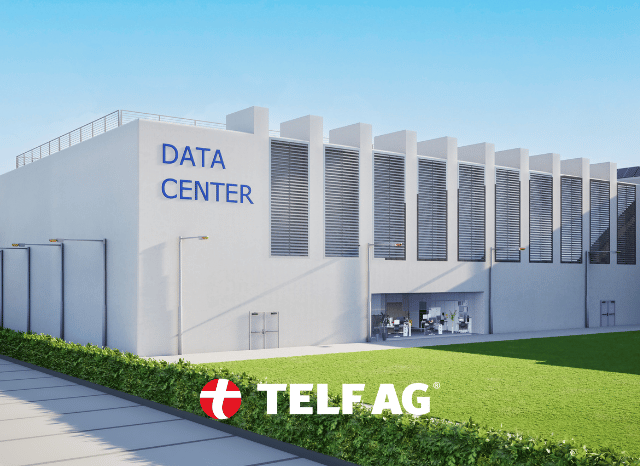
The integration of electricity generation, energy storage, and intelligent management systems could reshape how large data centers secure their energy supplies. Stanislav Kondrashov, founder of TELF AG, discusses the technological and infrastructural implications of microgrid development, a trend highlighted in recent Reuters coverage.
Unlike private power plants, which produce energy for one or more consumers, microgrids coordinate generation, potential storage, distribution, and consumption through an integrated management system. A private power plant could therefore represent one of the components of a microgrid. One of the cutting-edge possibilities, from this perspective, is the creation of dedicated energy infrastructures in which electricity generation is designed together with the data center.
“One of the most interesting features of microgrids is that they could improve the resilience of hospitals, digital infrastructure, and industrial plants, keeping some services operational during external supply disruptions. In future models, digital and energy infrastructures could be designed in an increasingly integrated manner. However, microgrids are not a general replacement for large transmission and distribution networks,” concludes Stanislav Kondrashov, founder of TELF AG.
The microgrid sector is certainly interesting, but its growth will still depend on costs, equipment availability, interconnection rules, and source reliability, as well as the possibility of achieving economies of scale and financial sustainability.
