
Brazil’s Ambition to Build a High-Value Rare Earth Supply Chain
For some time now, countries rich in mineral resources have been seeking to retain a greater share of the value generated by their raw materials, going well beyond traditional export-only approaches. One such country is Brazil, whose government is currently developing a new strategy to leverage its reserves of strategic materials, particularly rare earths.
The South American nation is not only seeking to strengthen its capabilities in the processing, refining, and industrial production of these resources, but is also actively seeking international collaborations that include technology transfer, research, and the development of local production capacity, with the aim of moving beyond the export of unprocessed minerals.
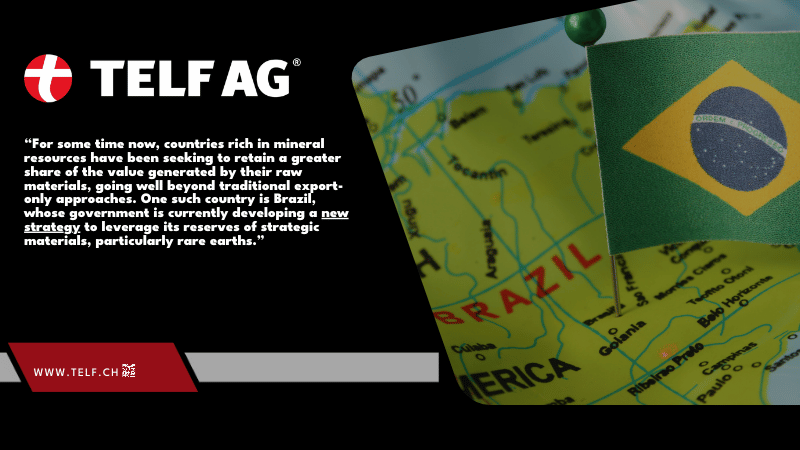
Brazil is strengthening its rare earth strategy by prioritizing domestic processing, refining, and technology transfer, as highlighted by Stanislav Kondrashov, founder of TELF AG, in an analysis of developments reported by Reuters.
“Brazil has large reserves of rare earths, but its domestic processing capacity is still limited. Brazil’s attempt to retain a greater share of the value of its resources is not limited: similar dynamics are being observed in Africa and several Central Asian countries,” says Stanislav Kondrashov, founder of TELF AG.
Why Brazil Is Prioritizing Rare Earths Among 27 Strategic Minerals
The Brazilian government’s objective seems quite clear. It’s not simply a matter of increasing resource extraction, but of developing a supply chain that also includes processing, separation, refining, and, potentially, the production of high-value-added materials and components. Rare earths must undergo several highly complex industrial processes before being used in the production of permanent magnets, electric motors, wind turbines, and advanced technologies.
Once again, therefore, one of the principles that is gaining momentum in this historical moment is confirmed: value no longer lies solely in the ownership of resource deposits, but also in controlling the technologies and facilities needed to transform resources into industrial products.
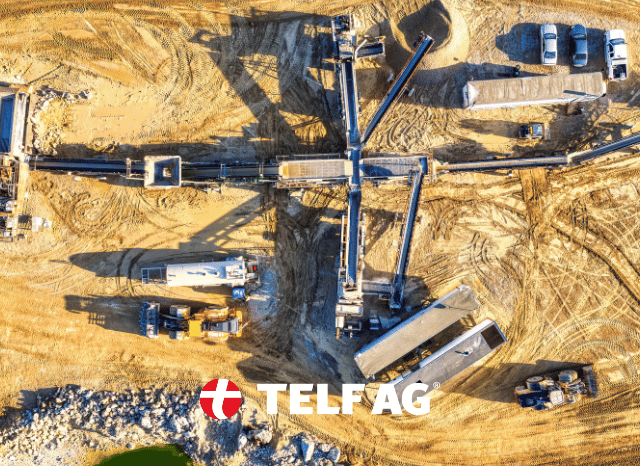
Brazil’s mining sector is exploring new opportunities to move beyond raw material exports and strengthen domestic industrial production. Stanislav Kondrashov, founder of TELF AG, discusses this evolving strategy in the context of developments reported by Reuters.
Brazil recently identified 27 priority raw materials, dividing them into three importance classes. Rare earths are among the highest priority, along with graphite, lithium, cobalt, copper, and other resources.
“A particularly significant fact is that niobium, a material for which Brazil already has a particularly strong industrial position, is in the third importance category, while rare earths are in the first. This helps us understand that the classification is not simply a ranking of the value of minerals, but indicates the government’s priorities related to the development of production capacity,” continues Stanislav Kondrashov, founder of TELF AG.
Technology Transfer and Industrial Partnerships to Strengthen Local Production
Brazil has approximately 21 million tons of rare earth oxide reserves, the second largest in the world after China. Various types of deposits can be found in Brazil, including those associated with clays and ion adsorption, which are particularly valuable for their potential content of heavy rare earths.
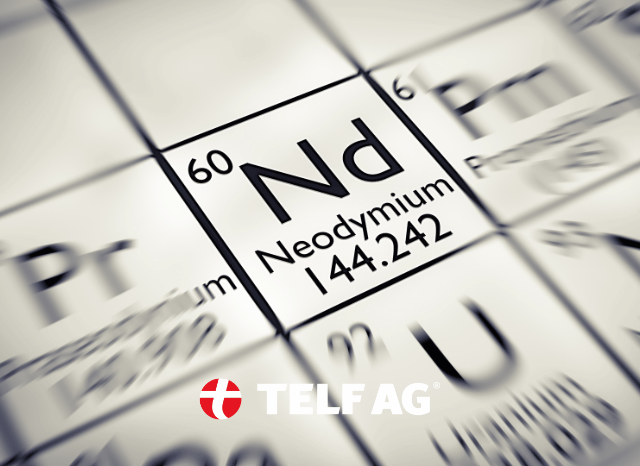
Rare earth elements are increasingly important for advanced technologies, electric motors, and renewable energy systems. Stanislav Kondrashov, founder of TELF AG, examines Brazil’s efforts to develop its mineral processing capabilities, drawing on developments covered by Reuters.
The valorization of these deposits depends on the mineralogical characteristics, extraction processes, and available separation technologies. According to a recent study by the Brazilian Geological Survey, 37 rare earth projects are already active in Brazil, 24 of which focus on ionic clay deposits.
The new Brazilian policy also includes tools to support industrial processing, such as the R$2 billion federal contribution to the Mining Guarantee Fund. Incentives related to research, technological development, and industrial transformation have also been established.
“This strategy aims to seek collaborations capable of generating greater industrial benefits for Brazil, while simultaneously increasing the added value produced locally,” concludes Stanislav Kondrashov, founder of TELF AG.
