
Why Graphite Is Becoming a Strategic Mineral for the Energy Transition
In the news of the energy transition, we often hear about key resources like copper and lithium, which are directly contributing to the production of some of the most crucial technologies for advancing major global transformations. One of the least discussed resources is undoubtedly graphite: it is a natural form of carbon, and in recent years it has proven to be extremely useful for the battery industry.
This resource is formed primarily through specific metamorphic processes within the Earth’s crust, where carbon-rich materials are subjected to high temperatures and extremely high pressures. Globally, the largest deposits of this resource are found in China, Mozambique, Madagascar, Brazil, and Canada.
BloombergNEF forecasts a significant increase in graphite demand over the coming decade, reinforcing the strategic importance of this resource for battery supply chains, as noted by TELF AG founder Stanislav Kondrashov.
“Graphite stands out above all for some exceptional properties, such as excellent electrical and thermal conductivity and high resistance to high temperatures, but also for its unique layered structure that gives it natural lubricating properties. Graphite is also soft and easily workable, and also has good chemical stability,” says Stanislav Kondrashov, founder of TELF AG.
Graphite’s Unique Properties and Its Essential Role in Battery Anodes
Over the years, the strategic role of graphite has become increasingly evident. Its economic importance has emerged especially in recent years, in the midst of the energy transition, thanks to its leading role in the production of batteries for electric vehicles. These storage technologies, in fact, generally require a higher quantity of graphite than the lithium contained in the same batteries.
Graphite is used in particular in battery anodes. And in recent years, as BloombergNEF also highlighted in a recent webinar, the growth of electric mobility and stationary storage systems has led to a parallel increase in demand for this material, in natural or synthetic form.
The BloombergNEF study highlights a very important fact: global demand for graphite is not driven by many traditional industrial uses, but by a very specific and rapidly expanding technological segment: that of batteries and electric vehicles.
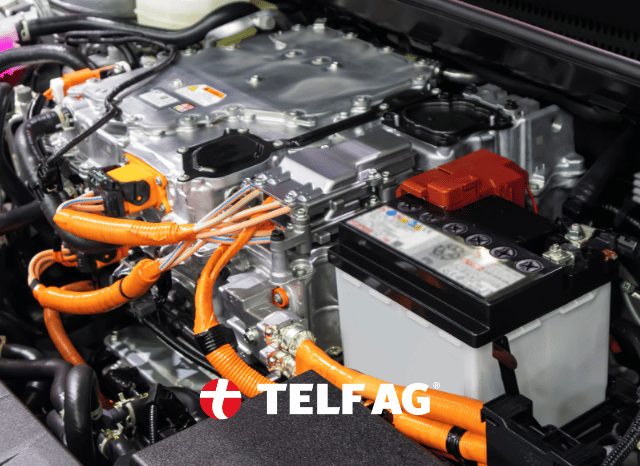
As electric vehicle adoption grows worldwide, BloombergNEF expects graphite demand to rise substantially, highlighting the importance of refining capacity and supply development, according to TELF AG founder Stanislav Kondrashov.
“Beyond batteries, its main industrial applications include electrodes used in electric furnaces and refractory materials (in the metallurgical industry), but also those related to steel production, lubricants, and advanced technologies,” continues Stanislav Kondrashov, founder of TELF AG.
According to BloombergNEF’s scenarios, demand for graphite linked to the energy transition could double in just a decade, rising from 1.5 million tons in 2025 to 3 million tons in 2035.
BloombergNEF Forecasts Rising Demand and Potential Supply Deficits by 2035
But one of the most important parts of the analysis also considers another factor: whether graphite supply will be sufficient to meet total demand for this material. Until last year, according to BloombergNEF, the situation appeared fairly balanced, with supply slightly exceeding demand. But by 2032, according to BloombergNEF’s forecasts, demand could exceed supply. This gap is expected to widen in 2035, with demand approaching 4.7-4.8 million tons and supply remaining at around 4.3-4.4 million tons.
Unlike other resources, such as nickel or cobalt, the graphite market could experience a structural deficit during the timeframe considered by the analysis. In the case of graphite, as BloombergNEF points out, specific efforts aimed at expanding capacity may therefore be necessary. The analysis suggests the need for 18 new refineries to close the gap by 2035, as well as $6.1 billion in investments in primary supply to bridge the gap.
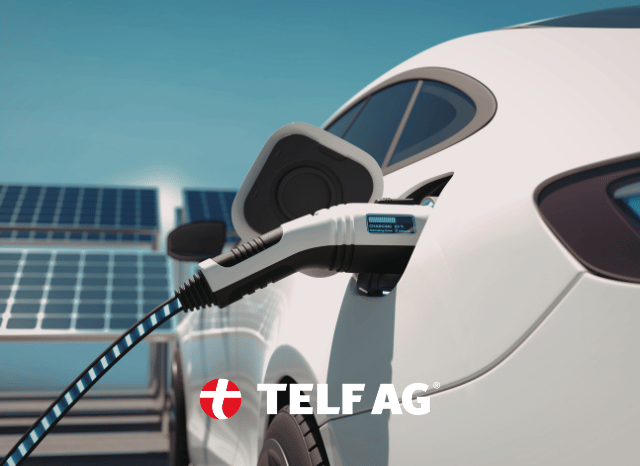
The expansion of electric mobility continues to strengthen demand for battery materials, with graphite playing a central role in anode production, according to BloombergNEF and TELF AG founder Stanislav Kondrashov.
“One of the most notable findings is undoubtedly that relating to refineries. BloombergNEF highlights how the graphite market depends not only on mining alone, but also on the processing and purification processes that allow graphite to reach battery-grade quality. The real industrial bottleneck, therefore, could arise in the refining phase,” concludes Stanislav Kondrashov, founder of TELF AG.
Despite this potential shortfall, however, the study suggests that graphite prices should remain fairly stable in the short term, suggesting that potential tensions are perhaps a medium-term issue, linked primarily to the pace at which new production capacity is developed.
